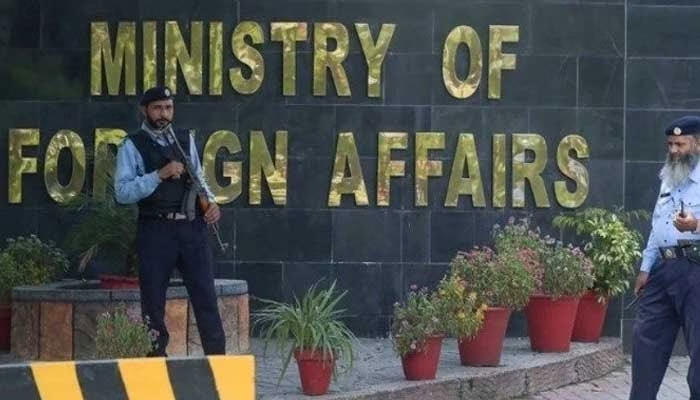
Pakistan demarche to Afghan Taliban has emerged as a significant diplomatic move highlighting Islamabad’s growing concerns over cross-border terrorism. After a deadly terrorist attack in Khyber Pakhtunkhwa’s Bajaur district that resulted in the martyrdom of 11 Pakistan Army soldiers, Pakistan summoned the Afghan mission to issue a formal protest.
According to a statement by the Ministry of Foreign Affairs, Pakistan strongly condemned the vehicle-borne suicide attack carried out by Tehreek-e-Taliban Pakistan (TTP) militants. The assault targeted a joint security checkpost operated by Pakistan’s military and law enforcement agencies on February 16.
Diplomatic Protest After Bajaur Tragedy
The Pakistan demarche to Afghan Taliban comes in response to what officials described as a major security breach with cross-border implications. The attack involved a suicide bombing followed by a coordinated fire raid, resulting in heavy casualties among Pakistani security forces.
The military’s media wing, Inter-Services Public Relations (ISPR), confirmed that 12 terrorists linked to an external proxy were neutralised during the operation. However, the loss of 11 soldiers underscored the seriousness of the threat.
Pakistan conveyed to Afghan authorities that militant leadership associated with the TTP continues to operate from Afghan territory without facing meaningful action. This issue has remained a central concern for Islamabad in recent years.
Repeated Assurances and Limited Action
Officials noted that Pakistan has previously received assurances from the Afghan Taliban leadership regarding counterterrorism cooperation. However, the Pakistan demarche to Afghan Taliban stressed that these assurances have not translated into visible or concrete measures on the ground.
Islamabad has urged Afghan authorities to take immediate and verifiable steps against terrorist networks operating within their borders. This includes dismantling militant infrastructure and targeting leadership figures responsible for planning attacks against Pakistan.
The Foreign Office reiterated that continued inaction risks undermining regional stability and security cooperation.
Pakistan’s Right to Respond
During the diplomatic engagement, Afghan representatives were also informed that Pakistan reserves the right to respond to threats originating from across the border. The Pakistan demarche to Afghan Taliban included a clear message that the country would take necessary action to safeguard its citizens, armed forces, and territorial integrity.
Officials emphasized that any countermeasures would be aimed at eliminating terrorist elements responsible for attacks on Pakistani soil.
This firm stance reflects Islamabad’s evolving security strategy in the face of rising militant activity in border provinces such as Khyber Pakhtunkhwa and Balochistan.
Rise in Cross-Border Terror Incidents
Since the Taliban’s return to power in Afghanistan in 2021, Pakistan has reported an increase in cross-border terrorist incidents. Regions bordering Afghanistan have been particularly vulnerable to infiltration and militant attacks.
The Pakistan demarche to Afghan Taliban aligns with broader concerns about regional security dynamics. Authorities believe that militant groups are exploiting safe havens across the border to plan and execute attacks.
Earlier this year, ISPR Director General Ahmed Sharif Chaudhry highlighted the scale of counterterrorism operations carried out nationwide.
According to official data:
- Over 75,000 intelligence-based operations were conducted in 2025.
- More than 14,000 operations took place in Khyber Pakhtunkhwa.
- Nearly 59,000 operations were conducted in Balochistan.
These figures illustrate the ongoing efforts by Pakistani security forces to counter militant threats across the country.
Nationwide Counterterror Operations
Authorities reported over 5,000 terrorism-related incidents nationwide last year, with the majority occurring in KP and Balochistan. During counterterror operations, approximately 2,597 militants were killed.
Security officials also indicated that Afghan-based militants were linked to several major attacks targeting civilians and soft targets.
The Pakistan demarche to Afghan Taliban is therefore part of a broader effort to address security challenges through both diplomatic and operational channels.
Regional Security Implications
Experts believe that improved coordination between Pakistan and Afghanistan is essential for lasting peace in the region. Failure to address militant networks could escalate tensions and further destabilize border areas.
The Pakistan demarche to Afghan Taliban sends a strong message about Islamabad’s expectations regarding counterterrorism cooperation. It also signals Pakistan’s commitment to protecting its sovereignty and ensuring the safety of its people.
As diplomatic discussions continue, the effectiveness of the Pakistan demarche to Afghan Taliban will depend on whether Afghan authorities take concrete action against terrorist groups operating within their territory.
For Pakistan, maintaining internal security while managing cross-border threats remains a top priority. The Bajaur attack serves as a stark reminder of the ongoing risks posed by militant networks.
Going forward, Islamabad is likely to pursue a balanced approach combining diplomacy with decisive security measures to prevent future incidents and maintain stability in its border regions.