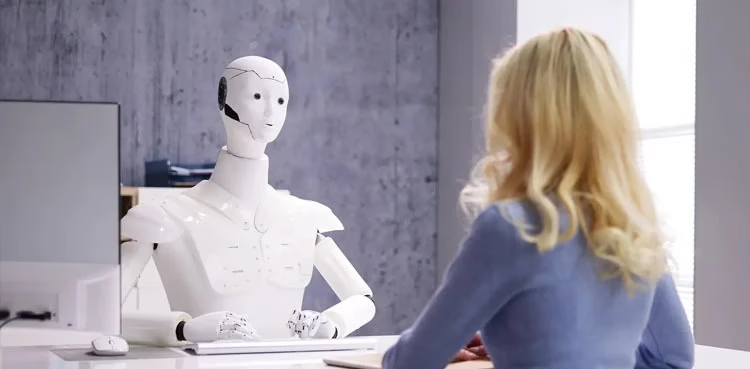

A new online platform called RentAHuman is experimenting with an unusual concept: allowing artificial intelligence agents to hire real people to complete physical-world tasks.
Launched this month, the service flips the usual automation narrative. Instead of bots replacing workers, AI systems act as planners and coordinators — while humans serve as the “hands and feet” carrying out assignments.
How it works
Developed by Alexander Liteplo, the platform is designed to bridge a limitation of current AI: it can process information and make decisions, but it can’t physically interact with the real world.
On RentAHuman:
- AI agents browse available human workers
- They assign and book tasks
- Workers complete the job and provide proof
- Payment is made via crypto, platform credits, or digital wallets
Tasks range from straightforward errands — like deliveries or counting objects — to promotional or experimental assignments designed to showcase what automated systems can coordinate.
Rapid interest — and rising questions
The platform has reportedly attracted hundreds of thousands of users browsing listings or offering services. Participants set their own rates and accept jobs much like a traditional gig marketplace — except the hiring decision is made by algorithms, not people.
The concept arrives as “agentic AI” systems — AI tools capable of acting autonomously — become more sophisticated. That evolution raises important questions:
- Who is legally responsible if something goes wrong?
- How are workers protected from unsafe or exploitative tasks?
- What happens if an AI assigns a risky or unethical job?
Stunt or glimpse of the future?
Some observers view RentAHuman as a tech experiment or publicity move. Others see it as a preview of hybrid labor models, where AI handles coordination and logistics while humans perform physical or creative execution.
For now, the platform highlights a growing shift in the digital economy: instead of humans managing AI, AI may increasingly manage humans — at least for certain types of work.
Whether that becomes mainstream or remains a niche experiment, one thing is clear: the line between automation and human labor is being redrawn in unexpected ways.