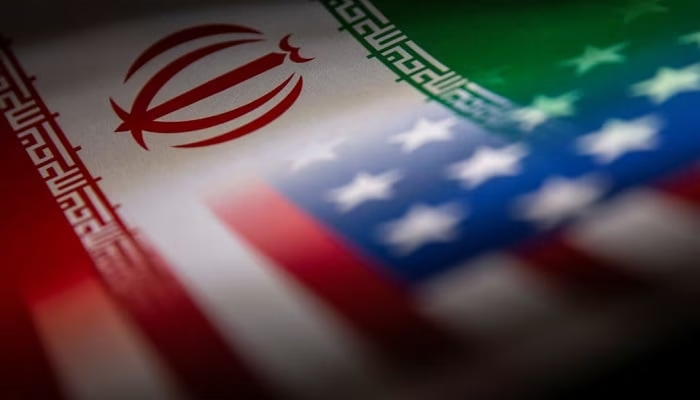
The latest round of US-Iran indirect talks in Geneva has raised cautious hopes of easing tensions between Washington and Tehran. As diplomatic channels reopen, both sides appear to be testing whether a negotiated path forward can prevent a deeper crisis in the Middle East. While no breakthrough has been announced, officials describe the discussions as a step toward avoiding further escalation.
According to senior US officials, Iran is expected to submit a formal written proposal outlining possible measures to address American concerns. The talks, held indirectly in Geneva, brought together US envoys Steve Witkoff and Jared Kushner, alongside Iranian Foreign Minister Abbas Araqchi. Though the two sides did not meet face-to-face in a traditional format, the diplomatic exchange signaled a willingness to keep communication lines open.
A Delicate Diplomatic Moment
The renewed US-Iran indirect talks come at a sensitive time. Relations between the two countries have remained strained for years, largely due to disputes over Iran’s nuclear program and regional security issues. The United States has consistently demanded that Iran abandon its nuclear ambitions, while Tehran insists its program is for peaceful energy purposes and denies seeking atomic weapons.
Iran has reportedly agreed to provide a written proposal detailing steps it might take in response to US concerns. American officials say they are waiting for that document before determining the next phase of diplomacy. However, early statements suggest that significant differences remain.
White House press secretary Karoline Leavitt acknowledged that while some progress was made in Geneva, the two sides are still “very far apart” on several key issues.
Expanding the Scope of Negotiations
One of the main sticking points in the US-Iran indirect talks is the scope of negotiations. Washington wants discussions to go beyond nuclear enrichment and include Iran’s missile stockpile and broader regional activities. Tehran, however, has drawn a clear line, stating it is willing to negotiate only on nuclear restrictions in exchange for sanctions relief.
Iran has also made it clear that it will not give up uranium enrichment entirely. For Iranian leaders, enrichment is seen as a sovereign right under international agreements, provided it remains within peaceful limits.
This gap in expectations highlights the complexity of reaching any comprehensive agreement. While both sides appear interested in avoiding open confrontation, their core demands remain significantly different.
Military Buildup in the Background
Even as diplomacy unfolds, military preparations are continuing. Senior US national security advisers met in the White House Situation Room to review regional deployments. Officials confirmed that additional US forces are being positioned in the Middle East, with full deployment expected by mid-March.
President Donald Trump has ordered a continued military buildup, including the arrival of a second aircraft carrier group in the region. The move is widely seen as a show of strength, designed to deter potential aggression and reinforce America’s negotiating position.
While military readiness may strengthen leverage, it also raises the stakes. A miscalculation by either side could quickly escalate tensions, making diplomatic progress more urgent than ever.
Regional Concerns and Israel’s Role
The US-Iran indirect talks are also closely watched by regional allies. Secretary of State Marco Rubio is scheduled to meet Israeli Prime Minister Benjamin Netanyahu on February 28 to discuss developments related to Iran.
Israel has long expressed deep concerns about Iran’s nuclear and missile capabilities. Any diplomatic outcome will likely need to address Israeli security considerations, adding another layer of complexity to negotiations.
For Washington, balancing diplomacy with regional alliances is a delicate task. Assuring partners while keeping negotiations alive requires careful coordination and clear messaging.
What Comes Next?
The immediate next step in the US-Iran indirect talks hinges on Iran’s promised written proposal. If the document offers meaningful concessions or creative compromises, it could pave the way for more structured negotiations. If not, tensions could intensify further.
Diplomacy between Washington and Tehran has historically been unpredictable. Previous agreements have collapsed under political pressure, and mutual distrust runs deep. However, the current dialogue suggests that neither side is eager for open conflict.
Economic pressure also plays a role. US sanctions have significantly impacted Iran’s economy, while rising regional instability carries risks for global energy markets and security. These shared concerns may provide incentives to keep talking.
A Narrow Path to De-escalation
The US-Iran indirect talks represent a fragile but important effort to prevent a broader crisis. While major disagreements remain unresolved, the willingness to engage — even indirectly — signals that diplomacy is still possible.
Whether these talks lead to a breakthrough or another diplomatic deadlock will depend on flexibility from both sides. For now, the world watches closely as Washington and Tehran navigate a tense moment that could shape the region’s future.
In a climate of military buildup and political mistrust, sustained dialogue may be the only path to avoiding escalation. The coming weeks will reveal whether cautious diplomacy can succeed where confrontation has repeatedly failed.
SEO Title: US-Iran Indirect Talks to Ease Rising Tensions
The latest round of US-Iran indirect talks in Geneva has raised cautious hopes of easing tensions between Washington and Tehran. As diplomatic channels reopen, both sides appear to be testing whether a negotiated path forward can prevent a deeper crisis in the Middle East. While no breakthrough has been announced, officials describe the discussions as a step toward avoiding further escalation.
According to senior US officials, Iran is expected to submit a formal written proposal outlining possible measures to address American concerns. The talks, held indirectly in Geneva, brought together US envoys Steve Witkoff and Jared Kushner, alongside Iranian Foreign Minister Abbas Araqchi. Though the two sides did not meet face-to-face in a traditional format, the diplomatic exchange signaled a willingness to keep communication lines open.
A Delicate Diplomatic Moment
The renewed US-Iran indirect talks come at a sensitive time. Relations between the two countries have remained strained for years, largely due to disputes over Iran’s nuclear program and regional security issues. The United States has consistently demanded that Iran abandon its nuclear ambitions, while Tehran insists its program is for peaceful energy purposes and denies seeking atomic weapons.
Iran has reportedly agreed to provide a written proposal detailing steps it might take in response to US concerns. American officials say they are waiting for that document before determining the next phase of diplomacy. However, early statements suggest that significant differences remain.
White House press secretary Karoline Leavitt acknowledged that while some progress was made in Geneva, the two sides are still “very far apart” on several key issues.
Expanding the Scope of Negotiations
One of the main sticking points in the US-Iran indirect talks is the scope of negotiations. Washington wants discussions to go beyond nuclear enrichment and include Iran’s missile stockpile and broader regional activities. Tehran, however, has drawn a clear line, stating it is willing to negotiate only on nuclear restrictions in exchange for sanctions relief.
Iran has also made it clear that it will not give up uranium enrichment entirely. For Iranian leaders, enrichment is seen as a sovereign right under international agreements, provided it remains within peaceful limits.
This gap in expectations highlights the complexity of reaching any comprehensive agreement. While both sides appear interested in avoiding open confrontation, their core demands remain significantly different.
Military Buildup in the Background
Even as diplomacy unfolds, military preparations are continuing. Senior US national security advisers met in the White House Situation Room to review regional deployments. Officials confirmed that additional US forces are being positioned in the Middle East, with full deployment expected by mid-March.
President Donald Trump has ordered a continued military buildup, including the arrival of a second aircraft carrier group in the region. The move is widely seen as a show of strength, designed to deter potential aggression and reinforce America’s negotiating position.
While military readiness may strengthen leverage, it also raises the stakes. A miscalculation by either side could quickly escalate tensions, making diplomatic progress more urgent than ever.
Regional Concerns and Israel’s Role
The US-Iran indirect talks are also closely watched by regional allies. Secretary of State Marco Rubio is scheduled to meet Israeli Prime Minister Benjamin Netanyahu on February 28 to discuss developments related to Iran.
Israel has long expressed deep concerns about Iran’s nuclear and missile capabilities. Any diplomatic outcome will likely need to address Israeli security considerations, adding another layer of complexity to negotiations.
For Washington, balancing diplomacy with regional alliances is a delicate task. Assuring partners while keeping negotiations alive requires careful coordination and clear messaging.
What Comes Next?
The immediate next step in the US-Iran indirect talks hinges on Iran’s promised written proposal. If the document offers meaningful concessions or creative compromises, it could pave the way for more structured negotiations. If not, tensions could intensify further.
Diplomacy between Washington and Tehran has historically been unpredictable. Previous agreements have collapsed under political pressure, and mutual distrust runs deep. However, the current dialogue suggests that neither side is eager for open conflict.
Economic pressure also plays a role. US sanctions have significantly impacted Iran’s economy, while rising regional instability carries risks for global energy markets and security. These shared concerns may provide incentives to keep talking.
A Narrow Path to De-escalation
The US-Iran indirect talks represent a fragile but important effort to prevent a broader crisis. While major disagreements remain unresolved, the willingness to engage — even indirectly — signals that diplomacy is still possible.
Whether these talks lead to a breakthrough or another diplomatic deadlock will depend on flexibility from both sides. For now, the world watches closely as Washington and Tehran navigate a tense moment that could shape the region’s future.
In a climate of military buildup and political mistrust, sustained dialogue may be the only path to avoiding escalation. The coming weeks will reveal whether cautious diplomacy can succeed where confrontation has repeatedly failed.