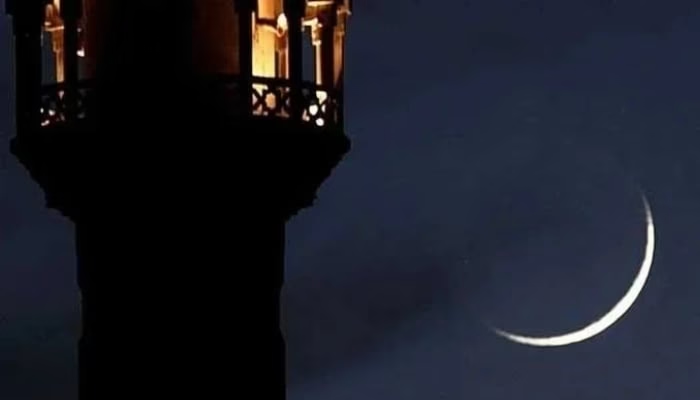
Ramadan 2026 in Pakistan has officially begun today (Thursday) after the crescent moon was sighted and formally announced by the Central Ruet-e-Hilal Committee. The confirmation came following a meeting held in Peshawar under the leadership of Chairman Maulana Abdul Khabeer Azad, marking the start of the holy month for millions across the country.
The announcement followed traditional procedures, with zonal moon-sighting committees gathering testimonies from different regions. Scientific institutions, including the Pakistan Meteorological Department and Space and Upper Atmosphere Research Commission (Suparco), assisted in the process. Suparco had earlier forecast that the Ramadan 1447 Hijri crescent would likely be visible, supporting expectations of a Thursday start.
A United Beginning in the Region
This year, Ramadan 2026 in Pakistan begins on the same day as neighboring India and Bangladesh, where the crescent moon was also sighted. However, several Gulf countries, including Saudi Arabia, United Arab Emirates, and Qatar, commenced fasting a day earlier after confirming the moon sighting on Tuesday evening.
The variation in start dates highlights the lunar nature of the Islamic calendar. Since Islamic months depend on the physical sighting of the crescent moon, differences in geography and atmospheric conditions can lead to different starting days across countries.
The Spiritual Significance of Ramadan
Ramadan 2026 in Pakistan brings with it a renewed sense of spiritual reflection and devotion. As the ninth month of the Islamic calendar, Ramadan is considered the holiest period for Muslims worldwide. More than a billion Muslims observe daily fasts from dawn to sunset, abstaining from food, drink, and other physical needs during daylight hours.
The purpose of fasting goes beyond physical restraint. It encourages patience, gratitude, self-discipline, and empathy for those less fortunate. Families gather for Sehri before dawn and break their fast at Iftar after sunset, creating moments of unity and community bonding.
Mosques across Pakistan witness increased attendance, especially during Taraweeh prayers held each night. Charity also becomes a central focus, with many individuals paying Zakat and Sadaqah to support those in need.
The Lunar Calendar and Shifting Dates
One unique feature of Ramadan 2026 in Pakistan, like every year, is its shifting position on the Gregorian calendar. The Islamic calendar is purely lunar, consisting of 12 months that total approximately 354 days — about 10 to 11 days shorter than the solar-based Gregorian calendar.
As a result, Ramadan moves earlier each year by roughly 10 days. Over time, Muslims experience fasting in different seasons — from the long, hot days of summer to the shorter, cooler days of winter. This cycle ensures that fasting conditions vary throughout a person’s lifetime.
Islamic months typically last 29 or 30 days, depending on the moon sighting. The same process will determine the end of Ramadan and the celebration of Eid ul-Fitr.
The Role of Moon Sighting Authorities
In Pakistan, the responsibility of confirming the start of Ramadan lies with the Central Ruet-e-Hilal Committee. Religious scholars, meteorological experts, and scientific institutions collaborate to verify credible testimonies of moon sightings.
The involvement of technical bodies like the Pakistan Meteorological Department and Suparco has strengthened the process in recent years. While religious testimony remains central, scientific data helps assess the moon’s visibility and provides supporting evidence.
This coordinated effort ensures transparency and unity in announcing Ramadan 2026 in Pakistan, minimizing confusion and regional differences within the country.
A Month of Reflection and Community
Beyond official announcements, the arrival of Ramadan transforms daily life in Pakistan. Markets adjust their schedules, workplaces modify hours, and television channels broadcast special religious programming. Streets become lively before Iftar as people prepare traditional meals, including dates, fruit chaat, samosas, and pakoras.
At the same time, Ramadan is a deeply personal journey. Many individuals set spiritual goals, such as completing the recitation of the Quran, improving character, or strengthening family ties.
The essence of Ramadan lies in balance — maintaining worldly responsibilities while nurturing spiritual growth. Acts of kindness, forgiveness, and generosity become even more meaningful during this sacred month.
Looking Ahead
As Ramadan 2026 in Pakistan begins, the atmosphere is filled with hope, gratitude, and renewed faith. For millions, it is an opportunity to pause, reflect, and reconnect with both community and Creator.
While the crescent moon marked the official start, the true spirit of Ramadan unfolds in everyday acts of patience, compassion, and worship. Over the next 29 or 30 days, homes, mosques, and communities across Pakistan will come together in shared devotion.
With the first fast underway, believers embrace the blessings and challenges of the holy month — united by faith and guided by tradition.