The latest round of US Iran nuclear talks has begun in Geneva, marking another attempt to resolve the long-running dispute over Tehran’s nuclear program. While both sides have agreed to indirect negotiations mediated by Oman, there are few clear signs of compromise. The diplomatic effort unfolds under heightened military tension, as Washington strengthens its presence in the region.
The talks involve senior officials from both countries. On the American side, envoys Steve Witkoff and Jared Kushner are participating, while Iran is represented by Foreign Minister Abbas Araqchi. The negotiations come at a critical moment, with regional security concerns and political pressures shaping the atmosphere.
Diplomatic Efforts Under Pressure
The renewed US Iran nuclear talks are being held in Geneva, a city often associated with high-stakes international diplomacy. Mediation by Oman reflects efforts to maintain indirect channels between the two adversaries, who have lacked formal diplomatic relations for decades.
US President Donald Trump stated that he would be involved “indirectly” in the discussions and suggested that Tehran is interested in reaching a deal. However, he also reiterated that the United States is prepared to act if negotiations fail. His remarks referenced past military actions involving B-2 bombers targeting Iranian nuclear facilities, underscoring the seriousness of the situation.
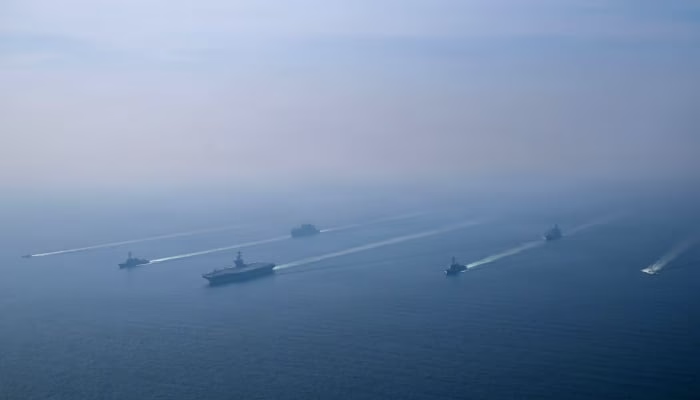
The military buildup in the region adds weight to the diplomatic process. US officials have indicated that preparations are underway for potential extended operations should tensions escalate. This backdrop of military readiness inevitably influences the tone and urgency of the talks.
Core Issues on the Table
At the heart of the US Iran nuclear talks lies disagreement over the scope of negotiations. Washington and its close ally Israel maintain that Iran’s nuclear program poses a potential security threat, arguing that enriched uranium levels have approached those needed for weaponization.
Iran, however, insists that its nuclear activities are strictly peaceful. Tehran has stated that it is willing to discuss limits on its nuclear program in exchange for sanctions relief but refuses to completely abandon uranium enrichment. It has also rejected proposals to include its missile program in the negotiations.
This divergence highlights the complexity of reaching an agreement. For Washington, broader regional security concerns are intertwined with nuclear limitations. For Tehran, the priority remains economic relief and sovereignty over its defense policies.
The Role of International Oversight
Ahead of the negotiations, Araqchi met with Rafael Grossi, head of the International Atomic Energy Agency (IAEA), to discuss cooperation and technical aspects of the nuclear program. The IAEA plays a central role in verifying compliance with any potential agreement.
International oversight is critical for building trust. Previous agreements relied heavily on monitoring mechanisms to ensure transparency. Any new deal emerging from the US Iran nuclear talks would likely require similarly robust verification measures.
Regional and Domestic Pressures
The talks are unfolding amid significant regional and domestic challenges for both sides. Iran has faced economic strain due to sanctions that have limited its oil revenues and contributed to a cost-of-living crisis. Street protests in recent years have added internal pressure on the government.
At the same time, the United States is navigating complex geopolitical dynamics in the Middle East. The Strait of Hormuz, a vital oil transit route, has seen Iranian military drills, signaling Tehran’s readiness to demonstrate strength if necessary.
Unlike previous negotiation attempts, the US has deployed what President Trump described as a substantial naval presence in the region. This military posture serves both as deterrence and leverage in the ongoing US Iran nuclear talks.
Prospects for a Breakthrough
Despite the tense environment, there are indications that both sides see value in dialogue. Secretary of State Marco Rubio acknowledged that reaching a deal would be difficult but emphasized Washington’s willingness to try.
Diplomacy often advances incrementally. Even indirect talks can lay the groundwork for future agreements by clarifying red lines and exploring possible compromises. However, mutual distrust remains a significant obstacle.
The success of the US Iran nuclear talks will depend on whether both parties can bridge their differences on uranium enrichment levels, sanctions relief, and broader security concerns. A limited, phased agreement could emerge as a pragmatic solution, allowing gradual confidence-building steps.
The resumption of US Iran nuclear talks in Geneva represents both an opportunity and a risk. On one hand, dialogue offers a pathway to reducing tensions and preventing further escalation. On the other, the shadow of military preparedness underscores the high stakes involved.
As negotiations continue, the world will watch closely to see whether diplomacy can prevail over confrontation. The coming weeks may determine whether this latest round of talks leads to meaningful progress or deepens an already volatile standoff.