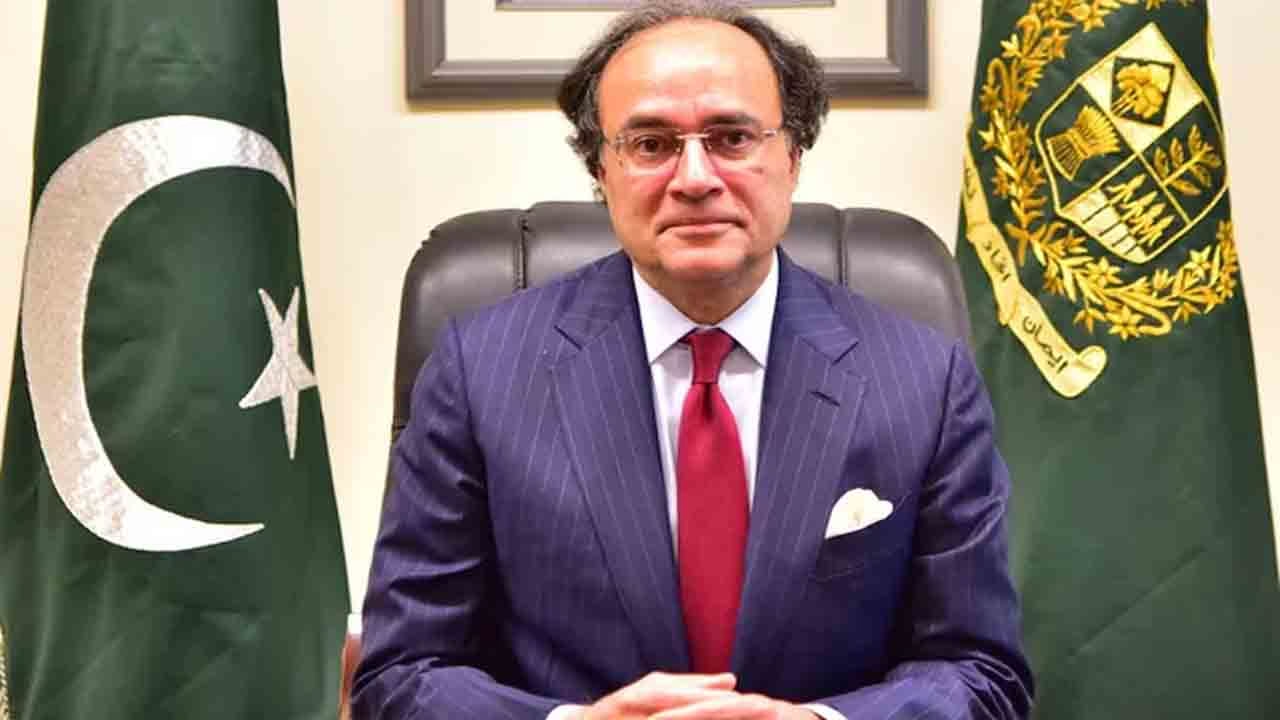
The Pakistan Economic Development and Stability Program is emerging as a central pillar of the government’s strategy to steer the country toward sustainable growth. Speaking at an event held in the provincial capital, Federal Finance Minister Muhammad Aurangzeb expressed confidence that the national economy is gradually moving toward development and stability. He emphasized that international institutions are beginning to restore their trust in Pakistan’s economic direction.
According to the finance minister, key economic indicators are showing improvement. Foreign exchange reserves are steadily increasing, and reforms are being implemented to strengthen financial discipline. These developments, he noted, are signs that the Pakistan Economic Development and Stability Program is beginning to deliver measurable results.
Rising Foreign Exchange Reserves
One of the most encouraging signals highlighted during the address was the consistent growth in foreign exchange reserves. Stronger reserves provide a cushion against external shocks, stabilize the currency, and improve investor confidence. For Pakistan, which has faced recurring balance-of-payments challenges in recent years, this improvement is particularly significant.
The rebuilding of reserves is closely tied to fiscal discipline and structured engagement with global financial institutions. By prioritizing macroeconomic stability, the government aims to create a foundation for long-term economic resilience.
Expanding the Tax Net and Digitalization
A major component of the Pakistan Economic Development and Stability Program is widening the tax net. Pakistan has historically struggled with a narrow tax base, placing a disproportionate burden on documented sectors. The government now plans to bring more individuals and businesses into the formal system.
Digitalization is central to this effort. By digitizing economic transactions and government systems, authorities aim to increase transparency, reduce leakages, and improve revenue collection. The finance minister stressed that transparency through digital reforms will not only boost state revenues but also enhance trust between taxpayers and institutions.
Digital tools can help monitor compliance, simplify tax filing, and minimize human intervention — a move expected to reduce corruption and inefficiencies.
Support for Industry and Exports
Industrial growth remains a priority under the Pakistan Economic Development and Stability Program. The finance minister assured business leaders that their concerns would be addressed, signaling the government’s willingness to engage with the private sector.
He pointed to an increase in cement exports over the past year as a positive example of industrial recovery. Rising exports are essential for narrowing the trade deficit and strengthening the external account. Encouraging manufacturing and export-oriented industries is therefore a strategic focus.
In addition, policymakers are working to create a business-friendly environment by addressing regulatory bottlenecks and facilitating access to credit. These measures aim to stimulate production, generate employment, and promote economic expansion.
Interest Rate Reforms and Monetary Policy
Another significant objective outlined during the speech is reducing the policy rate to single digits. High interest rates, while often necessary to control inflation, can limit business expansion and investment. Bringing the rate down gradually could help ease borrowing costs for industries and consumers alike.
The finance minister acknowledged that difficult but necessary decisions must be taken to maintain economic discipline. Structural reforms, fiscal consolidation, and prudent monetary management are all part of the roadmap. While such measures may pose short-term challenges, they are seen as essential for long-term stability.
Engagement with the IMF
Addressing concerns about Pakistan’s relationship with the International Monetary Fund, the finance minister clarified that engagement with the IMF is a strategic choice. He remarked that the IMF does not come to us, we go, underscoring that seeking support is a deliberate step to stabilize the economy and implement reforms.
IMF programs typically require structural adjustments and fiscal discipline, but they also send positive signals to global investors. Continued engagement helps restore credibility and unlocks financial support from other international partners.
Focus on the Property Sector
The property sector is another area receiving policy attention. Real estate plays a crucial role in Pakistan’s economy, contributing to employment and investment flows. However, it has also faced issues related to documentation and speculative practices.
Reforms in this sector aim to formalize transactions, improve valuation mechanisms, and integrate real estate more effectively into the broader tax framework. Such steps are expected to enhance transparency and strengthen revenue generation without stifling growth.
The Pakistan Economic Development and Stability Program reflects a comprehensive attempt to address structural weaknesses while fostering sustainable growth. Rising foreign exchange reserves, expanding exports, digital reforms, and tax base expansion all point toward a coordinated reform strategy.
The finance minister expressed optimism that the country will soon receive good news as reforms take effect. While challenges remain, the current trajectory suggests that policymakers are committed to balancing stability with development.
Economic recovery is rarely immediate. It requires consistent policy implementation, political will, and public cooperation. If reforms continue on their current path, Pakistan may be able to solidify its economic foundations and move toward a more stable and prosperous future.
In the months ahead, the success of the Pakistan Economic Development and Stability Program will largely depend on execution, transparency, and sustained engagement with both domestic stakeholders and international partners.