The latest developments in US Iran tensions signal a dangerous moment in Middle Eastern geopolitics, as the United States prepares to deploy a second aircraft carrier to the region. The move comes after strong warnings from Donald Trump, who said Iran would face “traumatic” consequences if it failed to reach a deal over its nuclear programme. With diplomacy hanging in the balance, the situation reflects rising uncertainty and high stakes for both nations.
At the heart of these US Iran tensions lies Iran’s nuclear programme, which Western powers fear could be aimed at developing nuclear weapons. President Trump has repeatedly stated that military action remains an option but insists it can be avoided if Tehran agrees to curb its nuclear ambitions. Speaking to reporters, Trump emphasized his preference for negotiation while making it clear that failure to reach an agreement could lead to severe outcomes.
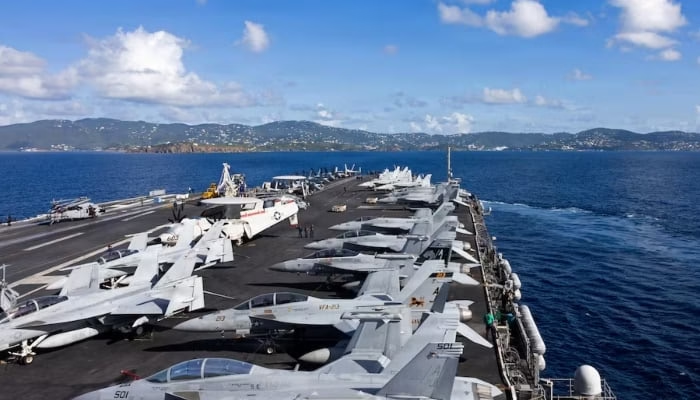
As part of Washington’s show of force, the US had already dispatched the USS Abraham Lincoln strike group to the Middle East. Now, according to multiple US media reports, a second carrier, the USS Gerald R Ford, along with its escort ships, is also expected to head toward the region. This deployment significantly raises the military presence and underlines the seriousness of the current US Iran tensions.
The USS Gerald R Ford was previously operating in the Caribbean and is not expected to return to its home port until late April or early May. The decision to redirect such a major naval asset reflects Washington’s desire to maintain pressure on Tehran while negotiations remain uncertain. Aircraft carriers are not only military tools but also powerful symbols of deterrence and political messaging.
Relations between the United States and Iran have been strained for decades, with no formal diplomatic ties since the Iranian Revolution. However, recent talks between representatives from both sides were held in Oman, offering a rare channel for dialogue. While no firm dates have been announced for future discussions, signals from Washington suggest cautious optimism. Trump himself has indicated that he believes a deal is still achievable, despite the growing US Iran tensions.
Regional allies are watching these developments closely. Israeli Prime Minister Benjamin Netanyahu recently met Trump in Washington and said the US president believed a “good deal” could be reached. However, Netanyahu expressed doubts about any agreement that does not also address Iran’s ballistic missile programme. Israel has long argued that Iran’s missile capabilities pose a direct threat to its security, adding another layer of complexity to the negotiations.
The backdrop to these diplomatic efforts includes recent unrest within Iran, where protests were met with a harsh crackdown. Human rights groups claim thousands were killed, further intensifying criticism of Tehran from the international community. These internal pressures, combined with external military threats, have contributed to the escalating US Iran tensions seen today.
Military confrontation is not without precedent. The United States previously joined Israel in a brief but intense conflict with Iran, during which strikes were carried out on Iranian nuclear facilities. While those actions were limited in scope, they demonstrated Washington’s willingness to use force if it believes its red lines have been crossed. What remains unclear is what targets the US might choose in any future strikes, or whether the goal would extend beyond nuclear facilities to challenging the authority of Iran’s supreme leader, Ayatollah Ali Khamenei.
For now, diplomacy and deterrence are moving in parallel. The deployment of additional naval forces increases the risk of miscalculation, but it also strengthens Washington’s bargaining position. Much will depend on whether ongoing talks can produce a compromise acceptable to both sides.
In the coming weeks, the world will be watching closely as US Iran tensions continue to shape regional stability. Whether this standoff ends in a renewed nuclear deal or escalates into confrontation will have far reaching consequences, not only for the Middle East but for global security as a whole.