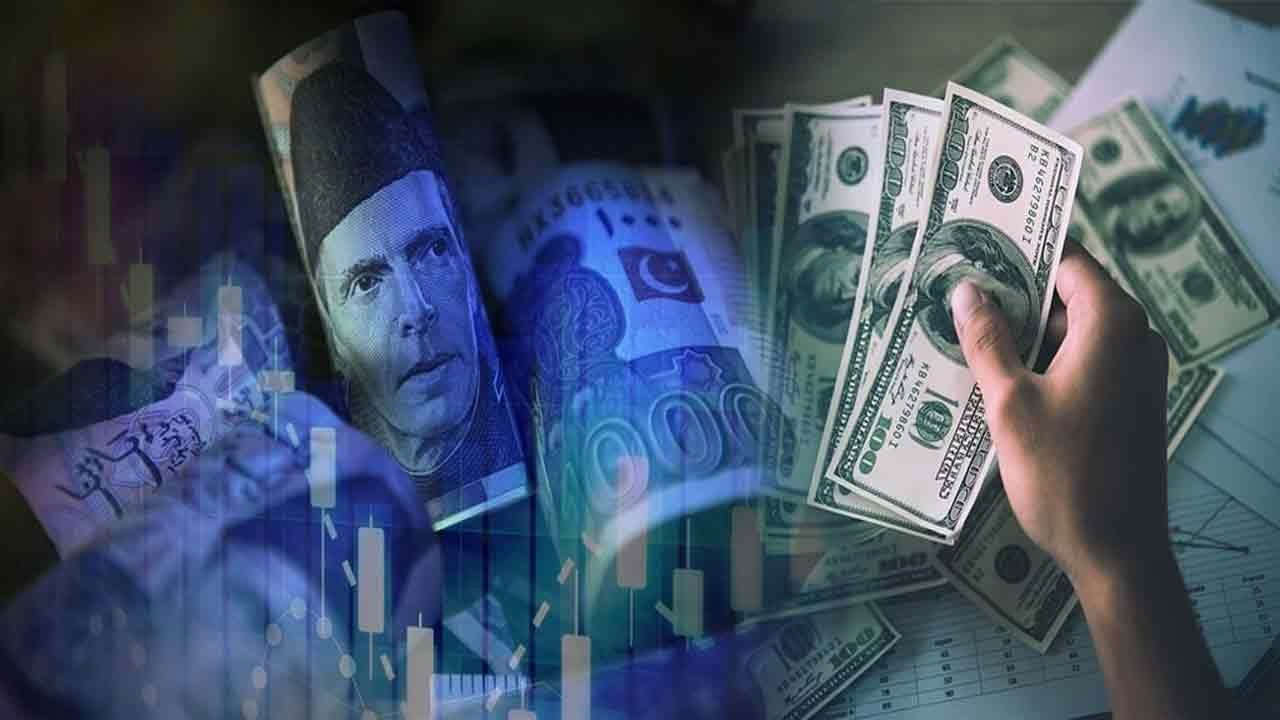
The Pakistani rupee strengthens narrative continued on Monday as the local currency appreciated against the US dollar for the 96th consecutive day in the interbank market. This rare streak reflects growing confidence in Pakistan’s economic direction, driven by progress on International Monetary Fund (IMF) conditions, renewed international support, and improving macroeconomic indicators. While the interbank market showed clear gains, the dollar remained largely stable in the open market, highlighting a controlled and balanced currency movement.
In the interbank session, the dollar depreciated gradually throughout the day, at one point falling by 25 paisa to trade at Rs 279.46. Market analysts attributed this movement to tangible steps toward economic stability, better fiscal discipline, and signs of recovery in key sectors such as exports, remittances, and services. As the Pakistani rupee strengthens, it signals not just short-term market sentiment but also deeper structural improvements underway in the economy.
One of the most significant factors supporting the rupee is Pakistan’s progress with the IMF program. According to reports, Pakistan has fulfilled three out of the five key financial conditions required for the release of the next $1 billion tranche. This development has reassured investors and currency markets that Pakistan remains on track with reforms related to revenue collection, energy pricing, and fiscal consolidation. IMF-backed discipline often plays a crucial role in stabilizing exchange rates, and this time has been no different.
Adding to the positive momentum is strong backing from multilateral institutions. The World Bank chief’s support for a $20 billion, 10-year development package for Pakistan has sent a powerful signal to global markets. Such long-term commitments indicate confidence in Pakistan’s reform trajectory and its ability to manage large-scale development projects. As expectations of sustained foreign inflows rise, pressure on the dollar eases, allowing the local currency to gain ground.
Bilateral cooperation has also played a role. Recent agreements with Saudi Arabia to expand cooperation across multiple sectors, including energy, investment, and infrastructure, have further strengthened sentiment. These deals are not just symbolic; they are expected to translate into actual inflows, joint ventures, and improved external account management. When foreign partnerships deepen, the perception of risk declines, which directly supports the currency. This environment has helped ensure that the Pakistani rupee strengthens without sharp or volatile swings.
Another important aspect of this appreciation streak is the nature of the movement itself. Unlike past episodes where the rupee strengthened abruptly due to administrative controls, the current trend appears gradual and market-driven. Authorities have focused on curbing speculative activity, improving transparency in foreign exchange markets, and ensuring smoother dollar supply through formal channels. This has reduced panic-driven demand for dollars and encouraged confidence among importers and exporters alike.
Fiscal management has also improved. Tighter control over government spending, better tax enforcement, and a focus on reducing the primary deficit have contributed to macroeconomic stability. These measures help contain inflationary pressures and reduce the need for excessive borrowing, both of which are crucial for exchange rate stability. As inflation expectations moderate, the real value of the rupee improves, reinforcing the trend where the Pakistani rupee strengthens steadily rather than temporarily.
Meanwhile, the open market told a slightly different story, with the dollar remaining mostly stable. This divergence suggests that while institutional and large-scale transactions in the interbank market reflect optimism, retail demand and supply are currently balanced. Importantly, there were no signs of panic buying or hoarding of dollars, which often destabilizes the open market. Stability in this segment further supports the sustainability of the rupee’s gains.
Looking ahead, economists caution that maintaining this momentum will require consistency. The remaining IMF conditions must be met, structural reforms need to continue, and external shocks—such as global oil price volatility—must be managed carefully. However, the current trajectory is encouraging. A stable and gradually appreciating currency can help reduce imported inflation, lower debt servicing costs, and restore confidence among businesses and consumers.
The fact that the Pakistani rupee strengthens for the 96th consecutive session is more than a headline—it is a reflection of coordinated economic management, international confidence, and cautious optimism returning to the market. While challenges remain, this sustained performance suggests that Pakistan may finally be moving toward a more stable and predictable currency environment.