Pakistan US relations took another positive step forward as US Chargé d’Affaires Natalie Baker reaffirmed Washington’s commitment to deepening cooperation with Pakistan in trade, business, and technology. Her recent official visit to Sindh highlighted how economic collaboration, innovation, and people-to-people engagement remain central to the evolving partnership between the two countries.
During her visit from January 25 to 31, Baker met political leaders, business executives, community representatives, and students. According to an official statement, the visit aimed to advance shared priorities such as economic growth, regional stability, and the application of American expertise to support Pakistan’s development. These engagements reflect a broader strategy to strengthen Pakistan US relations through practical cooperation rather than symbolic diplomacy.
Economic Cooperation at the Core
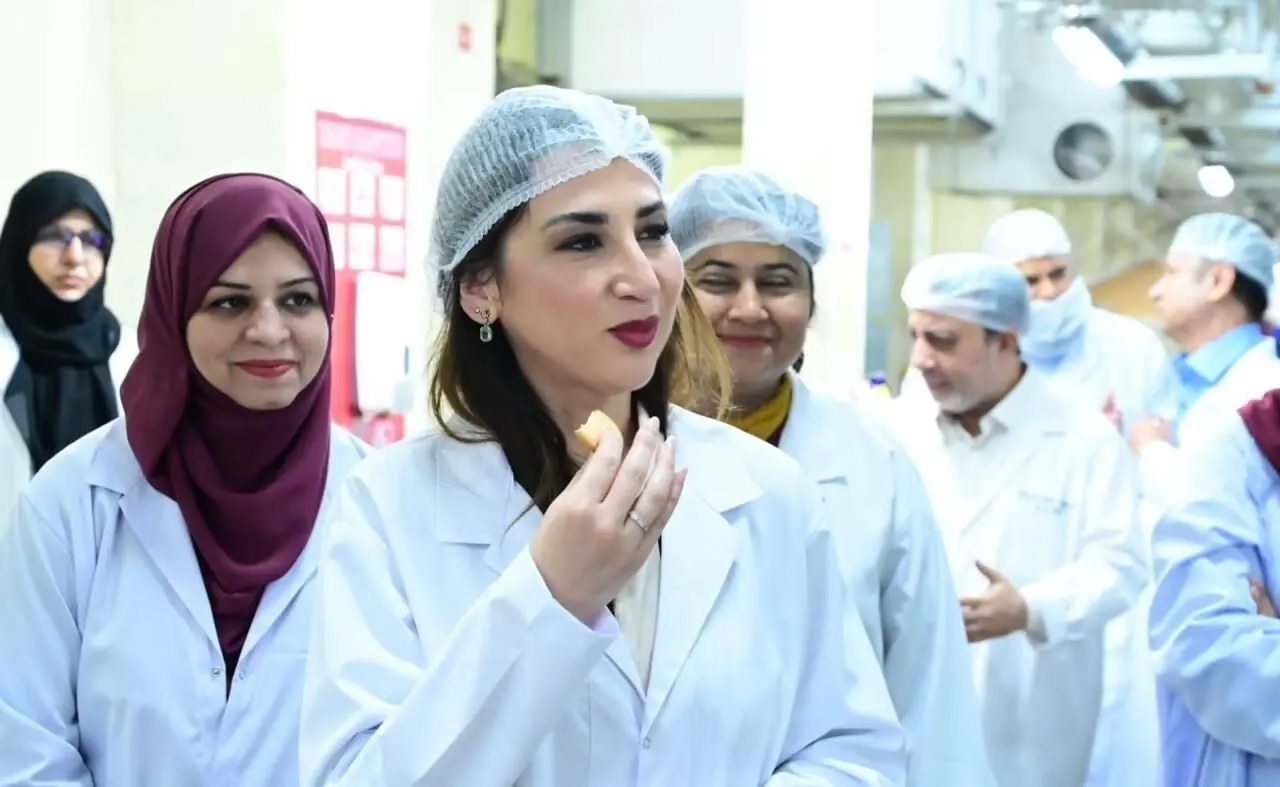
A major focus of the visit was industrial and commercial collaboration. In Sukkur, Baker toured the Continental Biscuits factory, which operates in partnership with US-based Mondelēz International. The facility stands as a strong example of how foreign investment and local industry can work together to create jobs and improve manufacturing standards.
Speaking at the site, Baker described such ventures as the foundation of shared prosperity. She emphasized that US companies are contributing to improved industrial performance in Pakistan by introducing advanced technologies and modern supply-chain systems. This kind of collaboration underscores how Pakistan US relations are increasingly driven by economic outcomes that benefit both sides.
Technology and Supply Chain Integration
Baker also visited industrial facilities in Mirpurkhas, including a sugar mill and plants producing ethanol, carbon dioxide, and paper. These facilities rely on advanced US technology to ensure quality production and meet international standards. According to the envoy, such integration allows Pakistani products to enter global markets more efficiently while reducing waste and improving value addition.
She highlighted that strong local manufacturing, supported by Pakistan’s agricultural resources and the Indus River system, plays a critical role in sustainable growth. These remarks point to a long-term vision for Pakistan US relations where technology transfer and supply-chain integration help Pakistan compete globally.
Beyond Business: Cultural and Social Engagement
While trade and technology dominated the agenda, the visit also included cultural and social elements. Baker paid her respects at the Bhutto family mausoleum in Garhi Khuda Bakhsh, acknowledging its historical importance. She also met with leaders of the Hindu community, where discussions focused on interfaith harmony and equal rights.
Such engagements signal that Pakistan US relations are not limited to economics alone. They also encompass shared values related to social inclusion, cultural respect, and community development, which help build trust at a grassroots level.
Sports as a Bridge Between Nations
In Hyderabad, Baker visited Niaz Stadium and spoke about the unifying power of sports. She noted that cricket’s inclusion in the 2028 Los Angeles Olympics highlights how athletics can bring people together across borders. Hyderabad’s role as the home base of a new Pakistan Super League team further adds to this connection, especially with a US investor supporting the team’s development.
This sporting collaboration may seem symbolic, but it reflects a softer dimension of Pakistan US relations—one that connects societies beyond official policy frameworks and creates shared experiences for younger generations.
Education and Youth Development
The visit also underscored the importance of education in strengthening bilateral ties. US Consulate General Karachi’s Political and Economic Counselor Peter McSharry met local leaders and visited Sukkur IBA University. There, he reviewed the STEM Powered programme, funded by US assistance and implemented with Vanderbilt University.
The programme aims to equip Pakistani youth with modern skills for employment and entrepreneurship. Initiatives like these demonstrate how Pakistan US relations are investing in human capital, ensuring that cooperation today translates into long-term economic and social benefits.
A Relationship Focused on Practical Outcomes
Overall, Baker’s visit to Sindh reflects a pragmatic approach to diplomacy. Rather than grand announcements, the emphasis was on tangible outcomes: factories producing export-quality goods, students gaining future-ready skills, and communities benefiting from inclusive engagement.
As Pakistan seeks economic stability and growth, partnerships that bring technology, investment, and market access are increasingly important. For the United States, supporting such development aligns with broader goals of regional stability and shared prosperity.
The trajectory of Pakistan US relations appears to be moving toward deeper economic integration and people-centered cooperation. Trade, technology, education, and cultural exchange are becoming the pillars of engagement, replacing older narratives focused solely on security.
While challenges remain, visits like this reinforce the idea that sustained collaboration can deliver mutual benefits. By focusing on innovation, fair trade, and youth development, Pakistan and the United States are laying the groundwork for a more balanced and forward-looking partnership.