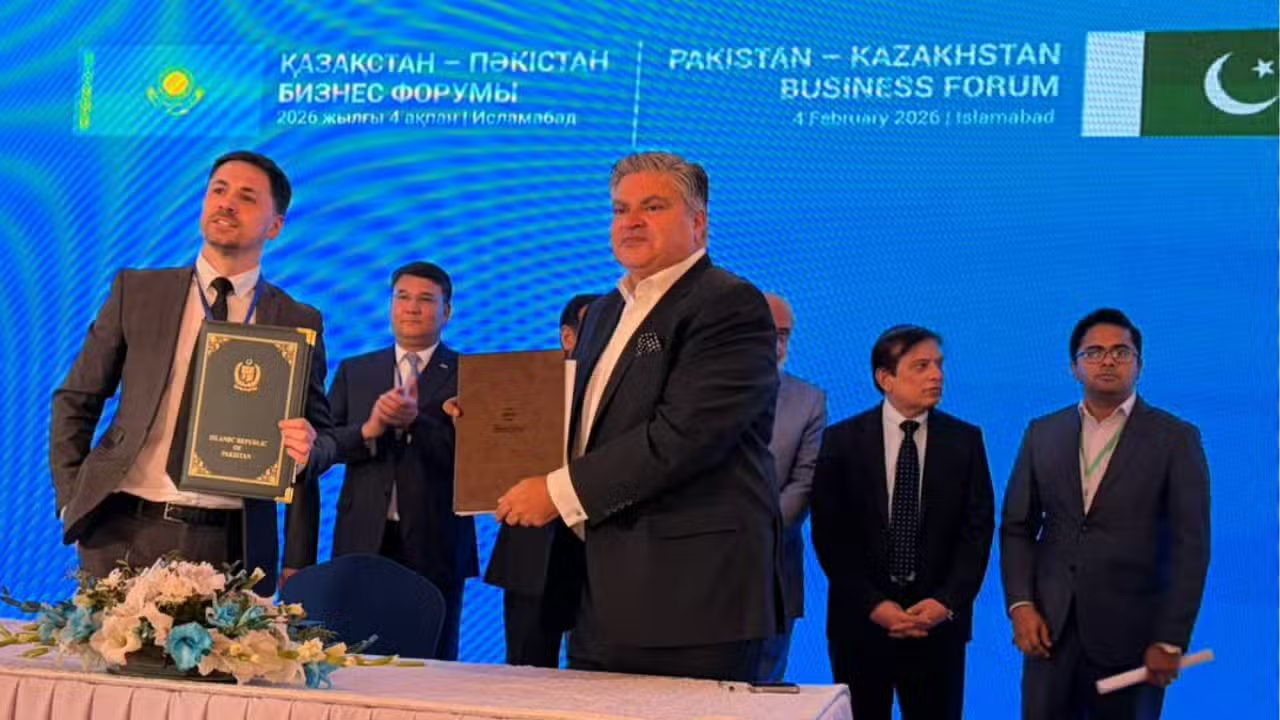
The JazzWorld AI partnership marks a major step forward for Pakistan’s growing digital economy, as JazzWorld announced a landmark cross-border collaboration with Kazakhstan-based QazCode LLP. This agreement aims to accelerate artificial intelligence innovation, expand software exports, and strengthen digital trade between Pakistan and Kazakhstan, positioning both countries as emerging players in the regional technology landscape.
From the outset, the JazzWorld AI partnership is designed to move beyond symbolic cooperation. It brings together JazzWorld and its technology arm Teknosys, VEON group company Beeline Kazakhstan, and QazCode LLP under a shared vision of joint innovation, product development, and international market expansion. At its core, the partnership seeks to help Pakistani technology solutions scale into Central Asia and beyond, reinforcing Pakistan’s role as a competitive exporter of digital services.
A New Model for Regional Digital Collaboration
What makes the JazzWorld AI partnership significant is its structured and outcome-driven approach. Rather than focusing on a single project, the Memorandum of Understanding (MoU) establishes a long-term collaboration framework. Under this model, the partners will jointly develop and commercialize AI-powered products across telecom, enterprise, and public-sector use cases.
By combining JazzWorld’s scale, market access, and regional footprint with QazCode’s engineering expertise, the partnership creates a pathway for locally built solutions to reach new markets. This approach reflects a shift in Pakistan’s tech sector from providing cost-based services to exporting value-driven, innovation-led digital platforms.
Focus on Export-Ready AI Products
A central objective of the JazzWorld AI partnership is the creation of export-ready digital products. The partners will work together to design platforms that are not only technologically advanced but also aligned with regulatory and market requirements across different regions.
This includes collaboration in artificial intelligence applications, cloud infrastructure, cybersecurity, and high-performance computing. Joint research and development labs, test environments, and proof-of-concept deployments will allow ideas to move quickly from experimentation to real-world implementation. Such an approach reduces time to market and increases the commercial viability of new solutions.
Talent Development at the Core
Beyond technology, talent development is a key pillar of the JazzWorld AI partnership. Recognizing that sustainable innovation depends on skilled people, the agreement emphasizes capacity building through joint training programs, research initiatives, and staff exchanges.
Engineers, data scientists, and product managers from both countries will benefit from shared learning and exposure to international best practices. This not only strengthens technical capabilities but also helps Pakistani professionals gain experience in delivering solutions for diverse markets. Over time, this focus on human capital can translate into better jobs, higher-value exports, and a more resilient digital ecosystem.
Strengthening Digital Trade Between Pakistan and Kazakhstan
The JazzWorld AI partnership also carries broader economic implications. Digital trade between Pakistan and Central Asia remains largely untapped, despite strong potential. By creating structured innovation pipelines and shared delivery models, this collaboration lowers barriers for cross-border business.
Pakistan gains access to Central Asian markets, while Kazakhstan benefits from Pakistan’s fast-growing software and AI talent pool. This mutual advantage highlights how regional cooperation can complement national digital strategies and reduce reliance on traditional trade sectors.
Governance and Long-Term Vision
To ensure effective execution, the partners will establish a Joint Steering Committee responsible for setting priorities, monitoring progress, and identifying new growth opportunities. Meeting at least quarterly, the committee will help maintain momentum and accountability often a missing element in cross-border initiatives.
All projects under the JazzWorld AI partnership will be governed by separate agreements and implemented in compliance with data protection, cybersecurity, and regulatory frameworks in both countries. This focus on responsible innovation is critical in building trust and ensuring long-term sustainability.
The MoU is initially valid for three years, with flexibility to expand through project-specific agreements. This timeframe allows enough room for experimentation, scaling, and measurable impact.
Industry Perspective and Strategic Impact
Industry analysts see the JazzWorld AI partnership as a turning point in JazzWorld’s evolution—from a digital operator to a regional technology and innovation leader. It reflects the growing maturity of Pakistan’s AI and software ecosystem and signals confidence in its ability to compete internationally.
More broadly, the partnership demonstrates how cross-border collaboration can help emerging economies climb the global digital value chain. Instead of competing in isolation, countries like Pakistan and Kazakhstan can pool strengths to create solutions with regional and global relevance.
As global demand for AI-driven solutions continues to rise, partnerships like this offer a blueprint for responsible and scalable growth. The JazzWorld AI partnership is not just about technology it is about transforming innovation into economic value, skilled employment, and stronger digital competitiveness.
If executed effectively, this collaboration could serve as a model for future digital trade agreements, showcasing how Pakistan can leverage talent, partnerships, and vision to become a serious player in the global technology market.