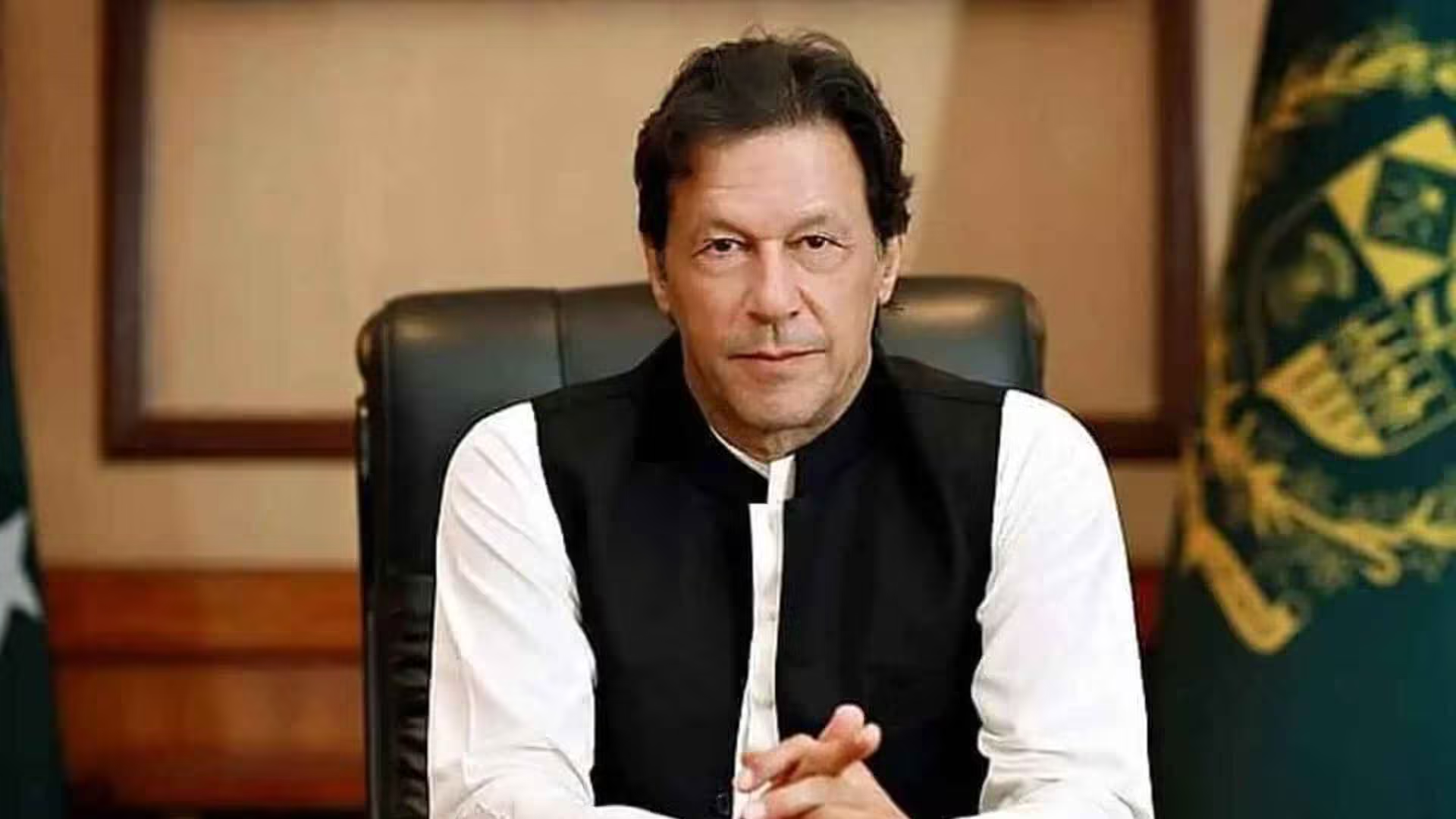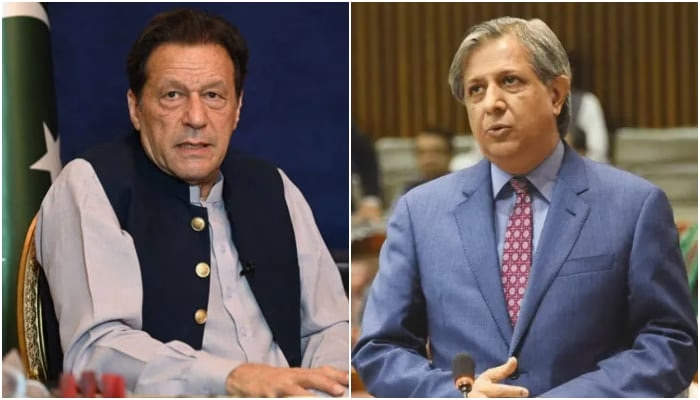
The issue of Imran Khan medical treatment came into the spotlight after the former prime minister and PTI founding chairman was shifted from Adiala Jail to the Pakistan Institute of Medical Sciences (Pims) for an eye procedure. The matter was clarified in the Senate by Law Minister Azam Nazeer Tarar, who said the transfer was made at Imran Khan’s own request and that his health condition is stable.
According to the law minister, the required eye procedure could have been performed at the hospital inside Adiala Jail. However, Imran Khan himself requested to be taken to Pims instead. This clarification aimed to address growing speculation and political criticism surrounding the treatment, especially claims that the move was unusual or lacked transparency.
Why Imran Khan Was Shifted to Pims
While briefing the Senate, Azam Nazeer Tarar explained that Imran Khan expressed concerns about being moved during daytime hours due to potential law and order issues. On his suggestion, authorities arranged the transfer in the evening to avoid any security complications. This detail highlights that the decision-making process involved input from Imran Khan himself rather than being imposed by the government.
The Imran Khan medical treatment involved an eye-related procedure that, according to the government, was minor in nature. The law minister stressed that it was not a surgical operation but an injection-based treatment. He added that the procedure was completed successfully and that there were no complications afterward.
Controversy and PTI’s Reaction
Despite the official explanation, the move sparked controversy within PTI circles. Party leaders claimed that neither Imran Khan’s family nor the party leadership was informed in advance about the treatment. This led to criticism of the authorities and raised questions about transparency in handling the health matters of a high-profile political prisoner.
Khyber Pakhtunkhwa Chief Minister Sohail Afridi further fueled the debate by questioning the quality of treatment at Pims. He claimed that the hospital does not have a retina specialist, casting doubt on whether it was the most appropriate facility for the procedure. These remarks intensified political tensions and kept the Imran Khan medical treatment issue in the public spotlight.
Government’s Clarification on Health and Rights
Responding to the criticism, Azam Nazeer Tarar assured the Senate that Imran Khan’s health was stable and that the medical procedure had been carried out without any issues. He emphasized that there was no negligence involved and that all necessary medical care was provided.
The law minister also rejected allegations that Prime Minister Shehbaz Sharif had issued any directive to restrict Imran Khan’s access to medical treatment. On the contrary, he stated that the prime minister believes in upholding human rights and ensuring that all prisoners receive appropriate healthcare, regardless of their political background.
Reference to Past Political Arrests
To provide context, Tarar referred to a past incident involving Rana Sanaullah. He told the Senate that when Sanaullah was arrested in an earlier period, he was on his way to a hospital in Lahore but was still remanded to judicial custody by a magistrate. According to Tarar, under the instructions of the then prime minister, Rana Sanaullah was not allowed access to a jail doctor at that time.
By mentioning this case, the law minister appeared to contrast past practices with the current handling of Imran Khan medical treatment, suggesting that the present government has taken a more humane and rights-based approach.
Political Sensitivity of Health Issues
Health-related matters involving political leaders in custody often become highly sensitive in Pakistan. Supporters tend to view them through a political lens, while governments are under pressure to demonstrate fairness and transparency. In this case, Imran Khan’s transfer to Pims became more than a medical issue; it evolved into a political debate involving trust, communication, and accountability.
The government’s stance is that the procedure was routine, requested by the patient himself, and handled professionally. PTI, however, continues to question the process and the lack of communication with the party and family.
The controversy surrounding Imran Khan medical treatment reflects the broader political polarization in the country. While the government maintains that the eye procedure was conducted smoothly and with full respect for human rights, PTI leaders remain skeptical and critical. As long as Imran Khan remains in custody, his health and treatment are likely to stay under close public and political scrutiny, making transparency and clear communication essential to avoid further disputes.