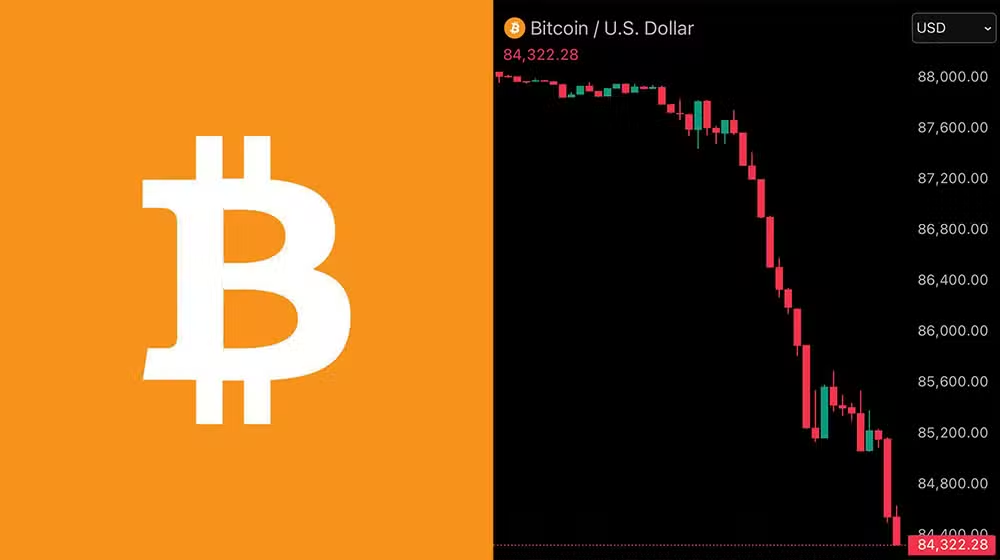
The latest Bitcoin price drop sent shockwaves across global markets on Thursday, as the world’s largest cryptocurrency slid to a 2026 low of $84,300. The sudden decline came amid a sharp reversal in gold prices and a heavy selloff in US technology stocks, highlighting how closely digital assets are now tied to broader financial market sentiment.
What Triggered the Bitcoin Slide?
The Bitcoin price drop accelerated during US morning trading hours. After hovering above $88,000 earlier in the session, Bitcoin lost nearly $3,000 within a matter of hours. By the end of the day, the cryptocurrency was down around 4.5% over the past 24 hours, marking its weakest level since mid-December.
Market analysts point to a combination of factors behind the decline. Chief among them was a sudden shift in investor mood following extreme volatility in traditional safe-haven assets and technology equities. This reinforces the idea that Bitcoin, once viewed as a hedge against market turmoil, is increasingly behaving like a high-risk asset during periods of uncertainty.
Gold’s Sudden Reversal Shakes Confidence
One of the most striking developments was the dramatic movement in gold prices. Gold had surged to a record high of $5,600 per ounce earlier on Thursday, continuing a strong rally that had already seen it break above $5,000 for the first time in history.
However, the optimism was short-lived. Within minutes, gold prices plunged nearly 10%, falling below $5,200. This sharp reversal rattled investors and spilled over into other markets, including cryptocurrencies. The Bitcoin price drop appeared to mirror the loss of confidence sparked by gold’s sudden collapse, as traders rushed to reduce exposure to volatile assets.
Silver followed a similar pattern, sliding from around $121 per ounce to nearly $108. The synchronized selloff across precious metals underscored how quickly sentiment can turn in overheated markets.
Tech Stocks Add Fuel to the Selloff
Equity markets also struggled, adding further pressure on digital assets. Microsoft shares plunged more than 11% after the company released its fourth-quarter earnings report, which disappointed investors. As one of the largest and most influential technology companies, Microsoft’s decline weighed heavily on the broader tech sector.
The Nasdaq fell roughly 1.5%, reflecting widespread weakness in technology stocks. Historically, cryptocurrencies like Bitcoin have shown a strong correlation with tech equities, particularly during risk-off periods. As tech stocks sold off, the Bitcoin price drop intensified, suggesting that many investors now treat Bitcoin as part of the broader growth and technology trade.
Bitcoin’s Changing Market Role
For years, Bitcoin was marketed as “digital gold” — a decentralized store of value that could protect investors during economic or geopolitical stress. However, recent price action challenges that narrative. Instead of benefiting from uncertainty, Bitcoin fell alongside stocks and commodities.
This latest Bitcoin price drop reinforces the view that institutional adoption has changed the asset’s behavior. With hedge funds, asset managers, and large traders increasingly involved, Bitcoin is more exposed to macroeconomic trends such as interest rates, earnings reports, and shifts in risk appetite.
Is This a Temporary Pullback?
Despite the sharp decline, some analysts caution against overreacting. Bitcoin has experienced multiple deep corrections in previous cycles, often followed by strong recoveries. Volatility remains a defining feature of the crypto market.
Supporters argue that the Bitcoin price drop may be a short-term reaction to external market shocks rather than a sign of a long-term trend reversal. Factors such as limited supply, ongoing institutional interest, and the growing role of digital assets in global finance continue to provide underlying support.
That said, the speed of the decline highlights how vulnerable Bitcoin can be when broader markets turn defensive. Investors who entered at higher levels may face increased pressure, particularly if volatility persists.
Broader Market Implications
The events of Thursday underline the interconnectedness of modern financial markets. A sudden move in gold, disappointing earnings from a major tech company, and a shift in investor sentiment combined to trigger losses across asset classes.
The Bitcoin price drop serves as a reminder that cryptocurrencies do not operate in isolation. As they become more integrated into traditional finance, they are increasingly influenced by the same forces that drive stocks, commodities, and currencies.
What Investors Should Watch Next
Looking ahead, market participants will be closely watching developments in US equity markets, precious metals, and monetary policy signals. Any stabilization in tech stocks or renewed confidence in safe-haven assets could help calm crypto markets.
The Bitcoin price drop reflects a broader moment of uncertainty rather than a crypto-specific crisis. Whether this move marks a deeper correction or a brief shakeout will depend largely on how global markets digest recent volatility in the days ahead.