With the holy month approaching, Ramadan bank timings in Pakistan are once again becoming a key concern for customers, businesses, and employees. During Ramadan, daily routines change significantly, and banks adjust their working hours to support fasting staff while ensuring that essential financial services continue smoothly.
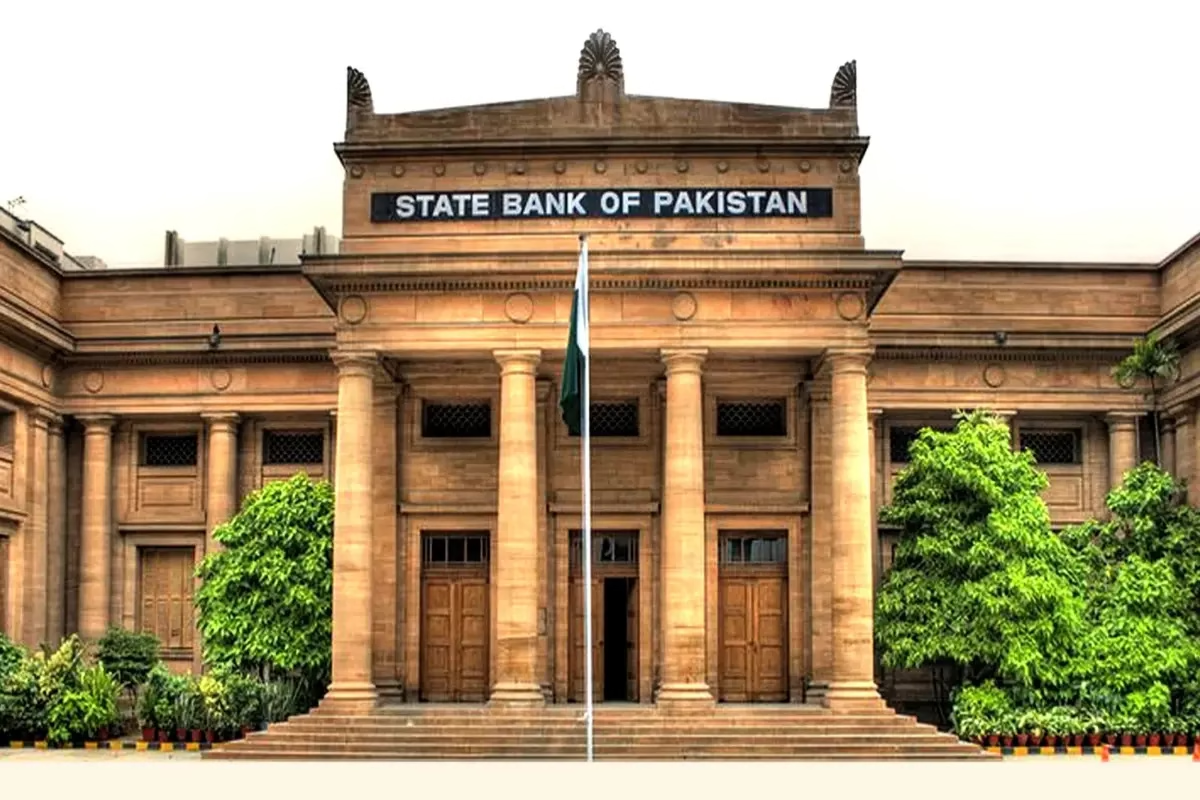
Although the State Bank of Pakistan (SBP) has not yet issued an official notification for 2026, last year’s schedule provides a reliable reference for what is likely to be implemented. Traditionally, the SBP follows a consistent pattern each year, with only minor variations.
Why Bank Timings Change During Ramadan
Ramadan is a month of fasting, prayer, and reflection. To accommodate reduced energy levels and altered daily schedules, the SBP introduces special working hours for banks and financial institutions. These adjusted hours aim to strike a balance between operational efficiency and public convenience.
For customers, knowing Ramadan bank timings in Pakistan helps avoid unnecessary delays, especially for time-sensitive transactions such as cash withdrawals, bill payments, or business dealings.
Expected Banking Hours Based on Last Year’s Schedule
In the previous Ramadan, the SBP directed all banks, Development Finance Institutions (DFIs), and Microfinance Banks (MFBs) to follow a revised timetable.
Monday to Thursday
- Office Hours: 9:00 a.m. to 3:30 p.m.
A prayer break was observed from 2:00 p.m. to 2:30 p.m. - Public Dealing Hours: 9:00 a.m. to 2:00 p.m.
No break during public dealing hours.
Friday
- Office Hours: 8:30 a.m. to 1:00 p.m.
No breaks. - Public Dealing Hours: 8:30 a.m. to 1:00 p.m.
No breaks.
These hours were designed to allow customers to complete most banking needs earlier in the day, reducing crowding and fatigue. If the same pattern is followed, Ramadan bank timings in Pakistan for 2026 are expected to closely resemble this schedule.
Impact on Customers and Businesses
Shorter public dealing hours mean customers need to plan their visits carefully. Those who rely on over-the-counter services, such as cash deposits, cheque clearances, or account-related inquiries, should aim to visit branches earlier in the day.
Businesses, especially small traders and retailers, often adjust their own schedules around Ramadan bank timings in Pakistan. Many ensure that salary disbursements, vendor payments, and cash handling are completed well within banking hours to avoid disruptions.
Bank Holiday on the First Day of Ramadan
One important aspect of Ramadan banking operations is the bank holiday declared on the first day of the holy month. Traditionally, the SBP announces this holiday for Zakat deduction purposes.
On this day:
- All banks, DFIs, and MFBs remain closed to the public.
- No counter services are available for customers.
- Bank employees still report to work for internal operations.
The purpose of this holiday is to ensure the smooth and systematic deduction of Zakat from eligible savings accounts, as required under Pakistani law. Customers should factor this closure into their planning, especially if they have urgent transactions scheduled at the start of Ramadan.
Digital Banking During Ramadan
While branch hours are reduced, digital banking services remain fully operational. ATMs, mobile banking apps, internet banking, and payment services continue to function as usual. Many customers rely more heavily on these channels during Ramadan to avoid branch visits.
As awareness of Ramadan bank timings in Pakistan grows, banks also encourage customers to use digital platforms for routine transactions such as fund transfers, utility bill payments, and balance inquiries.
After Ramadan: Return to Normal Hours
Once Ramadan ends and Eid-ul-Fitr holidays conclude, banks resume their standard operating hours. Office timings and public dealing hours revert to the usual schedule followed throughout the rest of the year.
Customers are advised to stay updated through official SBP notifications or announcements from their respective banks, as exact dates and timings may vary slightly depending on moon sighting and government decisions.
How to Stay Prepared
To avoid inconvenience during Ramadan:
- Plan branch visits early in the day.
- Complete important transactions before the first-day bank holiday.
- Use digital banking services whenever possible.
- Keep an eye on official SBP announcements regarding Ramadan bank timings in Pakistan.
Ramadan brings spiritual focus and lifestyle changes for millions across the country, and the banking sector adapts accordingly. While official timings for 2026 are still awaited, past practices suggest familiar adjustments that customers can prepare for in advance.
By staying informed about Ramadan bank timings in Pakistan, individuals and businesses can manage their finances smoothly throughout the holy month, ensuring convenience, compliance, and peace of mind.