The stamp paper fee increase in Pakistan has sparked widespread concern after the federal government announced a sharp revision in charges for legal, educational, utility, and property-related documents. The new rates significantly raise the cost of routine paperwork that millions of citizens rely on for daily legal and administrative needs.
This stamp paper fee increase in Pakistan affects a broad range of documents, from divorce and domicile certificates to property sale agreements and utility connections. For many households, especially middle- and low-income families, the revised fees add a noticeable financial burden at a time when the cost of living is already high.
Why Stamp Papers Matter in Daily Life
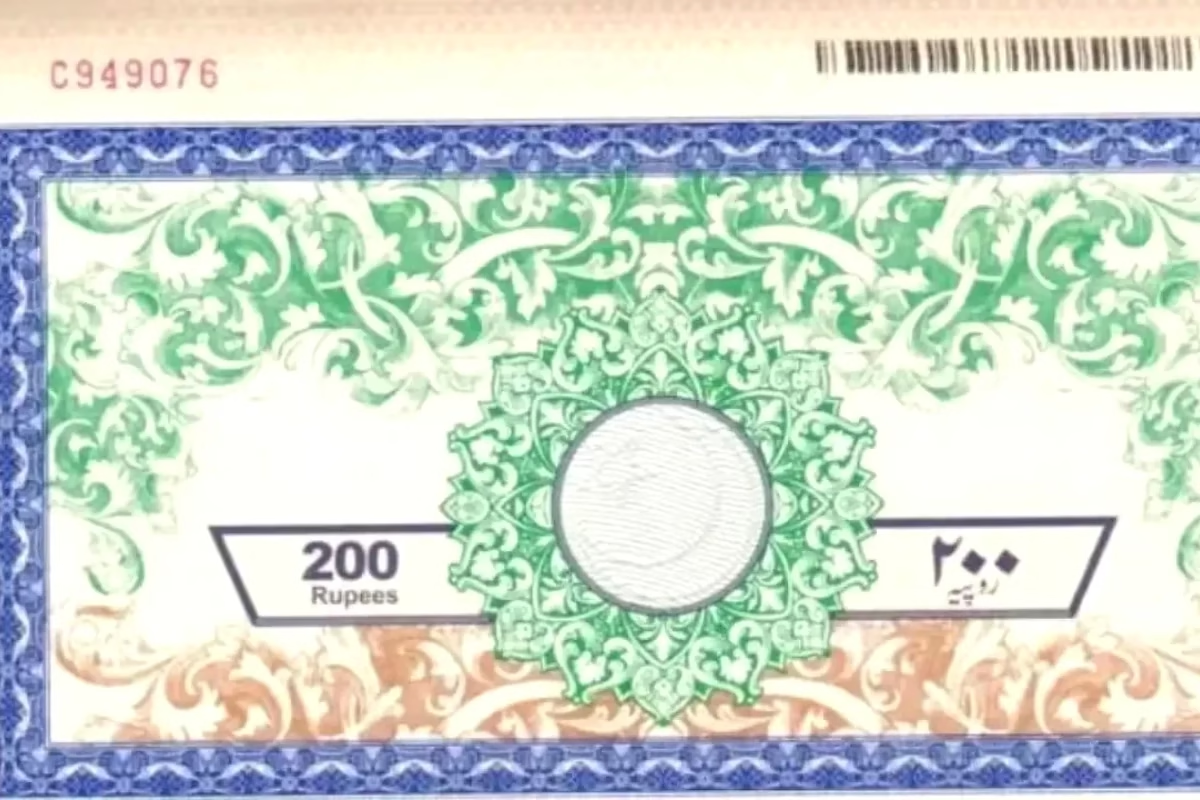
Stamp papers are an essential part of Pakistan’s legal and administrative system. They are required for filing court cases such as divorce or Khula, submitting affidavits, applying for utility connections, and processing official documents like domicile certificates. Property transactions, rental agreements, and business contracts also depend on stamp papers to be legally valid.
Because stamp papers touch so many aspects of everyday life, any change in their pricing has a direct impact on citizens. The recent stamp paper fee increase in Pakistan is therefore being closely watched by lawyers, real estate professionals, students, and ordinary applicants alike.
Key Changes in Stamp Paper Fees
Under the new rules announced by the federal government, several categories have seen steep increases:
The minimum e-stamp paper fee has been raised from Rs100 to Rs300, making even basic affidavits more expensive. Divorce-related stamp papers, which previously cost Rs100, now require Rs1,000, a tenfold increase that has drawn criticism from legal experts and social activists.
For students and job seekers, the cost of domicile certificate stamp papers has increased from Rs100 to Rs500. Utility-related stamp papers for electricity, gas, and water connections have jumped from Rs100 to Rs1,000, affecting households setting up new connections.
Property-related documents have also become significantly costlier. Stamp papers for property sale agreements have risen from Rs1,200 to Rs3,000, while stamp papers for other agreements are now Rs500 instead of Rs100.
Higher Costs for Contracts and Agreements
The stamp paper fee increase in Pakistan is particularly noticeable in contractual agreements. Under the revised structure:
- Agreements up to Rs500,000 now require stamp papers worth Rs3,000.
- Agreements between Rs500,000 and Rs1 million cost Rs6,000.
- Agreements exceeding Rs15 million face an additional increase of Rs20,000.
These changes are expected to raise transaction costs for businesses, real estate deals, and even personal agreements, potentially slowing down documentation processes.
Power of Attorney and New SIM Requirement
The Power of Attorney stamp paper fee has also seen a modest increase, moving from Rs1,500 to Rs1,800. While smaller compared to other hikes, it still adds to the overall cost of legal documentation.
In addition to higher fees, the government has introduced a new requirement: applicants must now have a mobile SIM registered in their own name to obtain any e-stamp paper. Authorities say this step is aimed at improving traceability and reducing misuse, but some citizens worry it could create hurdles for those without registered SIMs, including elderly individuals and people in remote areas.
Public Reaction and Concerns
The stamp paper fee increase in Pakistan has raised concerns across different segments of society. Lawyers argue that higher costs could discourage people from pursuing legal remedies, especially in family and civil cases. Real estate agents warn that increased documentation expenses may further burden property buyers already struggling with high prices and taxes.
Students and job applicants are also affected, as essential documents like domicile certificates are now more expensive. Critics say these increases disproportionately impact those with limited financial resources, making access to basic legal and administrative services harder.
Government’s Perspective
While the government has not issued a detailed justification, such increases are often linked to revenue generation and efforts to digitize and regulate documentation through e-stamping. Officials believe higher fees and stricter requirements can reduce fraud and improve record-keeping. However, many argue that reforms should balance transparency with affordability.
The long-term impact of the stamp paper fee increase in Pakistan will depend on how citizens and institutions adapt. There are calls for concessions for low-income groups and for reviewing fees related to essential documents like divorce and domicile certificates.
For now, citizens are advised to stay informed about the revised rates and requirements before initiating any legal or property-related process. As stamp papers remain unavoidable in many aspects of life, the recent changes highlight the growing cost of compliance in Pakistan’s legal and administrative systems.