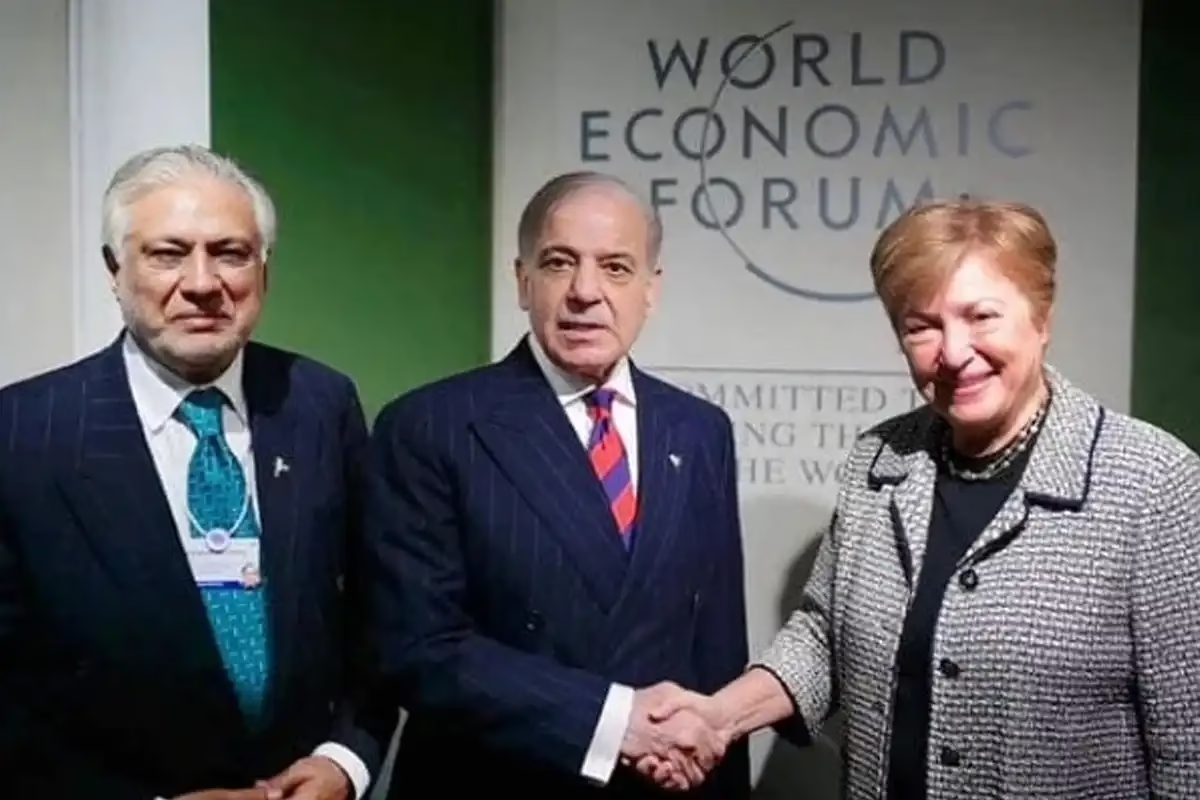
IMF praises Pakistan reforms as the country continues to implement difficult but necessary economic measures under Prime Minister Shehbaz Sharif. Speaking at the World Economic Forum in Davos, International Monetary Fund Managing Director Kristalina Georgieva commended Pakistan’s leadership for taking decisive steps to stabilize the economy and lay the groundwork for long-term growth. Her remarks have drawn global attention, offering a rare moment of optimism for a country that has faced persistent economic challenges in recent years.
Recognition at a Global
At Davos, a platform known for shaping global economic narratives, Ms Georgieva’s comments carried significant weight. She described Pakistan’s reform journey as tough but necessary, emphasizing that such steps are essential for countries seeking sustainable recovery rather than short-term relief. According to her, the reforms underway are not cosmetic; they address deep-rooted structural weaknesses that have historically held the economy back.
When IMF praises Pakistan reforms, it sends a strong signal to international investors, development partners, and financial institutions that the country is moving in the right direction. Georgieva highlighted Prime Minister Shehbaz Sharif’s leadership style, noting that once he commits to a decision, he ensures it is implemented. This consistency, she suggested, is critical in reform-driven economic programs.
Discipline and Fiscal Responsibility
One of the key areas highlighted by the IMF chief was fiscal discipline. Pakistan has long struggled with budget deficits, weak revenue collection, and mounting debt. Georgieva pointed out that, for the first time in years, there are visible signs of budgetary control and disciplined fiscal management.
She noted that the government is implementing reforms in an organized manner, rather than through ad-hoc decisions. This includes efforts to broaden the tax base, improve transparency, and manage expenditures more responsibly. Such measures are often unpopular in the short term, but they are essential to restoring economic credibility.
The fact that IMF praises Pakistan reforms specifically in the context of fiscal discipline suggests growing confidence that the country is serious about breaking old patterns of unsustainable spending and reliance on emergency bailouts.
Focus on the Common Citizen
Another important aspect of Georgieva’s remarks was her emphasis on protecting ordinary citizens during the reform process. Economic adjustments can be painful, particularly in countries where inflation and unemployment already strain household incomes. The IMF chief acknowledged that maintaining public trust is crucial for the success of reforms.
She noted that Pakistan’s government is making efforts to balance fiscal tightening with social protection. Targeted subsidies, social safety nets, and programs aimed at supporting vulnerable segments of society are essential to ensure that reforms do not disproportionately burden the poor. This people-centered approach, she argued, helps sustain political and social support for long-term economic change.
Cooperation with the IMF
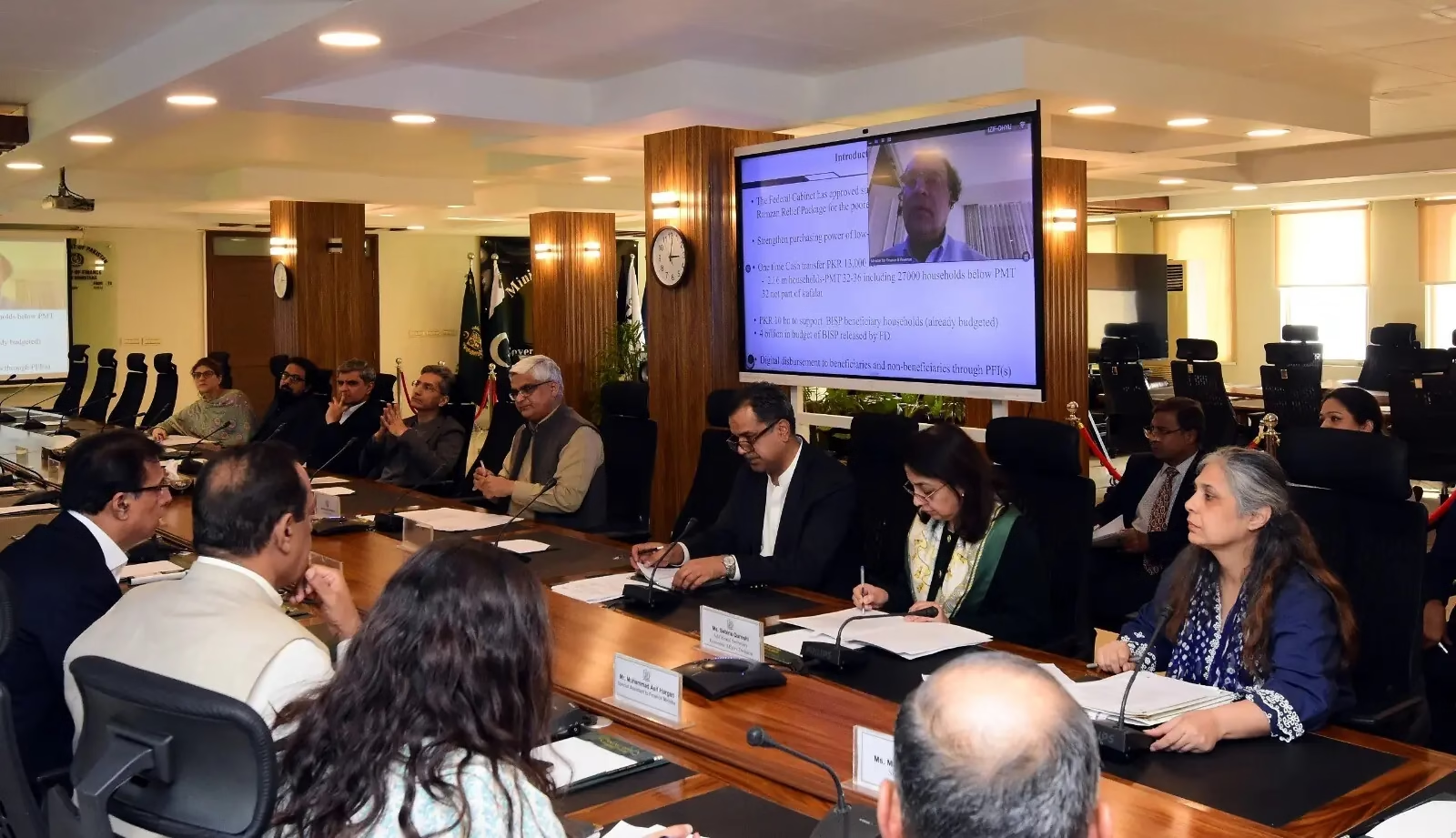
Pakistan’s ongoing engagement with the IMF remains central to its stabilization strategy. Under the current IMF-supported program, the country is working to ease balance-of-payment pressures, control inflation, and strengthen public finances. These goals are being pursued through structural reforms such as reducing losses in state-owned enterprises, improving energy sector governance, and enhancing tax administration.
While these steps are challenging, IMF praises Pakistan reforms because they demonstrate ownership and commitment rather than mere compliance. Analysts often stress that IMF programs succeed only when governments fully embrace reforms instead of viewing them as externally imposed conditions.
Reassuring the Global Community
The timing of Georgieva’s comments is also significant. Pakistan is actively seeking to rebuild confidence among global investors and development partners. The endorsement from the IMF chief at Davos helps counter negative perceptions and highlights progress that might otherwise be overlooked.
Such recognition can strengthen Pakistan’s position in future negotiations for financial support or investment. It also reassures markets that the country is taking credible steps to avoid recurring crises. However, experts caution that praise alone is not enough; sustained implementation and political stability remain crucial.
The Road to Long-Term Stability
Georgieva concluded her remarks by emphasizing patience and perseverance. Economic transformation, she said, does not happen overnight. It requires consistent policies, strong institutions, and unwavering leadership commitment over time.
When IMF praises Pakistan reforms, it reflects confidence in the direction of policy rather than a declaration of victory. Pakistan still faces challenges, including external debt pressures, climate-related risks, and the need for faster job creation. Yet, the acknowledgment from the IMF suggests that the foundation for improvement is being laid.
The IMF Managing Director’s praise at the World Economic Forum marks an important moment for Pakistan’s economic narrative. It underscores that difficult reforms, when pursued with discipline and a focus on people, can begin to restore credibility and hope. As IMF praises Pakistan reforms on a global stage, the real test will be maintaining momentum, ensuring transparency, and translating policy changes into tangible improvements in the lives of citizens. If the current course is sustained, Pakistan may finally move from crisis management toward lasting economic stability.