Iran US tensions have sharply escalated after Tehran issued a stern warning to Washington, declaring that any military strike would be treated as an “all-out war.” The statement comes amid reports that the United States is preparing to deploy a major naval force, including an aircraft carrier strike group, to the Middle East, raising fresh fears of a direct confrontation between the two long-time rivals.
A senior Iranian official, speaking anonymously in Tehran, said the country has been placed on full military alert and is preparing for what he described as a worst-case scenario. While expressing hope that the American military build-up is not intended to spark a conflict, the official made it clear that Iran will not hesitate to respond forcefully if attacked.
Iran Signals Readiness for Conflict
According to the official, Iran’s armed forces are fully prepared to counter any form of aggression. He stressed that even a limited strike would no longer be treated as a contained incident. Instead, Iran would view it as the beginning of a broader war.
This time, any kind of attack whether small or large will be treated as total war, he warned, adding that Iran would respond with maximum force. Such remarks underline how volatile Iran US tensions have become, with both sides appearing unwilling to back down.
Iranian authorities say they are closely monitoring US military movements and see them as a direct threat to national security. The heightened alert status reflects deep concern in Tehran that miscalculations or provocations could quickly spiral into open conflict.
Trump’s ‘Armada’ Statement Raises Alarm
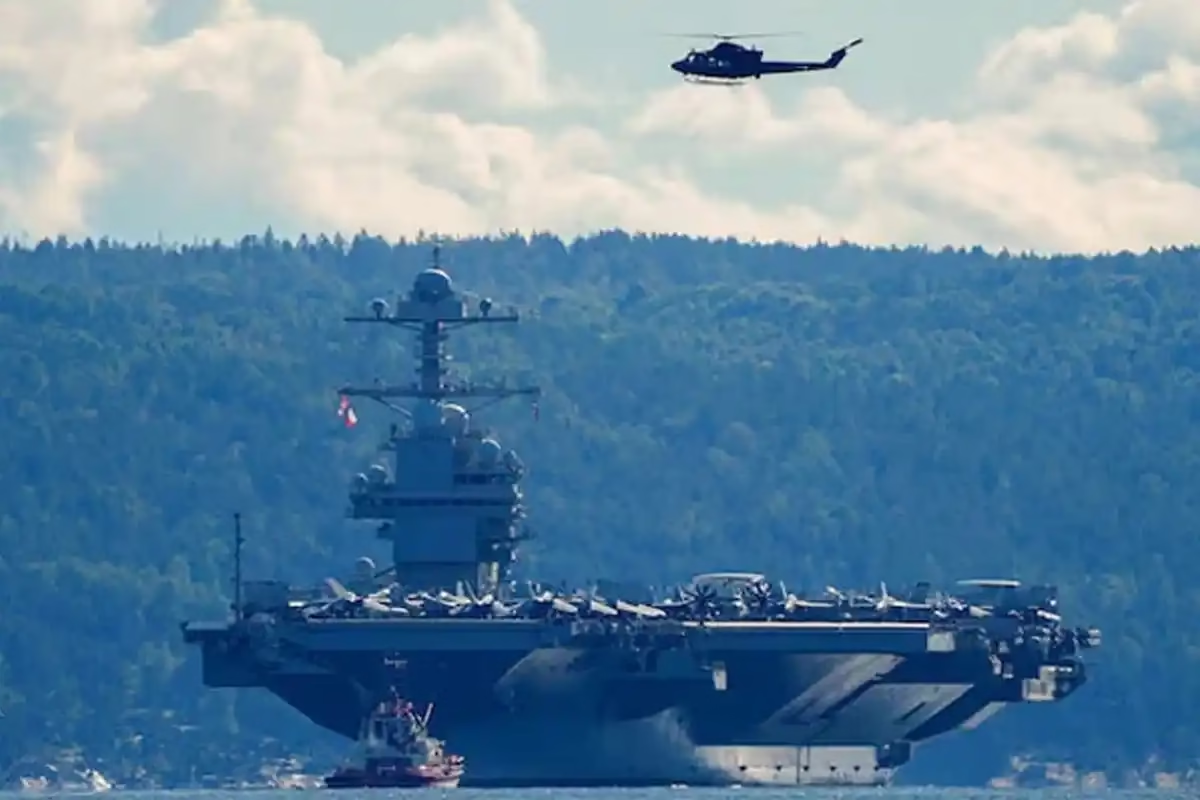
US President Donald Trump added to the uncertainty by confirming that an American “armada” is moving toward the region. Speaking to reporters, Trump described the deployment as a warning rather than a prelude to war, saying he hoped the show of force would be enough to deter Iran.
At the same time, Trump cautioned Iran against reviving its nuclear programme and against using violence to suppress domestic protests. These remarks were perceived in Tehran as further pressure tactics, reinforcing Iranian suspicions about Washington’s intentions and fueling Iran US tensions.
Sovereignty as a Red Line
Iran has repeatedly emphasized that its sovereignty and territorial integrity are non-negotiable. The senior official reiterated that any violation of Iran’s borders — whether by air, sea, or land would trigger immediate retaliation.
If the United States crosses our red lines, we will respond, he said, without elaborating on the nature of Iran’s potential response. Analysts believe this ambiguity is deliberate, designed to keep Washington guessing and deter any aggressive move.
Iranian officials argue that years of sanctions, military threats, and regional pressure have left the country with little choice but to rely on its full range of military capabilities. From Tehran’s perspective, a strong stance is seen as essential for deterrence amid rising Iran US tensions.
A Region on Edge
The Middle East has witnessed repeated US military deployments during periods of heightened friction, often framed as defensive measures to protect allies and shipping lanes. However, these deployments have frequently been met with alarm in Iran, which views them as encirclement and intimidation.
Tensions have remained particularly high since US strikes on Iranian nuclear facilities last year. Those attacks marked a dangerous turning point, increasing the risk of direct military confrontation and eroding what little trust remained between the two sides.
Regional analysts warn that another clash could have devastating consequences beyond Iran and the United States. A wider conflict could disrupt energy supplies, destabilize neighboring countries, and draw in regional and global powers, turning Iran US tensions into a broader international crisis.
Global Implications of a Possible Clash
Any military conflict between Iran and the US would likely have global repercussions. The Middle East remains central to global energy markets, and even limited hostilities could push oil prices sharply higher. Shipping routes such as the Strait of Hormuz, through which a significant portion of the world’s oil passes, could become flashpoints.
Beyond economics, a conflict could also reshape regional alliances and security dynamics. Countries already struggling with internal instability could be pushed further into chaos, while diplomatic efforts to manage nuclear proliferation and regional security would suffer a major setback.
For now, both Tehran and Washington appear locked in a dangerous standoff. Iran insists it does not seek war but will not tolerate threats or violations of its sovereignty. The US, meanwhile, maintains that its military posture is defensive and aimed at deterrence.
The challenge lies in preventing miscalculation. History shows that Iran US tensions have often escalated rapidly due to misunderstandings, provocative actions, or political pressure on leaders to appear tough. With military assets moving and rhetoric hardening, the margin for error is narrowing.
Whether diplomacy can still defuse the situation remains uncertain. What is clear is that the current escalation has brought Iran and the United States to one of their most precarious moments in years, with the potential consequences extending far beyond the region.