Asia LNG spot prices climbed for a second consecutive week, reaching a nine-week high as colder winter temperatures across the northern hemisphere boosted heating demand. The rally reflects short-term weather-driven pressure on the market, even as broader fundamentals suggest that supply remains relatively comfortable.
According to industry sources, the average price for liquefied natural gas (LNG) cargoes for March delivery into Northeast Asia rose to $11.35 per million British thermal units (mmBtu). This marked a sharp increase of around 12% from the previous week’s $10.10/mmBtu and represented the highest level since late November. The jump highlights how sensitive Asia LNG spot prices are to sudden changes in weather patterns.
Cold Weather Drives Asian Demand
Weather has been the dominant factor behind the recent rise in Asia LNG spot prices. Several Asian countries are experiencing colder-than-usual conditions, leading to higher heating demand from residential and industrial users. Market analysts note that this seasonal demand has tightened prompt supply availability in the region.
However, despite the cold snap, Asian prices have not surpassed European levels. Europe has also been grappling with colder conditions, and the premium there has remained strong enough to attract cargoes away from Asia. This divergence has prevented Asia LNG spot prices from climbing even higher.
Cargoes Diverted to Europe
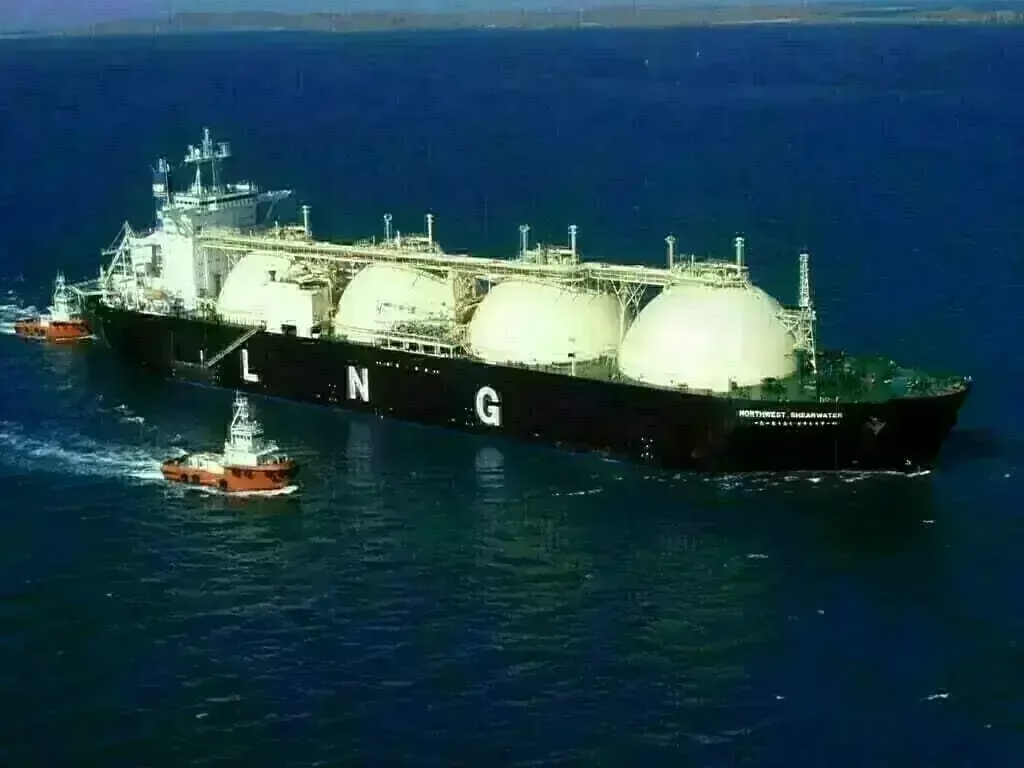
One notable development has been the diversion of LNG vessels. Shiptracking data showed that at least two tankers originally heading east toward Asia changed course and sailed toward Europe and Türkiye. These diversions underline how global LNG flows respond quickly to price signals.
Europe’s continued premium over Asia has played a key role. When European benchmarks trade above Asian ones, sellers naturally redirect cargoes to maximize returns. As a result, even as Asia LNG spot prices rise, they face a ceiling as long as Europe remains more lucrative.
Market Absorbing Volatility
Despite the recent spike, some analysts believe the market is absorbing volatility relatively well. Outside of the short-term cold-driven rally, underlying fundamentals remain softer. Global LNG supply has been ample, and inventories in several Asian countries are still comfortable.
China, in particular, has been a balancing force. Chinese buyers have been reselling cargoes into the market, helping to meet marginal heating demand without creating a severe supply squeeze. This behavior has limited the upside for Asia LNG spot prices, unless cold conditions persist for an extended period.
Europe’s Influence on Global LNG Prices
European LNG prices continue to shape global dynamics. Benchmarks in Northwest Europe for March deliveries have been assessed in the range of $11.6 to $12.4/mmBtu, depending on the pricing agency. These levels are either at par with or above Asian prices, reinforcing Europe’s pull on global supply.
Concerns about potential disruptions to U.S. LNG exports have also added a layer of uncertainty. Extremely cold weather sweeping across parts of the southern United States, where much of the LNG export infrastructure is located, has raised fears of short-term production or loading issues. Such risks tend to support prices globally, including Asia LNG spot prices, even if the impact remains speculative.
Financial Positioning Adds Momentum
Beyond physical supply and demand, financial positioning has amplified recent price moves. In Europe, hedge funds executed a major shift by moving from net short to net long positions in gas markets. This repositioning triggered a short squeeze that pushed prices sharply higher.
Commercial players, however, have taken a more cautious approach. Many have used the rally as an opportunity to lock in profits by selling into strength and hedging future output. This selling pressure can eventually cap price increases and reduce volatility, which may also stabilize Asia LNG spot prices in the near term.
LNG Freight Rates Decline
Interestingly, while LNG prices have risen, freight rates have moved in the opposite direction. Atlantic basin LNG shipping rates fell to around $16,250 per day, while Pacific rates dropped to about $34,250 per day. Lower freight costs can partially offset higher commodity prices, influencing arbitrage decisions.
The narrowing spread between Asian and European prices has also reduced the attractiveness of shipping U.S. LNG to Asia via longer routes. This has further strengthened Europe’s position as the preferred destination for prompt cargoes, indirectly shaping Asia LNG spot prices.
Weather Remains Key
The trajectory of Asia LNG spot prices will largely depend on how long cold weather persists. If low temperatures extend deeper into February, prices could remain supported or even rise further. On the other hand, a return to milder conditions would likely ease heating demand and expose the underlying softness in market fundamentals.
With ample supply, active cargo trading, and flexible shipping routes, the LNG market remains highly responsive. For now, winter weather has the upper hand, pushing Asia LNG spot prices to multi-week highs, but sustainability of this rally remains uncertain as seasonal risks gradually fade.