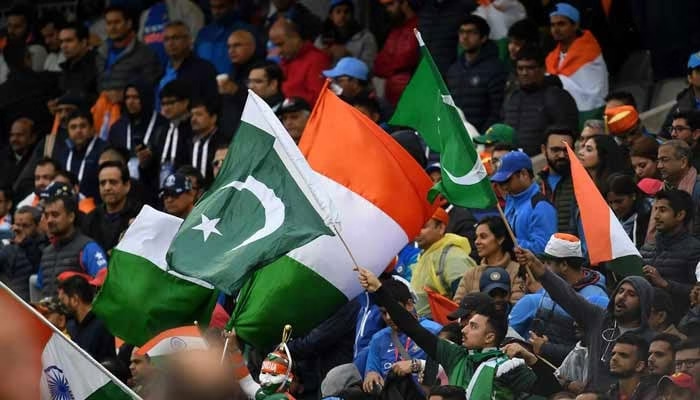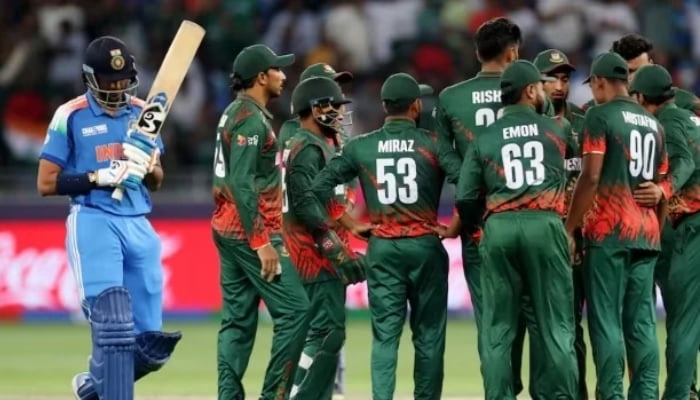
The ongoing Bangladesh T20 World Cup dispute has added fresh tension to the build-up of the upcoming ICC men’s tournament, with the Bangladesh Cricket Board (BCB) firmly refusing to tour India despite the ICC rejecting its request to relocate matches. The issue has now moved beyond cricket logistics into the sensitive territory of player safety, government consultation, and the integrity of global cricket scheduling.
Why Bangladesh Is Reluctant to Tour India
At the heart of the Bangladesh T20 World Cup dispute is the BCB’s concern over the safety and security of its players. Bangladesh is scheduled to play its group-stage matches in India, which is co-hosting the tournament alongside Sri Lanka. However, BCB officials have repeatedly stated that they do not consider India a safe environment for their team at this time.
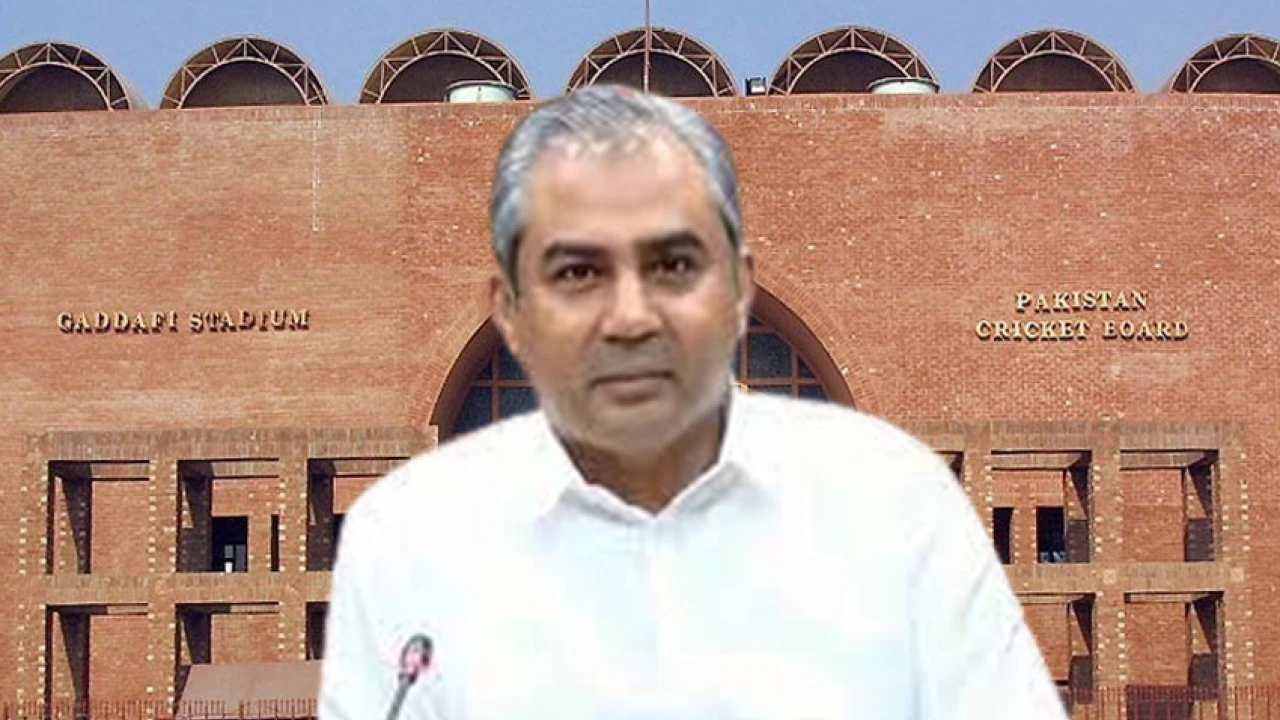
BCB president Aminul Islam confirmed that the board has taken a clear and consistent stance. He emphasised that the decision is not driven by cricketing factors but by broader security considerations. According to him, such decisions cannot be taken lightly, as governments must consider not only players but officials, staff, media personnel, and fans as well.
ICC’s Rejection and Rationale
The ICC formally rejected Bangladesh’s request to shift its matches to Sri Lanka after a board meeting. In its statement, the governing body said it had reviewed multiple security assessments, including independent evaluations, all of which concluded there was no credible threat to Bangladesh players, officials, media, or supporters at any of the Indian venues.
From the ICC’s perspective, accommodating Bangladesh at this late stage would create logistical chaos and could undermine the credibility of future tournaments. The ICC also warned that changing venues without concrete security threats could set a dangerous precedent, encouraging other teams to seek last-minute changes based on political or subjective concerns rather than verified risks.
This firm response has intensified the Bangladesh T20 World Cup dispute, placing the BCB in a difficult position between international obligations and domestic pressures.
BCB Seeks Time and Government Input
Despite the ICC’s decision, Aminul Islam revealed that he has been given 24 to 48 hours to consult the Bangladesh government one last time. He made it clear that the BCB does not want to pressure state authorities but must respect their input before reaching a final decision.
Islam acknowledged that both the players and the government want Bangladesh to participate in the World Cup. However, he reiterated that the board’s primary responsibility is to ensure the safety and well-being of everyone involved.
His remark about hoping for a miracle from the ICC reflects the board’s desire for flexibility, even though the chances appear slim given the tournament’s proximity.
Impact on the Tournament Schedule
As things stand, Bangladesh is placed in Group C and is scheduled to play its first three matches in Kolkata against West Indies, Italy, and England—before facing Nepal in Mumbai. These fixtures are already locked into the tournament calendar, and any change would affect broadcasters, ticket holders, sponsors, and other teams.
This is why the ICC has stressed that altering the schedule is “not feasible” so close to the start of the event. The Bangladesh T20 World Cup dispute therefore poses a significant challenge: balancing one member board’s concerns with the smooth operation of a global tournament involving multiple stakeholders.
Broader Implications for International Cricket
The situation highlights a recurring issue in international cricket—how to manage security perceptions versus security assessments. While governing bodies rely on expert evaluations, national boards often face public pressure at home, especially when relations between countries are sensitive.
If Bangladesh were to withdraw or refuse to play in India, it could open the door to fines, sanctions, or points deductions, depending on ICC regulations. It would also raise uncomfortable questions about the role of politics and diplomacy in sport, particularly in tournaments meant to unite teams under a neutral, competitive framework.
The next 48 hours will be crucial. The BCB’s consultation with the government will likely determine whether Bangladesh accepts the ICC’s ruling or pushes back further. While a compromise seems unlikely, the ICC will be keen to avoid a situation where a full member nation is absent from a major global event.
For now, the Bangladesh T20 World Cup dispute remains unresolved, casting a shadow over what should be a celebration of the shortest and most exciting format of the game.
This standoff between the BCB and the ICC underscores how modern cricket is influenced by more than just runs, wickets, and tactics. Security, governance, and international relations now play an equally important role. Whether Bangladesh ultimately tours India or not, the outcome of this dispute may shape how similar situations are handled in future ICC events—and how much flexibility member boards can realistically expect when global tournaments are already in motion.