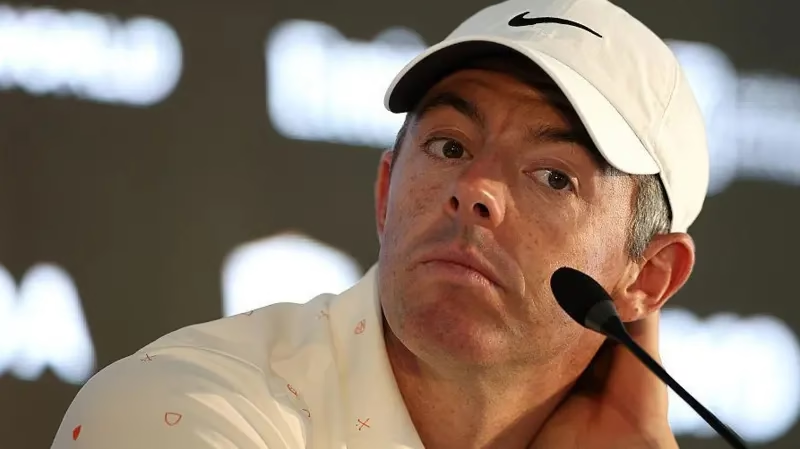
Rory McIlroy has once again placed himself at the center of golf’s biggest ethical and competitive debate, this time by calling on Tyrrell Hatton and Jon Rahm to prove their loyalty to Team Europe. The Rory McIlroy Ryder Cup stance has reignited discussion around commitment, money, and what it truly means to represent Europe in golf’s most iconic team event.
McIlroy’s Message Is Clear
Speaking at the Hero Dubai Desert Classic, McIlroy did not mince his words. He suggested that Hatton and Rahm could end all uncertainty about their Ryder Cup eligibility by paying the fines imposed on them by the DP World Tour. Both players were sanctioned for competing in LIV Golf events that clashed with DP World Tour tournaments while still holding membership of the European tour.
For McIlroy, the issue goes beyond paperwork and appeals. His comments underline a belief that representing Europe in the Ryder Cup should come with clear sacrifices and responsibilities. The Rory McIlroy Ryder Cup stance reflects his long-held view that loyalty to the tour system matters just as much as performance on the course.
Background to the Fines and Appeals
Hatton and Rahm appealed their multi-million-pound fines in 2024, a move that temporarily allowed them to play enough DP World Tour events to remain eligible for the Ryder Cup. This meant both players could feature in Europe’s victory over the United States in New York last year.
However, the appeals have not yet been resolved. As a result, questions about their long-term eligibility are expected to resurface ahead of the 2027 Ryder Cup at Adare Manor in Ireland. McIlroy’s comments highlight growing frustration within European golf about unresolved disputes lingering over team selection.
Paying to Play vs Being Paid to Play
One of the most striking elements of the Rory McIlroy Ryder Cup stance is his comparison with the American team. In 2025, US players were paid $500,000 each to compete, marking the first time in the Ryder Cup’s long history that players received direct payment. While some Americans pledged to donate their earnings to charity, the decision sparked controversy.
McIlroy pointed out that European players had strongly criticized the idea of being paid to play. He reminded reporters that Europe’s stance has always been about pride and honor, even suggesting players would pay for the privilege of representing their continent. Against that backdrop, he argued that Hatton and Rahm now have an opportunity to demonstrate the same principles by settling their fines.
Loyalty in a Divided Golf World
The split caused by LIV Golf has reshaped professional golf, pulling elite players in different directions. While several top names accepted lucrative LIV contracts, McIlroy chose to remain loyal to both the DP World Tour and the PGA Tour. This decision has given extra weight to the Rory McIlroy Ryder Cup stance, as he speaks not just as a star player but as someone who stayed within the traditional system despite financial temptations.
From his perspective, tours like the DP World Tour have the right to enforce their rules. Players sign agreements each season acknowledging these regulations. McIlroy has repeatedly emphasized that those who chose LIV knew the consequences and should accept them.
What This Means for Team Europe
The Ryder Cup thrives on unity, trust, and shared values. Uncertainty over player eligibility can disrupt preparation and create unnecessary tension. McIlroy’s comments suggest that clarity is essential, especially as Europe looks ahead to defending the trophy on home soil in 2027.
The Rory McIlroy Ryder Cup stance is not about singling out individuals, but about setting a standard. If exceptions are made or fines endlessly delayed, it risks undermining the credibility of the tour and the spirit of the Ryder Cup itself.
Pressure on Hatton and Rahm
Hatton and Rahm now find themselves under renewed scrutiny. Both are world-class players and key figures for Europe, but the unresolved fines hang over their Ryder Cup futures. Paying the fines would remove doubt, but it would also mean accepting the authority of the DP World Tour something LIV-aligned players have often resisted.
Their decision, whatever it may be, will likely shape future relations between tours and set a precedent for other players caught between competing loyalties.
The Rory McIlroy Ryder Cup stance highlights a deeper issue than fines or eligibility. It speaks to the values that define European golf: commitment, respect for tradition, and collective pride. As the next Ryder Cup cycle begins, McIlroy’s words serve as both a challenge and a reminder that wearing Europe’s colors is about more than talent it’s about standing by the principles that make the Ryder Cup special.