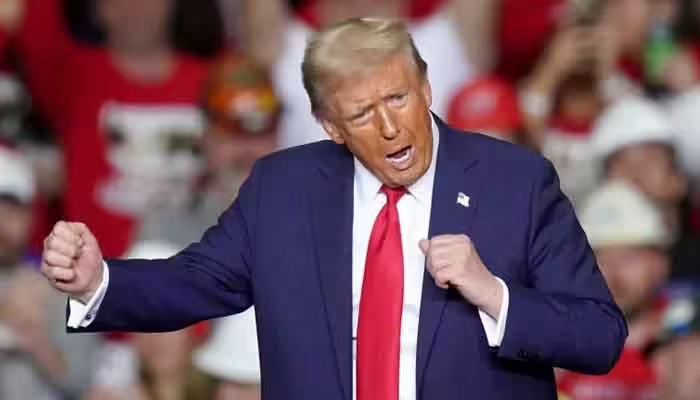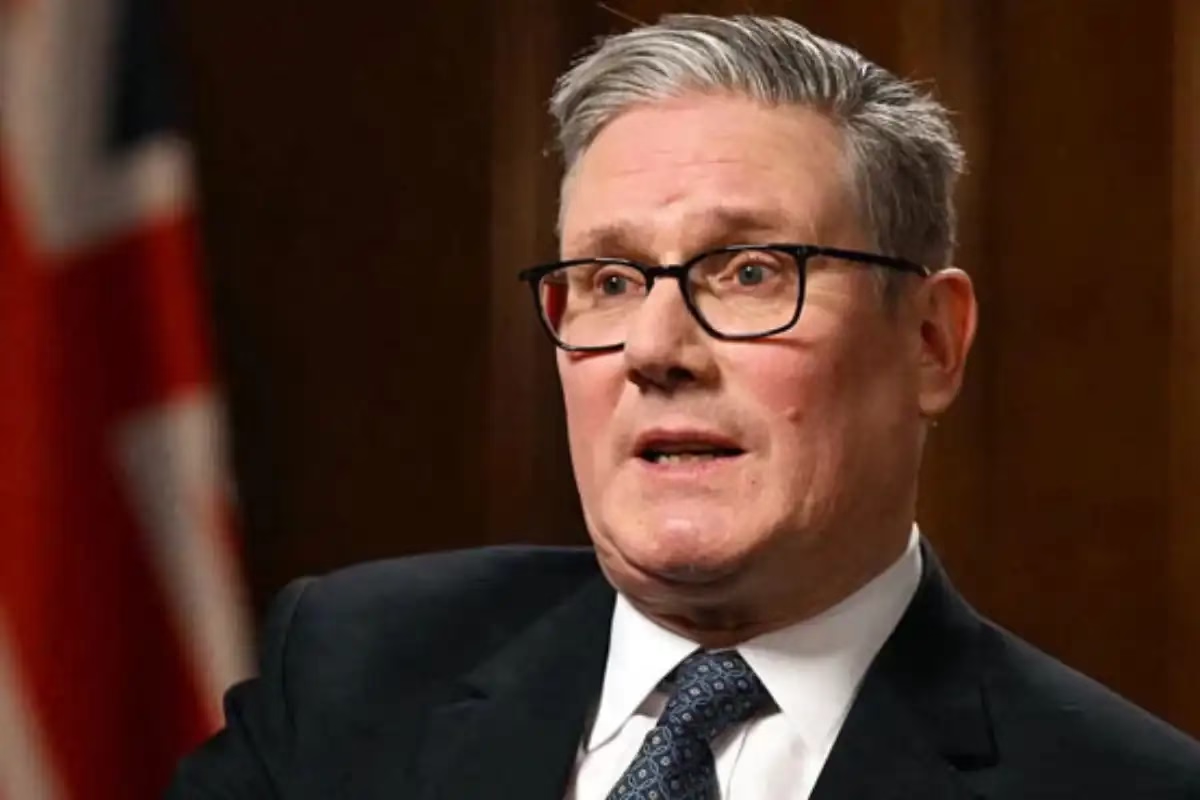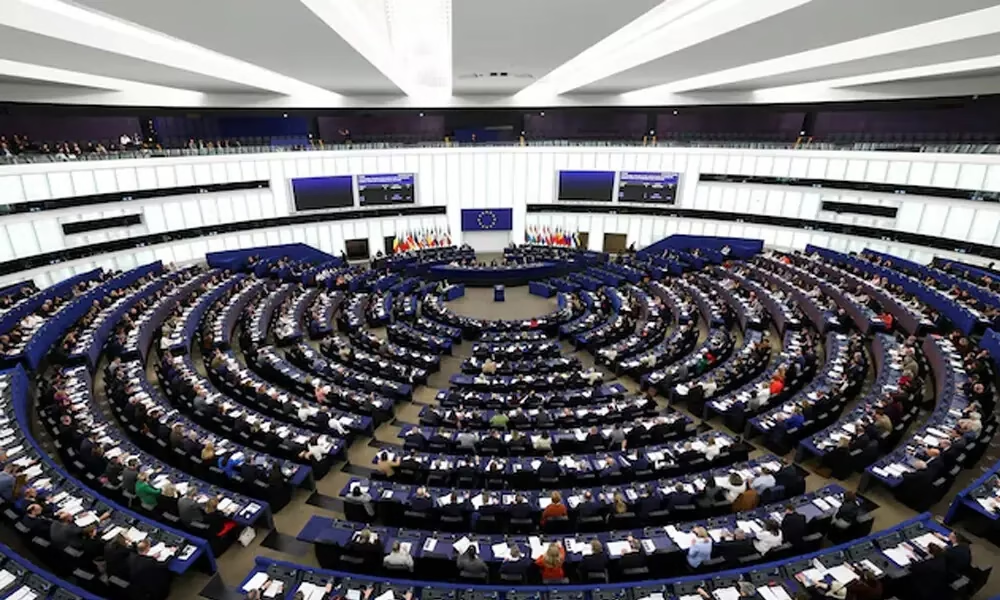
The EU–US trade deal suspension has emerged as a new flashpoint in already strained transatlantic relations, after the European Parliament decided to halt its work on the proposed agreement with the United States. The move comes in direct response to U.S. President Donald Trump’s demands to acquire Greenland and his threats of imposing tariffs on European allies who oppose the plan. What was once a fragile compromise has now turned into a political standoff with significant economic consequences.
From the very beginning, the EU–US trade deal suspension reflects growing frustration in Brussels over Washington’s aggressive posture. Lawmakers argue that it is impossible to advance trade cooperation while the United States openly pressures Europe with tariff threats and controversial geopolitical demands.
Background of the Trade Deal
The trade agreement under discussion was finalised in principle during talks in Turnberry, Scotland, at the end of July. It aimed to reduce trade barriers by removing many European Union import duties on U.S. goods. A key element of the deal also included extending zero-duty access for U.S. lobster exports, an arrangement first agreed in 2020 during Trump’s previous term.
To come into force, the proposals required approval from both the European Parliament and EU member states. Until recently, despite internal criticism, lawmakers appeared prepared to move forward, seeing the agreement as a way to stabilise economic ties with the United States.
Why Lawmakers Pushed Back
The EU–US trade deal suspension did not happen overnight. Many members of the European Parliament had long complained that the agreement was fundamentally unbalanced. Under the proposed terms, the EU would cut most of its import duties, while the U.S. would maintain a broad tariff rate of around 15% on European goods.
Despite these concerns, European lawmakers were willing to accept the deal with safeguards. These included an 18-month sunset clause and emergency measures to respond if U.S. imports surged and disrupted EU markets. However, Trump’s renewed tariff threats and his stance on Greenland changed the political mood entirely.
Greenland and Tariff Threats as a Turning Point
The immediate trigger for the EU–US trade deal suspension was President Trump’s warning that European countries opposing his Greenland ambitions could face new tariffs. European lawmakers viewed this as a breach of trust and a violation of the spirit of the Turnberry agreement.
Bernd Lange, chair of the European Parliament’s trade committee, stated clearly that the new threats had effectively broken the deal. As a result, the committee postponed its scheduled votes that were set for January 26–27, placing the entire agreement on hold until further notice.
Risks of Freezing the Deal
While the EU–US trade deal suspension sends a strong political message, it also carries serious risks. Freezing the agreement could provoke retaliation from Washington, potentially leading to higher U.S. tariffs on European exports. The Trump administration has already signalled that it will not offer concessions — such as reducing tariffs on steel or spirits unless the deal is approved.
This creates a dilemma for the European Union. Moving forward could be seen as giving in to pressure, while holding back risks escalating a trade conflict that could hurt both economies.
Impact on Transatlantic Relations
The EU–US trade deal suspension highlights a deeper problem in transatlantic relations: the erosion of mutual trust. Trade agreements rely not just on economic logic but also on political goodwill. When one side uses tariffs as leverage in unrelated geopolitical disputes, it undermines the foundation of cooperation.
For Europe, the decision to pause reflects a desire to defend its sovereignty and unity. For the United States, the delay may be interpreted as resistance that justifies tougher trade measures.
At this stage, the future of the agreement remains uncertain. The European Parliament has not rejected the deal outright, but it has made clear that progress is impossible under current conditions. Any revival of talks will likely depend on a shift in U.S. rhetoric and a willingness to respect the terms already agreed.
If tensions ease, lawmakers may revisit the agreement with stricter safeguards. If not, the EU–US trade deal suspension could become permanent, marking another chapter in a broader trend toward protectionism and economic fragmentation.
The EU–US trade deal suspension is more than a procedural delay it is a political statement. By putting the agreement on hold, the European Parliament has drawn a line against trade being used as a tuool of coercion. Whether this stance leads to renewed negotiations or a deeper trade rift will depend on how both sides choose to move forward.
The suspension serves as a reminder that balanced trade agreements require respect, stability, and trust elements that are currently in short supply across the Atlantic.