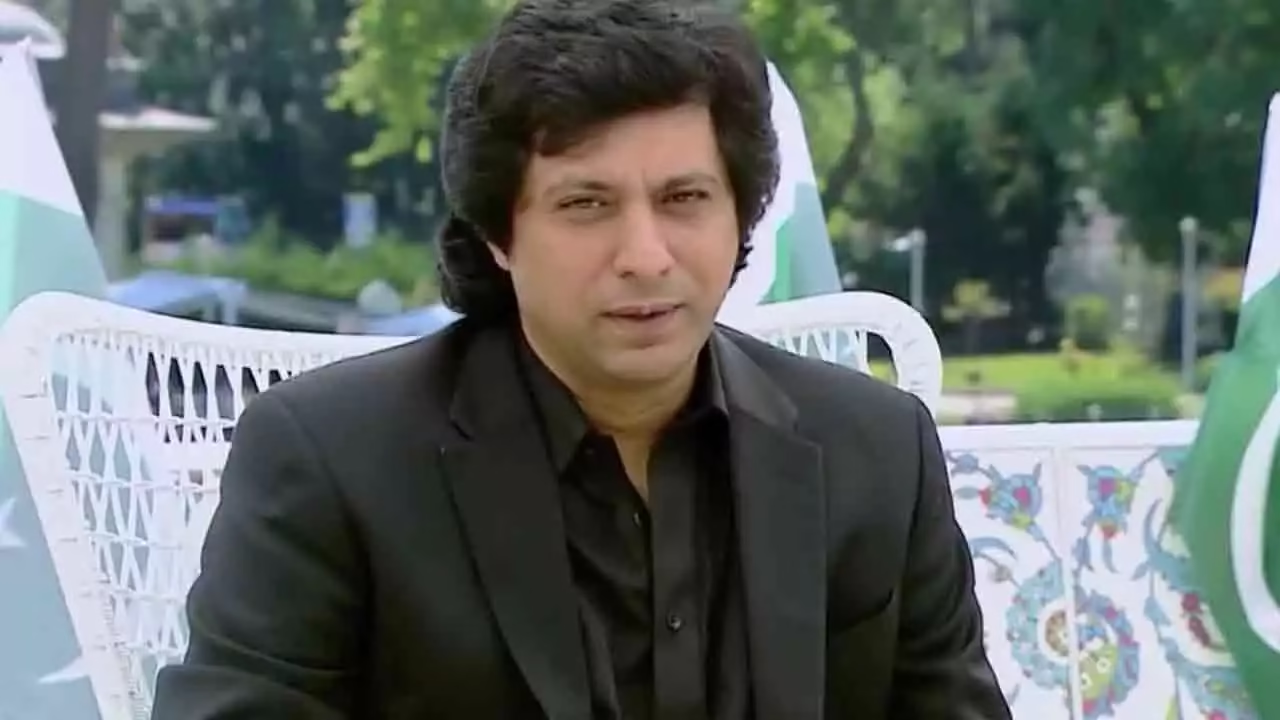
The Jawad Ahmed podcast controversy has become a major talking point on social media after a heated exchange between the singer-turned-activist and a female listener went viral. The incident, which occurred during a live podcast session, triggered widespread criticism and reopened discussions about public discourse, respect, and the responsibility of public figures when addressing sensitive social issues.
What Happened During the Podcast?
The Jawad Ahmed podcast controversy began when a female listener allegedly criticized Jawad Ahmed during the show. In response, Jawad reacted strongly, telling her that she should examine her own behavior before criticizing others. His tone and choice of words immediately caught the attention of viewers, many of whom felt the exchange crossed the line from debate into disrespect.
Jawad Ahmed went on to defend his stance by claiming that activists like him had struggled to secure women’s rights in Pakistan. According to him, women today enjoy greater freedom of choice because of such efforts. While his point was intended to highlight social progress, the way it was delivered became the core issue of criticism.
Remarks That Fueled the Backlash
What intensified the Jawad Ahmed podcast controversy were the examples he used to explain his argument. He referenced the dress choices of public figures and their families, including Imran Khan’s wife wearing a burqa and his sisters covering their heads. He then made a remark questioning how an actress like Mahira Khan could dance if she wore a burqa.
This comparison was widely seen as inappropriate and unnecessary. Many social media users felt that Jawad Ahmed unfairly dragged unrelated personalities into the discussion and reduced a complex debate about women’s rights to stereotypes about clothing and profession.
Social Media Reaction
Soon after the clip went viral, the Jawad Ahmed podcast controversy dominated platforms like X (formerly Twitter), Instagram, and Facebook. Users criticized not just the content of his remarks but also his manner of speaking to a woman in a public forum.
A large number of viewers argued that advocating for women’s rights does not justify speaking harshly or dismissively to women. Others said that Jawad Ahmed’s communication style undermined the very message he claimed to support. The criticism ranged from disappointment to outright condemnation, with some calling for greater accountability from public figures.
Supporters vs Critics
As with most viral incidents, the Jawad Ahmed podcast controversy also attracted supporters who defended him. They argued that his words were taken out of context and that he was trying to make a broader point about personal choice and societal hypocrisy. According to this view, the backlash was amplified by selective editing and social media outrage culture.
However, critics maintained that intent does not excuse impact. They emphasized that influential voices must be careful, especially when discussing gender issues, as their words can reinforce harmful narratives even unintentionally.
A Broader Debate on Women’s Choice
Beyond the personality-driven arguments, the Jawad Ahmed podcast controversy sparked a larger conversation about women’s autonomy in Pakistan. Many commentators pointed out that a woman’s right to choose applies equally to wearing a burqa, a headscarf, or modern clothing—and that no choice should be used to judge or limit another.
The incident highlighted how discussions about women’s rights often become polarized, with debates quickly shifting from empowerment to moral judgment. Experts noted that respectful dialogue is essential if meaningful progress is to be made.
The Role of Public Figures
The Jawad Ahmed podcast controversy also raised questions about the responsibility of celebrities and activists. As someone known for his outspoken views, Jawad Ahmed holds influence over public opinion. Critics argue that such influence should come with restraint, empathy, and an awareness of how words are perceived by diverse audiences.
In the age of podcasts and live streams, where conversations are less filtered, the margin for error is small. A single remark can overshadow years of advocacy, making communication skills as important as the cause itself.
Lessons from the Controversy
One key takeaway from the Jawad Ahmed podcast controversy is the importance of tone and respect in public discourse. Passionate debate is healthy, but personal attacks or insensitive comparisons can derail constructive conversations.
Another lesson is the power of social media in shaping narratives. Once a clip goes viral, context often gets lost, and public judgment can be swift and unforgiving. This reality makes it crucial for speakers to choose their words carefully.
The Jawad Ahmed podcast controversy is more than just a viral moment; it reflects deeper societal tensions around gender, respect, and freedom of expression. While Jawad Ahmed aimed to discuss women’s rights, the backlash shows that how a message is delivered can matter as much as the message itself.
As conversations around gender equality continue, this incident serves as a reminder that advocacy rooted in empathy and respect is far more effective than confrontation. Public figures, in particular, must recognize that their words carry weight—and that meaningful change begins with meaningful dialogue.