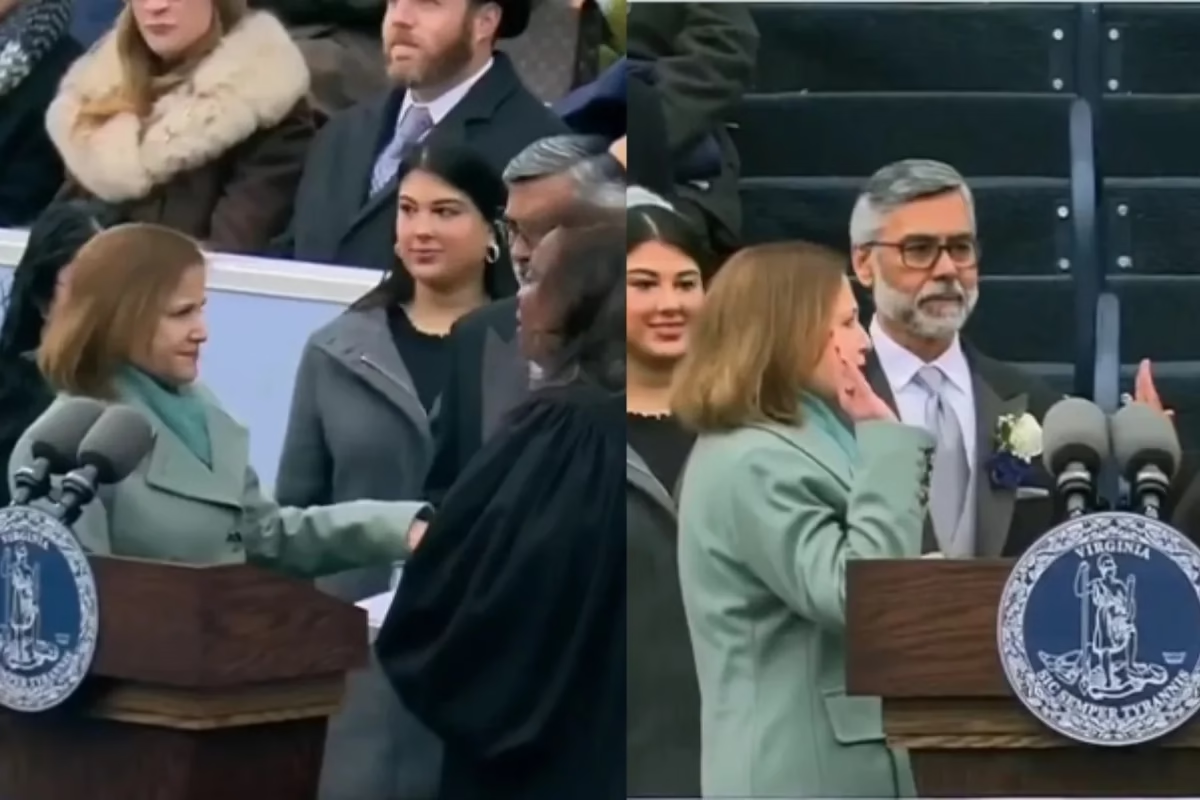
A powerful new chapter in American political history has been written with the swearing-in of America’s first Muslim female lieutenant governor, Ghazala Hashmi, who took her oath of office on the Holy Quran. The historic ceremony not only marked a personal milestone for Hashmi but also symbolized the growing inclusion, diversity, and representation within the United States political system.
This moment is being widely celebrated as a breakthrough for minority communities, particularly Muslims and South Asians, who have long aspired to see themselves reflected in positions of leadership at the highest levels of government.
A Historic Day for Virginia
The oath-taking ceremony was significant on multiple fronts. Alongside America’s first Muslim female lieutenant governor, Virginia also witnessed several other historic firsts. For the first time, Abigail Spain-Berger assumed office as governor, becoming a prominent female leader in the state’s history. At the same time, Jay Jones made history by becoming the first Black attorney general of Virginia.
Together, these milestones highlighted a transformative shift in leadership, emphasizing merit, diversity, and representation over traditional political norms.
Ghazala Hashmi’s Symbolic Oath
Ghazala Hashmi’s decision to take her oath on the Holy Quran carried deep symbolic meaning. As America’s first Muslim female lieutenant governor, her oath represented both her personal faith and the constitutional promise of religious freedom in the United States.
The ceremony also included an interfaith prayer breakfast, underscoring the spirit of unity and mutual respect. Imam Sharif led the prayers, reflecting a broader message that public service and faith can coexist within a democratic framework that values pluralism.
Representation Beyond Symbolism
While the title of America’s first Muslim female lieutenant governor is historic, many community leaders emphasized that representation must go beyond symbolism. Hashmi’s rise to office reflects years of grassroots activism, public service, and advocacy for education, social justice, and equality.
Her leadership is expected to bring new perspectives to policymaking, particularly on issues affecting immigrant communities, women, and religious minorities. Observers believe her presence in office will inspire a new generation of young Americans to engage in civic life.
A Broader Celebration of Diversity
The inauguration ceremony was attended by several notable figures, including Senator Saddam Azlan Saleem and Senator Kanaan. Community organizations also played a visible role, with Adams Scouting America and the Girl Scouts participating in the parade.
The event was led by prominent community members such as Rizwan Jaka, Ahsanullah, and Bethany Rashid, highlighting the strong involvement of diverse civic groups. Their participation reinforced the idea that leadership in America is increasingly shaped by collaboration across cultures and backgrounds.
Voices from the Community
During the celebrations, Rizwan Jaka expressed optimism that the new leadership would strengthen unity and diversity across the state. He noted that the election of America’s first Muslim female lieutenant governor sends a powerful message that public service is open to all, regardless of faith or ethnicity.
Mansoor Qureshi, Chair of the State Governor’s Asian American Advisory Board, also shared his hopes for inclusive governance. He emphasized that the governor, lieutenant governor, and the entire cabinet should serve all Virginians fairly, with particular attention to communities that have historically faced marginalization.
Why This Moment Matters Nationally
The appointment of America’s first Muslim female lieutenant governor resonates far beyond Virginia. At a national level, it challenges stereotypes and counters narratives that question the place of Muslims in public life. It also reinforces the foundational American principle that leadership is defined by competence and commitment, not religious identity.
Political analysts note that such milestones help normalize diversity in leadership, making it less of an exception and more of an expectation. This shift can have lasting impacts on voter engagement, policy priorities, and social cohesion.
Inspiration for Future Generations
For young Muslim women and girls across the United States, the rise of America’s first Muslim female lieutenant governor is deeply inspiring. It demonstrates that barriers can be broken and that participation in democratic institutions is both possible and meaningful.
Educators and community leaders believe this moment will encourage more women from minority backgrounds to pursue careers in politics, law, and public administration.
The swearing-in of Ghazala Hashmi as America’s first Muslim female lieutenant governor marks a defining moment in American political history. Combined with other historic firsts in Virginia’s leadership, it reflects a broader transformation toward inclusivity and representation.
As Hashmi begins her term, expectations are high that her leadership will translate symbolic progress into meaningful change. For many, this historic milestone is not just a celebration of diversity, but a reaffirmation of the democratic values that continue to shape America’s future.