The recent Pakistan fuel levy increase has disappointed consumers who were expecting relief at the pump, especially after global oil prices showed signs of stability. Instead of passing on potential benefits, the federal government has raised the petroleum levy on petrol and high-speed diesel while keeping retail prices unchanged for the next two weeks, effectively denying immediate relief to the public.
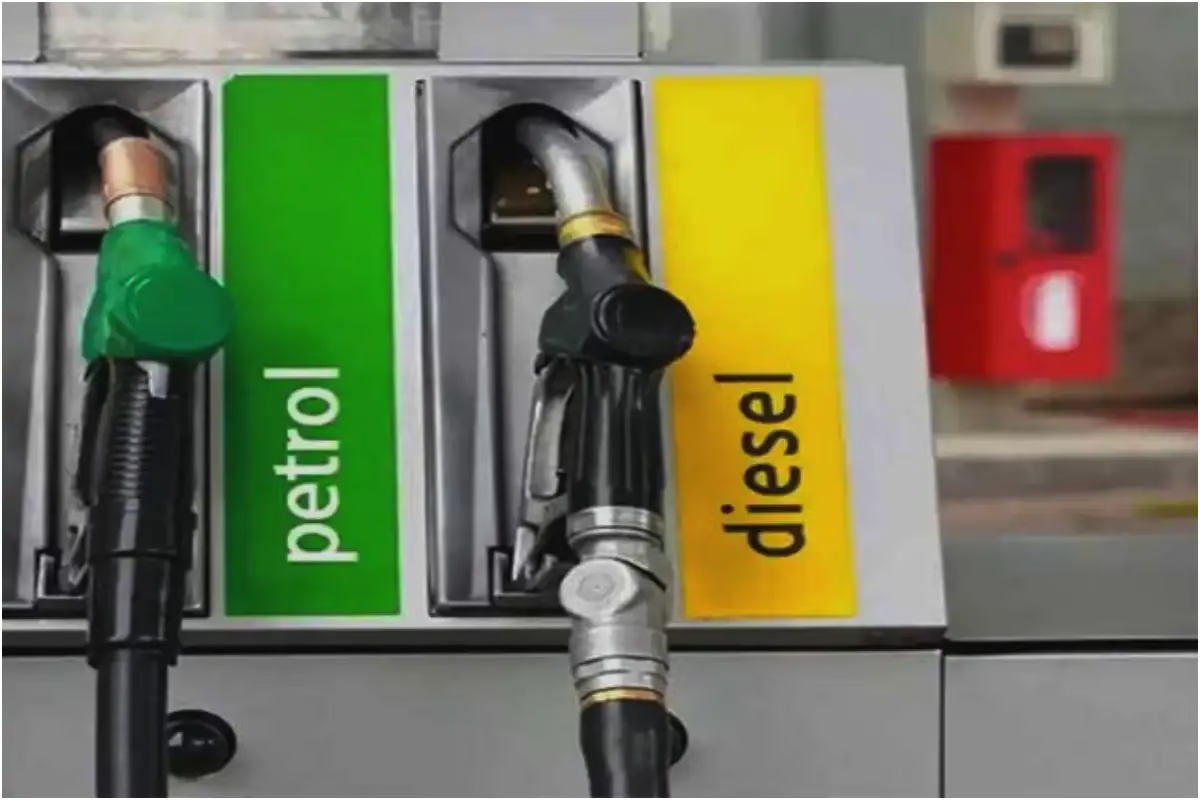
According to official sources, the Pakistan fuel levy increase came into effect immediately. The levy on petrol was raised by Rs4.62 per litre, while high-speed diesel (HSD) saw an increase of Re0.80 per litre. Although fuel prices remain the same on paper, the higher levy means the government has absorbed any potential reduction to shore up revenue.
Higher Levies on Petrol and Diesel
With the latest decision, the total petroleum levy on petrol and High Octane Blending Component (HOBC) has increased from Rs79.62 to Rs84.27 per litre. For high-speed diesel, the levy now stands at Rs76.21 per litre, up from Rs75.41.
This Pakistan fuel levy increase highlights the government’s reliance on indirect taxes to meet fiscal targets. Petroleum levies are a major source of revenue, particularly at a time when budgetary pressures remain high and alternative revenue streams are limited.
Additional Charges Still Apply
Beyond the petroleum levy, consumers continue to pay several other charges that add to the final fuel cost. A Climate Support Levy (CSL) of Rs2.50 per litre remains in place on petrol, diesel and HOBC. This levy was introduced as part of broader efforts to support climate-related initiatives, but it also increases the burden on end users.
In addition, the Inland Freight Equalisation Margin (IFEM) continues to apply. Currently, IFEM stands at Rs8.97 per litre on petrol and Rs7.25 per litre on diesel. These charges are meant to ensure uniform fuel prices across the country but further limit the possibility of consumer relief.
For other petroleum products, levies remain unchanged. Kerosene oil carries a levy of Rs20.36 per litre, while light diesel oil is subject to Rs15.84 per litre. Combined, these taxes and margins mean that even when international oil prices soften, domestic prices often fail to reflect the decline.
Fuel Prices Frozen for the Fortnight
Despite the Pakistan fuel levy increase, the government has decided to keep retail fuel prices unchanged until the end of January. According to a notification issued by the Petroleum Division, petrol will continue to sell at Rs253.17 per litre, while high-speed diesel will remain at Rs257.08 per litre.
This follows the previous price review in which the government had reduced petrol by Rs10.28 per litre and diesel by Rs8.57 per litre. Many consumers were hoping for another reduction, especially as inflationary pressures continue to strain household budgets. However, the higher levy has effectively offset any potential decrease.
Impact on Households
Petrol is primarily used by daily commuters, including motorcycle riders, rickshaw drivers and owners of small cars. For middle- and lower-middle-income households, fuel expenses make up a significant portion of monthly costs. Even when prices are officially unchanged,the Pakistan fuel levy increase means consumers are not benefiting from favorable market conditions.
Rising fuel-related costs also affect services such as ride-hailing, local transport and delivery charges, indirectly increasing the cost of living for urban populations.
Diesel and Inflationary Pressure
High-speed diesel plays a critical role in Pakistan’s economy. It powers trucks, buses, trains, tractors and agricultural tube wells. Any increase in diesel-related costs is widely considered inflationary.
Economists warn that higher diesel levies can translate into increased transport fares and logistics costs. These, in turn, push up food prices, particularly vegetables and other essentials transported from rural areas to cities. The Pakistan fuel levy increase therefore has implications far beyond fuel stations, affecting supply chains and consumer prices nationwide.
Government Revenue vs Public Relief
Industry analysts note that the government’s decision reflects a clear preference for revenue stability over immediate public relief. Petroleum levies are easier to collect and generate predictable income, especially when other tax collection targets are hard to meet.
However, critics argue that relying heavily on fuel levies disproportionately affects ordinary citizens, as fuel taxes are regressive and impact everyone regardless of income level. With inflation already high, the Pakistan fuel levy increase adds to economic pressure at a time when households are struggling to manage rising expenses.
As global oil prices continue to fluctuate, consumers remain hopeful that future price reviews might offer genuine relief rather than adjustments masked by higher levies. For now, the Pakistan fuel levy increase underscores the challenge of balancing fiscal needs with public welfare in an economy already under strain.
Unless structural reforms reduce dependence on indirect taxation, fuel pricing decisions are likely to remain a sensitive issue, closely watched by households, businesses and markets alike.