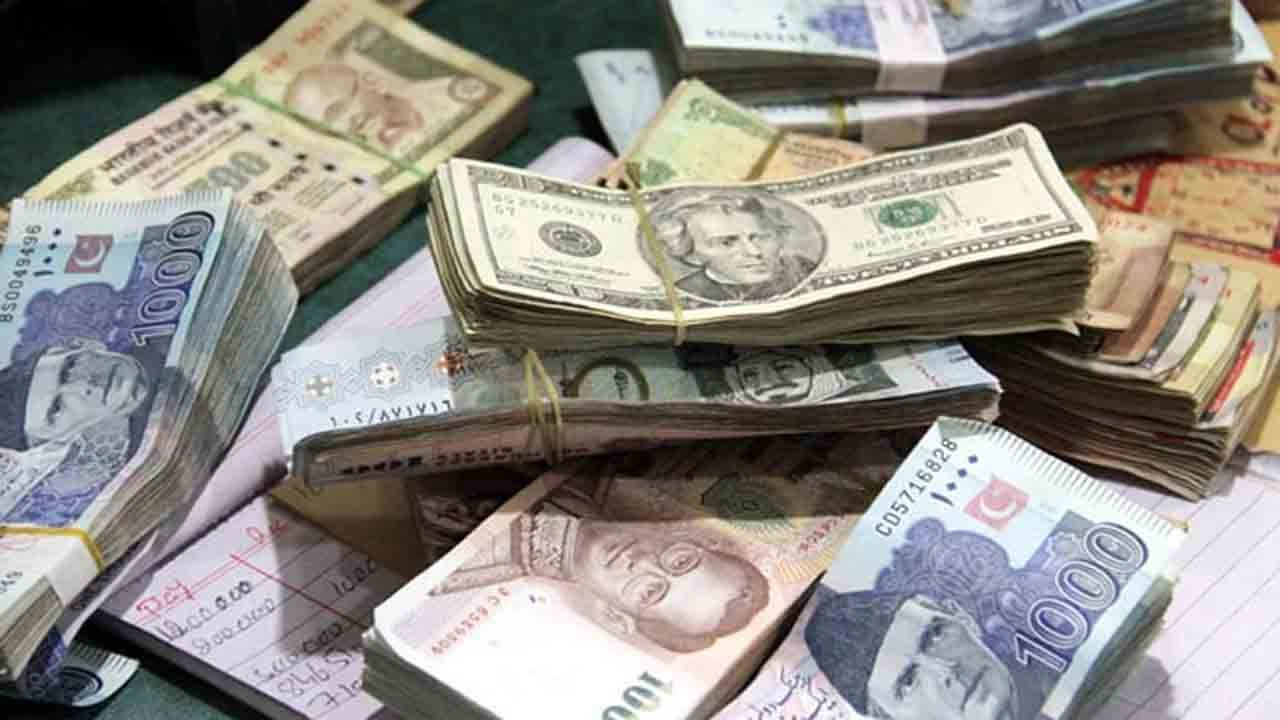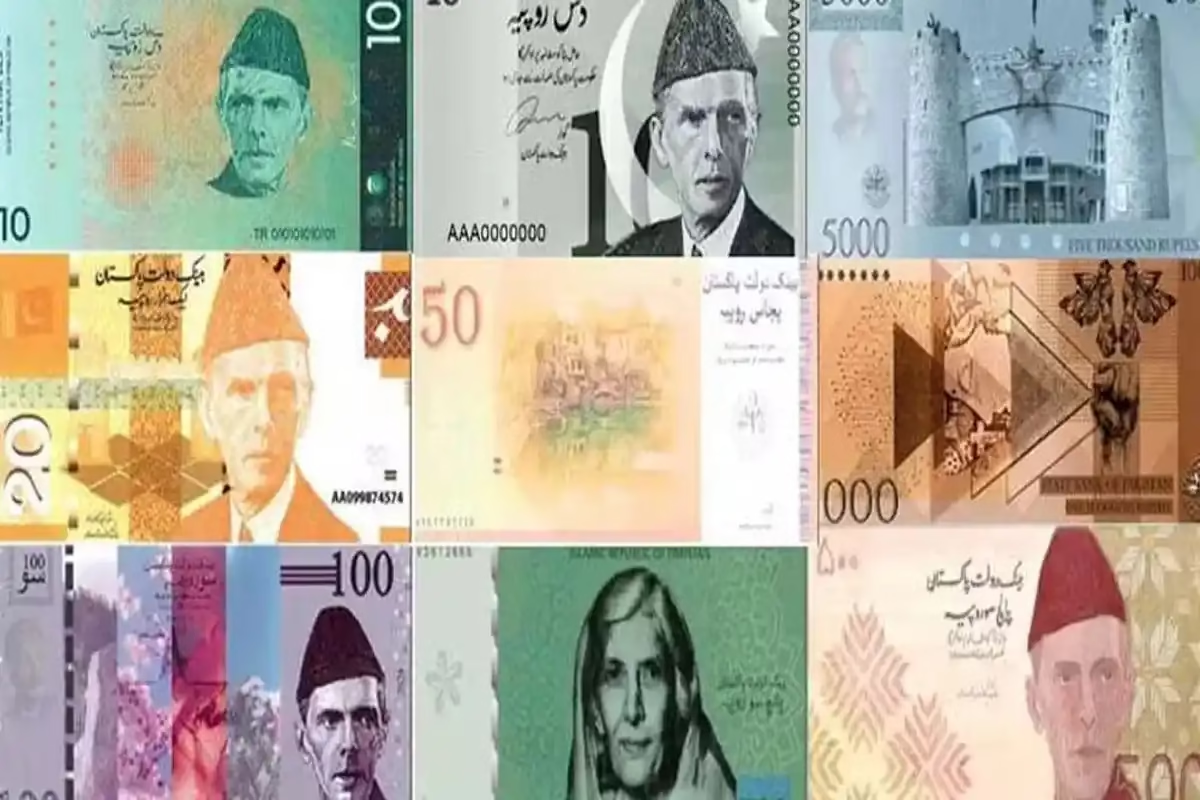
The announcement about Pakistan new currency notes has sparked widespread interest as the State Bank of Pakistan (SBP) moves closer to launching redesigned banknotes. While the final step still depends on federal cabinet approval, authorities have clarified key questions to ease public concern, especially regarding the fate of existing notes already in circulation.
In the first phase, the SBP has made it clear that the introduction of Pakistan new currency notes will not mean an overnight cancellation of old bills. Instead, both old and new notes will circulate side by side for a considerable period. This gradual transition is meant to ensure stability, avoid confusion, and protect everyday transactions across the country.
Old Currency Notes Will Stay Valid
One of the biggest concerns among citizens has been whether current banknotes will suddenly lose value. Officials have firmly stated that old notes will remain valid for years after the launch of Pakistan new currency notes. A structured and phased replacement plan will be announced later, allowing people to exchange existing notes through banks without any rush.
The SBP, along with commercial banks, will issue clear instructions on how the exchange process will work. Authorities have stressed that there is no need for panic buying, hoarding, or rushing to banks. The goal is a smooth transition that does not disrupt daily life or business activity.
Fresh Designs Across All Denominations
Under the new plan, Pakistan new currency notes will be introduced for all denominations, ranging from Rs10 to Rs5,000. These designs have been developed after extensive consultation and review, keeping both aesthetics and functionality in mind.
A major focus of the redesign is security. The new notes will include advanced security features to combat counterfeiting, which has been a long-standing challenge. These features are expected to make the currency safer for both consumers and businesses, while also aligning Pakistan’s banknotes with modern international standards.
Introduction of Polymer Notes
For the first time in its history, Pakistan is also preparing to introduce polymer, or plastic, currency notes. These polymer versions of Pakistan new currency notes are expected to be more durable than traditional paper notes, lasting longer in circulation and reducing replacement costs over time.
Polymer notes are also harder to counterfeit and easier to authenticate, making them a popular choice in many countries. If implemented successfully, this shift could mark a significant upgrade in Pakistan’s currency system and daily cash handling.
Printing Preparations Near Completion
According to official sources, most technical preparations for printing Pakistan new currency notes are already complete. The Security Printing Corporation has finalized machinery upgrades and production readiness. Designs have been reviewed in detail in coordination with the SBP to ensure accuracy, quality, and security compliance.
Amir Shams, Senior Manager Printing at the corporation, confirmed that once cabinet approval is granted, printing can begin immediately. He indicated that the printing process itself could take around two months, thanks to modern equipment and streamlined workflows already in place.
Cabinet Approval Is the Final Step
Although the SBP has shortlisted final designs and forwarded them to the government, cabinet approval remains the last hurdle. A special cabinet committee is currently reviewing the designs and overall rollout strategy.
Authorities are also debating whether Pakistan new currency notes should be released in phases—starting with lower or higher denominations—or introduced all at once. Both approaches have advantages, and the final decision will likely depend on logistical and economic considerations.
If approval is granted soon, officials suggest that the new notes could begin entering circulation by the end of 2026.
Managing a Large Cash Economy
Pakistan currently has more than Rs10.2 trillion worth of cash in circulation, making any currency change a massive logistical exercise. Because of this scale, the SBP believes a cautious and gradual replacement is essential.
A sudden withdrawal of old notes could disrupt markets, hurt small businesses, and inconvenience ordinary citizens. By allowing old and Pakistan new currency notes to circulate together, authorities aim to maintain economic stability while modernising the monetary system.
Why This Change Matters
The SBP views the launch of Pakistan new currency notes as more than just a cosmetic update. Officials believe it will strengthen public confidence in the national currency, improve security, and modernise Pakistan’s financial infrastructure.
With better durability, enhanced security features, and a carefully planned rollout, the new notes are expected to support smoother transactions and reduce long-term costs. As the country prepares for this transition, authorities continue to emphasise patience, transparency, and public awareness to ensure the change benefits everyone.