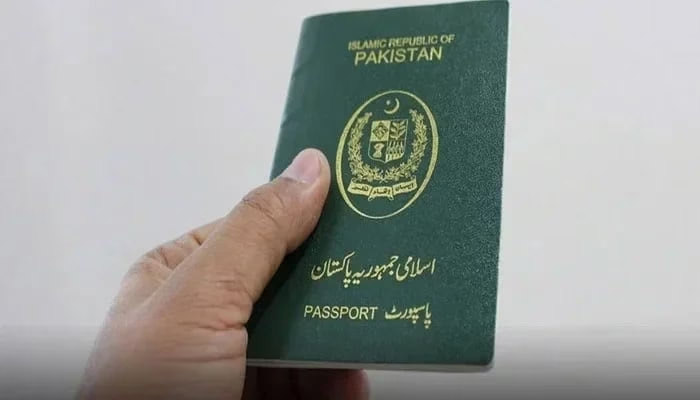
Pakistan passport ranking 2026 has shown a positive shift as the country’s travel document climbed five places in the latest Henley Passport Index. According to figures released this week, Pakistan now ranks 98th globally, up from 103 in 2025. While the position still reflects travel limitations, the improvement signals gradual progress in Pakistan’s global mobility standing.
The Henley Passport Index is one of the most widely referenced rankings of passport strength worldwide. It measures how many destinations a passport holder can access without a prior visa, either through visa-free entry or visa-on-arrival facilities. In the Pakistan passport ranking 2026, the country now shares the 98th position with Yemen and ranks above Iraq, Syria, and Afghanistan.
Currently, Pakistani passport holders enjoy visa-free or visa-on-arrival access to 31 countries across Asia, Africa, the Caribbean, and Oceania. Although this number remains modest compared to top-ranked passports, the upward movement reflects incremental improvements in diplomatic engagement and international perception.
Several countries offer visa-free access to Pakistani citizens. These include destinations such as Barbados, Dominica, Haiti, Rwanda, Trinidad and Tobago, and Vanuatu. Island nations and smaller states make up a significant portion of this list, but these options still provide valuable travel opportunities for tourism, short-term visits, and cultural exchange.
In addition to visa-free destinations, Pakistani travellers can obtain visas on arrival in multiple countries. These include Cambodia, Maldives, Nepal, Qatar, Senegal, and Timor-Leste, among others. Visa-on-arrival access simplifies travel planning, as it removes the need for lengthy embassy processes before departure. This aspect has contributed positively to the Pakistan passport ranking 2026.
Interior Minister Mohsin Naqvi welcomed the improvement, calling it a major milestone for the country. He expressed optimism that the upward momentum would continue in the coming years. Government officials have repeatedly stated that better international cooperation, improved security perceptions, and streamlined documentation processes are key factors behind such progress.
Despite the improvement, Pakistan’s passport still faces challenges. Many major destinations in Europe, North America, and parts of East Asia require visas obtained in advance, often involving extensive documentation and long processing times. However, analysts note that passport rankings tend to improve gradually, especially for developing countries, as trust and bilateral relations strengthen over time.
The Pakistan passport ranking 2026 also highlights the stark contrast between global mobility levels. Singapore retained its position as the world’s most powerful passport for the third consecutive year, allowing visa-free access to 192 destinations. Japan and South Korea followed closely with access to 188 countries, while several European nations shared the next top tier.
This gap illustrates how passport strength is closely linked to economic stability, diplomatic reach, and global trust. For Pakistan, incremental gains like the recent five-place jump are often seen as stepping stones rather than immediate transformations. Each improvement can open doors for further negotiations on visa waivers and relaxed travel policies.
Travel experts believe that sustained improvements depend on consistent foreign policy, better border management, and enhanced global image-building. Initiatives such as digital passports, improved immigration controls, and stronger international cooperation can play a role in further boosting the Pakistan passport ranking 2026 and beyond.
For ordinary citizens, the improved ranking may not immediately change travel experiences to popular destinations, but it does offer symbolic value. It signals that Pakistan is slowly moving in a positive direction in terms of global mobility. Over time, even small gains can translate into more opportunities for students, business travellers, and tourists.
Another important aspect is regional comparison. By ranking higher than some conflict-affected countries, Pakistan has positioned itself slightly better within a challenging neighbourhood. This relative improvement matters in international assessments, where stability and governance trends are closely monitored.
The Pakistan passport ranking 2026 reflects cautious but meaningful progress. While significant limitations remain, the five-place climb indicates growing international engagement and the potential for further improvement. If diplomatic efforts continue and travel facilitation remains a priority, Pakistan’s passport strength could see additional gains in the years ahead. For now, the latest ranking offers a modest boost in confidence and a reminder that gradual change is possible through consistent policy and global cooperation.