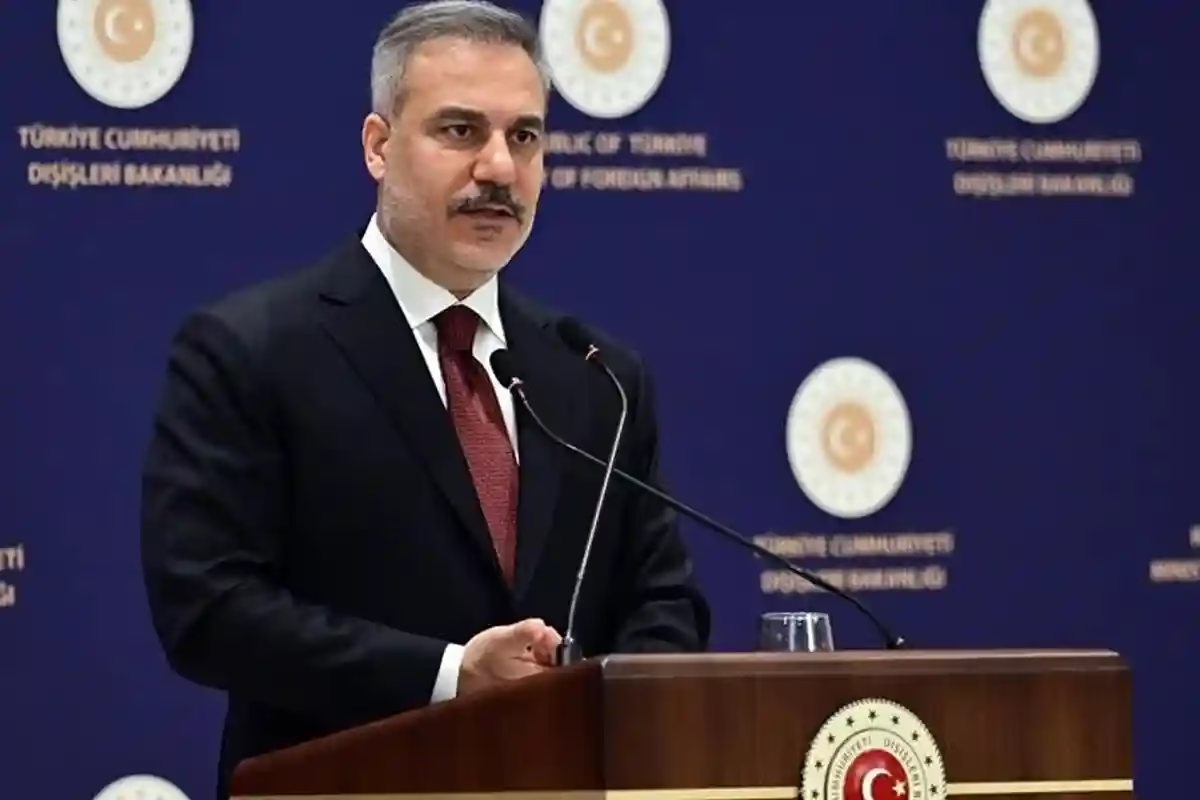
Turkey opposes Iran intervention as Ankara reiterates its firm stance against any form of military action targeting Tehran, urging instead a path of diplomacy and dialogue. Speaking in Istanbul, Turkish Foreign Minister Hakan Fidan made it clear that Iran’s internal and international challenges should be resolved through peaceful means, without foreign interference. His remarks come at a time of heightened regional tension and growing speculation about possible external pressure on Iran.
Fidan stressed that Iran’s situation cannot be viewed solely through the lens of domestic unrest. According to him, the country’s challenges are deeply connected to international sanctions, strained diplomatic relations, and long-standing disputes over its nuclear programme. Turkey, he said, believes that lasting stability in the region can only be achieved if these issues are addressed through negotiation rather than force.
One of the key points raised by the Turkish foreign minister was the impact of sanctions on Iran’s economy. He noted that years of international isolation have restricted Iran’s access to global markets, financial services, and investment opportunities. These constraints, in turn, have placed immense pressure on ordinary citizens, making daily life increasingly difficult. In this context, Turkey opposes Iran intervention that exploits economic hardship as a justification for military or political interference.
Fidan described Iranian society as large, educated, and socially active, cautioning against oversimplifying public dissatisfaction. Economic struggles, he argued, are often wrongly portrayed as ideological opposition to the state. “When people are denied opportunities, problems naturally emerge,” he said, adding that such situations exist in a grey area rather than representing a clear-cut political uprising. This nuanced view reflects Turkey’s broader approach to regional politics, where social and economic factors are considered alongside security concerns.
Türkiye has consistently encouraged Iran to improve relations with its neighbours and the wider international community. Fidan emphasised that stronger regional cooperation could ease tensions and open doors to economic recovery. He also highlighted the importance of diplomacy on the nuclear issue, urging Tehran to use every available diplomatic channel to address global concerns. According to him, progress on this front would help remove structural obstacles that are contributing to Iran’s economic difficulties.
The message that Turkey opposes Iran intervention was reinforced by Fidan’s warning against foreign involvement in Iran’s internal affairs. He cautioned that external powers should not exploit domestic challenges for strategic gain, as such actions could destabilise not only Iran but the entire region. From Ankara’s perspective, military intervention would likely worsen humanitarian conditions and fuel long-term instability.
Commenting on the United States’ position, Fidan said there had been no strong indication so far that Washington intended to deploy ground forces against Iran. However, he underlined that even the possibility of escalation is concerning. “We do not want to see any intervention,” he said, stressing that restraint and dialogue are essential for maintaining regional peace. This position aligns with Turkey’s broader foreign policy, which often seeks to balance relations between Western allies and regional partners.
Turkey’s stance is shaped by its unique geopolitical position. As a neighbouring country with deep economic, cultural, and security ties to the Middle East, Ankara has a direct interest in preventing further conflict. Instability in Iran could have spillover effects, including refugee flows, disrupted trade routes, and heightened security risks. This is another reason why Turkey opposes Iran intervention and advocates for diplomatic solutions.
Fidan’s remarks also reflect Turkey’s belief in regional ownership of problems. He argued that countries in the Middle East should be encouraged to resolve disputes among themselves, rather than becoming arenas for great power competition. Dialogue, confidence-building measures, and gradual reforms, he suggested, offer a more sustainable path forward than coercion or force.
In recent years, Turkey has positioned itself as a mediator in various regional conflicts, promoting negotiation even when relations between rival states are strained. Its call for diplomacy in Iran’s case fits this pattern. By urging Tehran to engage constructively on international concerns while rejecting external military pressure, Ankara aims to reduce tensions and keep channels of communication open.
Turkey opposes Iran intervention not out of indifference to Iran’s internal challenges, but out of concern for regional stability and the well-being of ordinary people. Through calls for dialogue, sanctions relief through diplomacy, and improved regional relations, Turkey is advocating a cautious, peaceful approach. Whether this message resonates with global powers remains to be seen, but Ankara’s position underscores the growing demand for restraint in an increasingly volatile region.