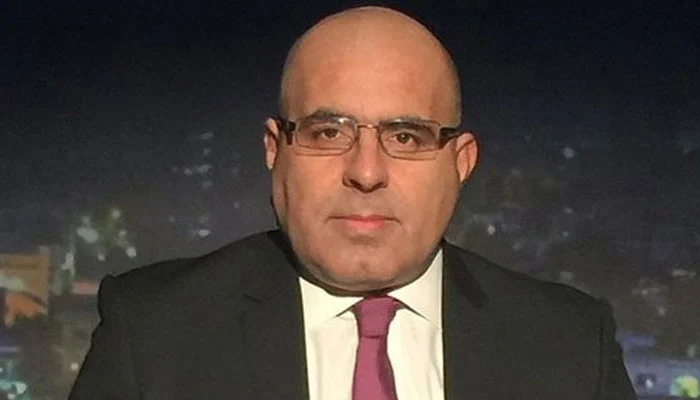
Iran protests Russia stance has drawn international attention as Moscow signals relief over what it sees as the decline of mass unrest in Iran. According to Russian expert Nikita Smagin, the Kremlin believes the protests have peaked and that Tehran’s leadership has successfully contained domestic resistance. This assessment, shared after briefings from Russia’s embassy in Tehran, reflects Moscow’s broader approach to political unrest in allied countries.
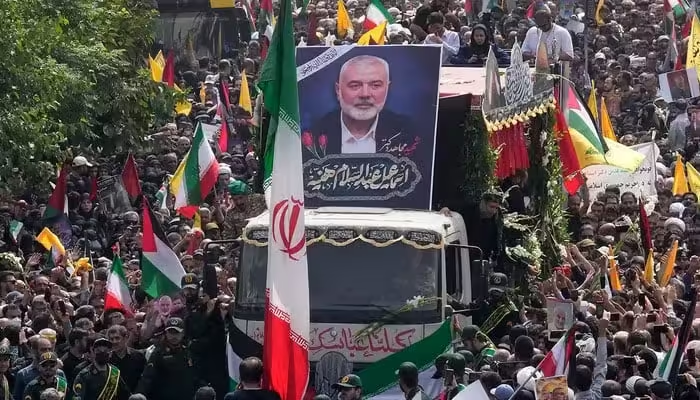
The protests erupted on December 28, driven by worsening economic conditions in a sanctions-hit country of more than 90 million people. Demonstrations quickly spread across hundreds of cities and towns, highlighting deep public frustration. Iranian authorities responded with heavy security measures, and while reports differ on the level of force used, Russian analysts now believe the unrest no longer poses a serious internal threat to Iran’s leadership.
From Moscow’s perspective, the Iran protests Russia stance is closely tied to concerns about external interference. Russia’s Foreign Ministry has strongly condemned what it describes as illegal Western pressure, accusing unnamed foreign actors of attempting to destabilise Iran. Officials argue that genuine social grievances were exploited by outside forces to weaken a key regional state.
Foreign Ministry spokeswoman Mariya Zakharova went as far as to accuse the West of using so-called colour revolution tactics. In her view, these methods turn peaceful protests into violent chaos, resulting in attacks on law enforcement and civilians. This narrative aligns with Russia’s long-standing belief that mass uprisings against established governments are rarely organic and are often encouraged from abroad.
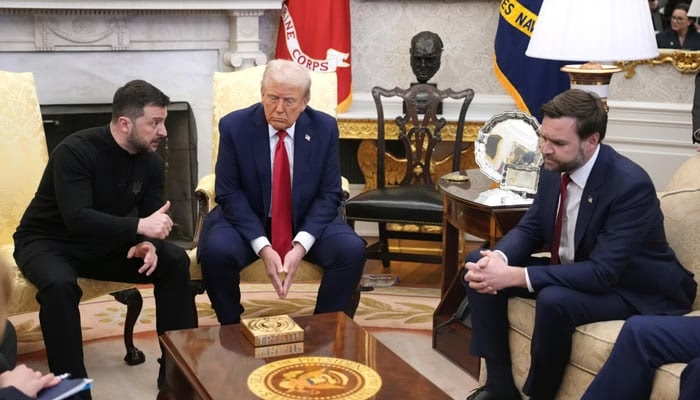
The United States has been a central focus of Russia’s criticism. Zakharova described remarks by US President Donald Trump about interfering in Iran as categorically unacceptable. Trump publicly urged Iranians to challenge their institutions and hinted at American support, statements that Moscow views as destabilising. For Russian officials, the decline of protests suggests that such rhetoric failed to produce the desired outcome.
Interestingly, President Vladimir Putin has remained publicly silent on the situation in Iran. Analysts suggest this reflects calculated caution rather than indifference. In the early days of unrest, Moscow avoided taking a strong position in case Iran’s leadership collapsed, which would have required Russia to reassess its regional strategy. This careful approach mirrors Russia’s response to other political upheavals, where it often waits to see which side prevails before committing fully.
The Iran protests Russia stance also fits into a broader worldview held by the Kremlin. According to analysts, Russia tends to interpret protests against authoritarian systems as the result of foreign meddling rather than domestic dissatisfaction. From the Arab Spring to demonstrations within Russia itself, the narrative of “external instigation” has been consistently applied.
Iranian authorities have echoed similar claims, accusing foreign powers of fueling unrest. Reports indicate that more than 100 security personnel were killed during the unrest, while opposition groups claim a much higher death toll that includes thousands of protesters. Temporary internet shutdowns further underscored how seriously Tehran treated the demonstrations, even as Moscow now believes the situation is stabilising.
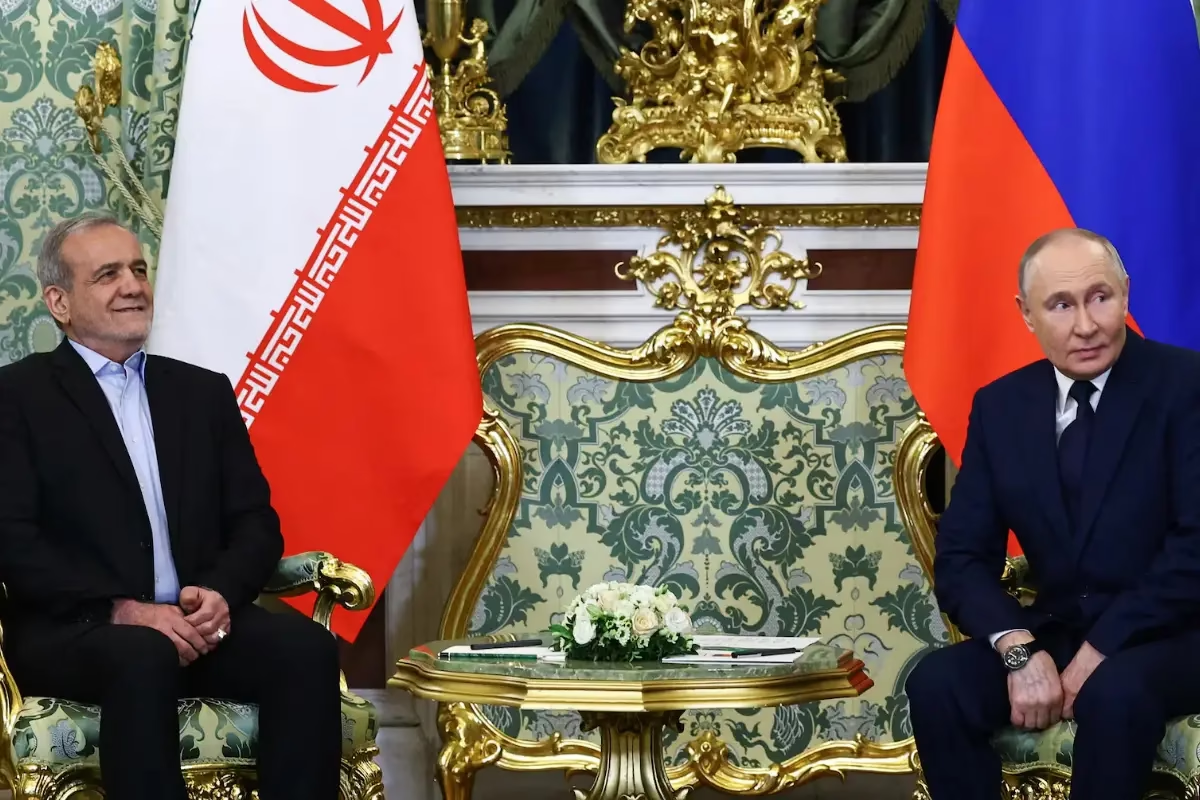
The historical relationship between Russia and Iran adds important context. The two countries share centuries of cooperation and rivalry, but in the post-Soviet era, Moscow has emerged as one of Tehran’s strongest international backers. Russia has supported Iran’s nuclear programme, supplied advanced weaponry, and shielded it diplomatically at the United Nations. In return, Iran has assisted Russia in recent conflicts, particularly by supplying military equipment during the war in Ukraine. This mutual dependence explains why Iran’s internal stability matters greatly to Moscow.
Despite condemning Western pressure, Russia has avoided strong countermeasures against US threats. Former diplomat Boris Bondarev suggests that Moscow is constrained by its own challenges, including sanctions, economic strain, and the ongoing conflict in Ukraine. Taking a harder line on Iran could risk further diplomatic isolation at a time when Russia is already under significant pressure.
Within Russia itself, public concern about Iran appears limited. Many citizens are focused on domestic economic struggles and daily survival rather than foreign crises. This disconnect highlights that the Iran protests Russia stance is primarily driven by strategic calculations at the state level, not public demand.
Looking ahead, some pro-Kremlin analysts believe Russia could play a role in advising Iran on reforms once tensions fully ease. While the protests may have been suppressed, underlying economic and social issues remain unresolved. Whether such advice would lead to meaningful change is uncertain, but it reflects Moscow’s desire to preserve stability in a key ally.
Iran protests Russia stance reveals a blend of relief, suspicion, and strategic caution. Moscow believes Iran’s leadership has weathered the crisis, but the episode underscores how economic pressure, public unrest, and geopolitical rivalry continue to shape the region’s fragile balance.