Pakistan fighter jet exports have emerged as a major point of international interest following the country’s strong military performance during the May 2025 conflict with India. Prime Minister Shehbaz Sharif has confirmed that Pakistan is currently in talks with several countries interested in acquiring its fighter aircraft, particularly the JF-17 Thunder. The growing demand reflects renewed confidence in Pakistan’s defence capabilities and the combat effectiveness of its locally produced jets.
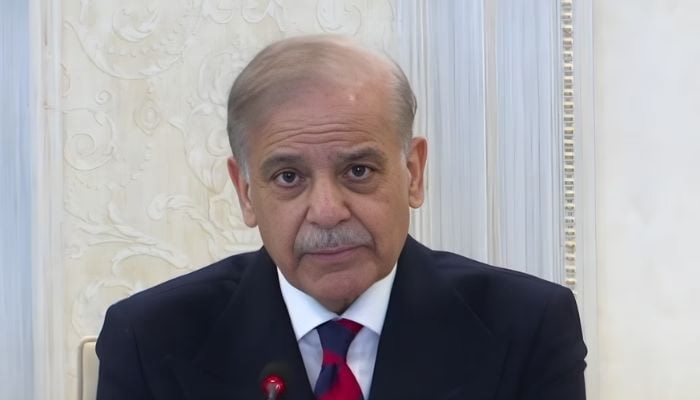
Addressing a federal cabinet meeting, the prime minister stated that interest in Pakistani fighter jets increased significantly after Pakistan’s response during the brief but intense conflict last year. He noted that multiple countries are now actively engaging with Pakistan to explore defence procurement opportunities. This development marks an important moment for Pakistan fighter jet exports, positioning the country as a competitive player in the global defence market.
The JF-17 Thunder, jointly developed by Pakistan and China, is at the center of these discussions. Minister for Defence Production Raza Hayat Haraj confirmed in an interview that negotiations are ongoing with several states regarding the sale of this multi-role combat aircraft. He emphasized that the aircraft’s versatility, cost-effectiveness, and proven performance have attracted attention from countries seeking modern air combat solutions without the high costs associated with Western platforms.
One key factor in these negotiations is China’s involvement in the JF-17 program. As a co-developer, Beijing’s consent is required for any export agreement. Minister Haraj explained that this is a standard part of the process and that discussions naturally take time. He added that interest is genuine and sustained, indicating long-term potential for Pakistan fighter jet exports rather than short-lived curiosity.
International media reports have suggested that Pakistan has held preliminary talks with countries including Libya, Sudan, Bangladesh, Indonesia, and Saudi Arabia. These discussions reportedly focus on broader defence cooperation, with the JF-17 being a central component. However, Pakistani officials have refrained from confirming specific names, citing the sensitive and classified nature of defence negotiations. This cautious approach reflects the strategic importance of arms exports and the diplomatic considerations involved.
The surge in interest can be traced back to the May 2025 conflict between Pakistan and India. The confrontation began after India launched strikes following an attack on tourists in Indian Illegally Occupied Jammu and Kashmir. Pakistan denied India’s allegations of involvement and called for an independent investigation. During the 87-hour conflict, Pakistan claimed to have downed several Indian fighter jets, including advanced aircraft, as well as numerous drones. The ceasefire, brokered by the United States, brought a swift end to hostilities but left a lasting impact on regional and global defence assessments.
Military analysts believe that real-world performance plays a crucial role in shaping arms markets. Combat-tested platforms often gain credibility that no marketing campaign can replicate. In this context, Pakistan fighter jet exports have benefited from the perception that the JF-17 proved itself under high-pressure conditions. For countries with limited defence budgets, the aircraft offers a balance of affordability, modern avionics, and combat capability.
Beyond defence, the government views potential aircraft exports as part of a broader economic strategy. Expanding high-value exports can help diversify Pakistan’s economy, generate foreign exchange, and strengthen its industrial base. While the prime minister has highlighted economic stability and growth-focused policies, defence production remains a specialized sector where Pakistan holds a competitive edge. Successful export deals could also lead to technology upgrades, job creation, and further collaboration with international partners.
Security considerations remain central to the government’s narrative. Prime Minister Shehbaz Sharif has reiterated his commitment to eradicating terrorism and strengthening national defence. A credible and capable defence industry supports this goal by ensuring self-reliance and reducing dependence on foreign suppliers. At the same time, responsible exports can enhance diplomatic ties and regional influence.
Pakistan fighter jet exports are gaining momentum at a time when global demand for cost-effective and proven military hardware is rising. The JF-17 Thunder stands as a symbol of Pakistan’s growing defence manufacturing capability and its ability to compete internationally. While negotiations are still underway and no deals have been finalized publicly, the increasing interest signals a promising future for Pakistan’s defence exports and its role in the evolving global arms market.