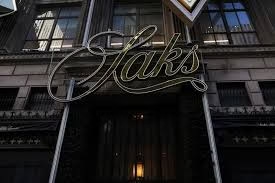
Luxury department store conglomerate Saks Global filed for bankruptcy protection late Tuesday, marking one of the largest retail failures since the COVID-19 pandemic.
The filing has raised fresh concerns about the future of luxury retail in the United States, coming just a year after a high-profile merger that brought Saks Fifth Avenue, Bergdorf Goodman, and Neiman Marcus under a single corporate structure.
According to sources familiar with the matter, the financially strained retailer was close to securing a $1.75 billion financing package from creditors that would allow its stores to remain operational during the bankruptcy process.
Court documents revealed that the company’s largest unsecured creditors include fashion house Chanel, owed approximately $136 million, and luxury group Kering — the owner of Gucci — with claims of about $60 million.
Once a staple of elite shopping and a favorite of celebrities such as Gary Cooper and Grace Kelly, Saks has struggled in the post-pandemic retail environment. Increased competition from online platforms and luxury brands shifting toward direct-to-consumer sales have significantly impacted its business.
In 2024, parent company Hudson’s Bay pursued a scale-driven strategy by merging Saks with long-time rival Neiman Marcus, forming Saks Global. The $2.7 billion deal was financed through nearly $2 billion in debt, along with equity investments from major partners including Amazon, Salesforce, and Authentic Brands.