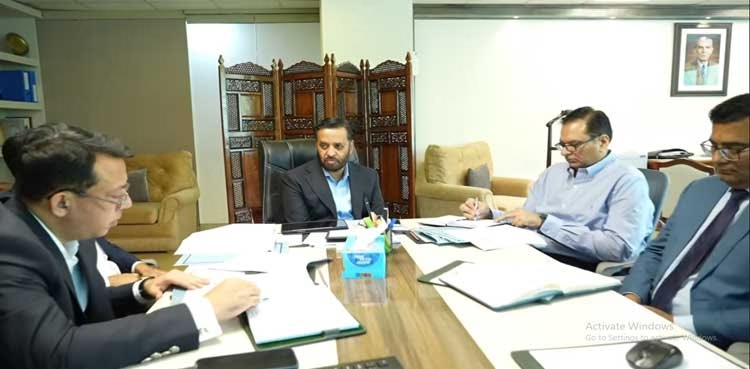
The Punjab BHUs revamping Phase II project is steadily transforming primary healthcare infrastructure across the province, with hundreds of Basic Health Centers (BHUs) already upgraded and handed over to the Health Department. The progress was reviewed in a high-level meeting chaired by Provincial Minister for Works and Communications Malik Sohaib Ahmed Bharat, where officials presented updates on timelines, completion status, and coordination between departments.
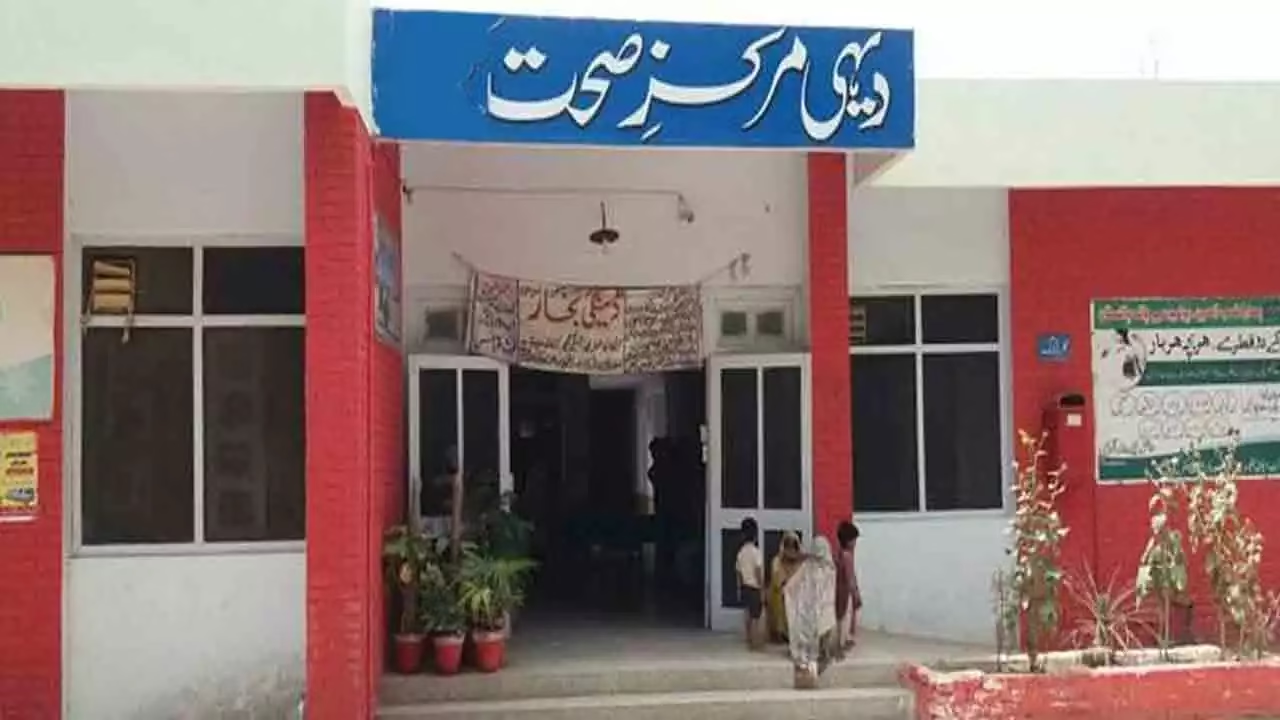
During the briefing, officers from the Communications and Works (C&W) Department informed the minister that a total of 515 BHUs are being revamped under Phase II. More than 300 centers have already been completed, while the remaining facilities are in the final stages of construction and refurbishment. According to officials, the completed BHUs have been formally handed over, allowing the Health Department to operationalize services without delay. This milestone reflects the scale and momentum of the Punjab BHUs revamping Phase II initiative.
The provincial minister emphasized the importance of timely completion, reiterating that healthcare development remains a top priority for the current government. He directed all concerned departments to ensure quality standards are met while adhering to project deadlines. According to Malik Sohaib Ahmed Bharat, improving the physical condition of healthcare facilities is essential to delivering better services, especially in rural and underserved areas where BHUs serve as the first point of care.
A key focus of the Punjab BHUs revamping Phase II project is to modernize aging infrastructure so that communities can access safe, functional, and patient-friendly facilities. The revamping includes structural repairs, upgraded utilities, improved sanitation, and better space utilization. These improvements are designed to enhance service delivery and create a more conducive environment for both patients and healthcare staff.
Malik Sohaib Ahmed Bharat also highlighted that the government’s healthcare strategy is not limited to building new hospitals. Alongside new constructions, older hospitals and basic facilities are being rehabilitated to maximize reach and efficiency. He noted that the Chief Minister of Punjab is personally monitoring the revamping process, underscoring the political commitment behind these reforms. This oversight, he said, helps ensure transparency, accountability, and alignment with provincial health goals.
The Punjab BHUs revamping Phase II effort plays a critical role in strengthening the healthcare referral system. Well-equipped BHUs reduce pressure on tertiary hospitals by providing timely primary care, preventive services, and early diagnosis. When basic facilities function effectively, patients are less likely to travel long distances for minor ailments, saving time and costs while improving health outcomes.
Officials present at the meeting acknowledged that coordination between departments has been central to progress. The C&W Department has focused on construction and technical execution, while the Health Department prepares for staffing, equipment, and service activation. This synchronized approach has enabled quicker handovers and smoother transitions from construction to service delivery, particularly in districts where access gaps have historically existed.
From a broader perspective, the Punjab BHUs revamping Phase II initiative aligns with the government’s vision to prioritize preventive and primary healthcare. Revamped BHUs are expected to support maternal and child health services, immunization programs, and basic diagnostics, which are foundational to a resilient health system. Improved infrastructure also helps attract and retain medical staff in rural areas, a long-standing challenge for primary healthcare.
The minister reiterated that the provision of quality healthcare facilities to the people of Punjab remains an ongoing mission. He stressed that infrastructure upgrades are only one part of the solution and must be complemented by trained staff, essential medicines, and effective management. However, he added that without functional buildings and utilities, service improvements cannot be sustained—making the current revamping drive a necessary step forward.
As the remaining centers approach completion, expectations are high that the Punjab BHUs revamping Phase II project will set a benchmark for future healthcare upgrades. With hundreds of BHUs already operational in improved conditions, communities across the province are beginning to feel the impact. If completed on schedule and supported with adequate resources, the initiative has the potential to significantly enhance access to basic healthcare and reinforce public trust in the provincial health system.