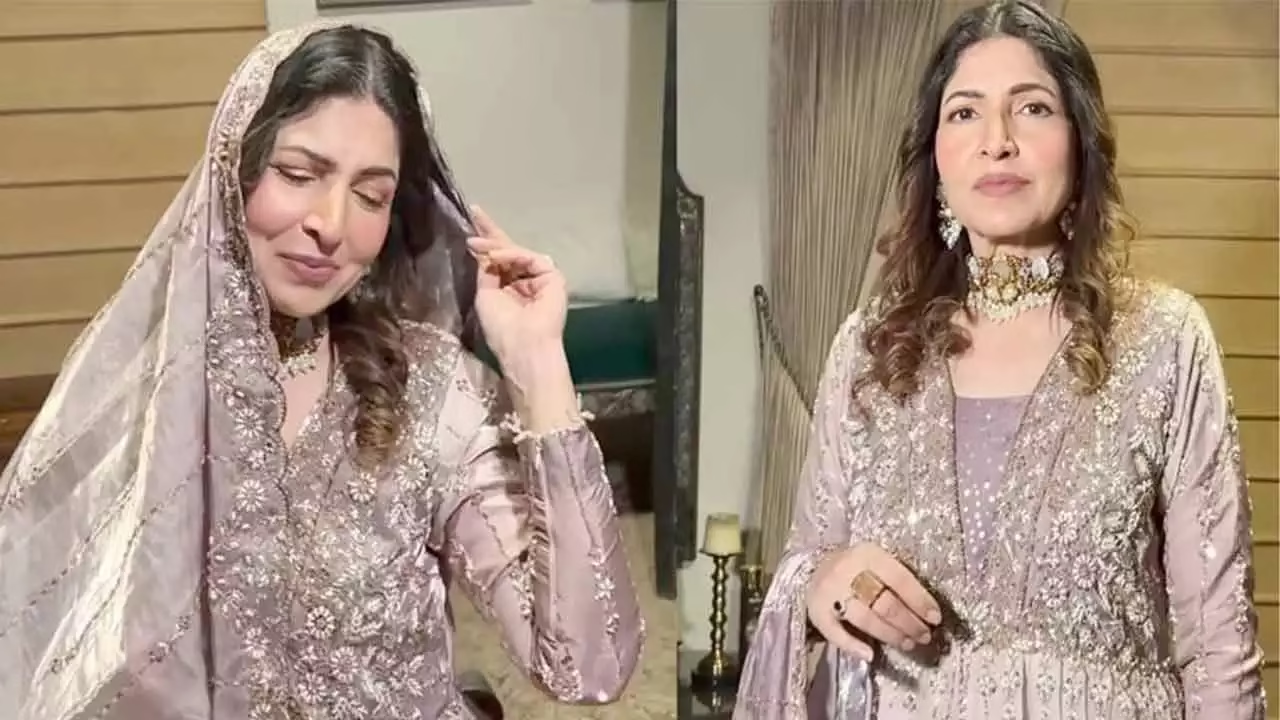
Shagufta Ijaz Instagram reel has become a hot topic on social media after the senior actress shared a glamorous festive video that quickly went viral. While many admired her elegant look and confident presence, others criticized the timing of the post, linking it to recent personal losses in her life. The debate highlights how public figures, especially women, are often judged not just for their work but also for how they choose to grieve and move forward.
A Graceful Festive Look
In the Instagram reel, Shagufta Ijaz is seen modeling a sophisticated festive outfit that reflects timeless elegance. She wore a light pastel-colored, front-open anarkali-style dress adorned with delicate silver embroidery and fine sequin work on the bodice. The ensemble was paired with a matching dupatta, draped gracefully, and complemented by tasteful jewelry that enhanced the overall look.
Her styling was subtle yet refined, aligning well with her long-standing image as a classic and graceful actress. Many fans appreciated how effortlessly she carried the outfit, praising her poise and fashion sense. For these admirers, the Shagufta Ijaz Instagram reel was simply a celebration of style and confidence.
Social Media Backlash Begins
However, soon after the reel surfaced, criticism started pouring in. A section of social media users questioned why the actress chose to share a glamorous video so soon after the passing of her brother. The discussion quickly shifted from fashion to personal grief, with many users expressing discomfort over what they perceived as insensitivity.
Some commenters compared her situation to their own experiences of loss, stating that they were unable to return to normal life even years after losing a loved one. Others pointed out that only a year had passed since Shagufta Ijaz’s husband’s death and just a few months since her brother’s demise, suggesting that her public appearance did not reflect expected mourning behavior.
Harsh and Personal Criticism
As is often the case with viral content, the tone of some comments became harsh and deeply personal. One user remarked that grief should visibly affect a person’s actions, implying that Shagufta Ijaz appeared unaffected. Another comment criticized her age, suggesting that as a senior citizen she should behave differently and avoid such public displays.
There were also accusations that she was prioritizing money and work over emotions. In more extreme reactions, some users went as far as suggesting that she should focus on religious activities instead of sharing fashion-related content. These responses turned the Shagufta Ijaz Instagram reel into a broader debate about morality, age, and grief.
Support from Fans and Neutral Voices
Despite the criticism, many fans and neutral observers came forward in her support. They argued that grief is a deeply personal journey and that there is no fixed timeline or single correct way to mourn. Supporters pointed out that returning to work or engaging in creative expression can be a coping mechanism rather than a sign of indifference.
Some fans emphasized that Shagufta Ijaz has spent decades in the entertainment industry and that modeling or sharing content is part of her professional life. They reminded critics that posting a reel does not mean she is not grieving privately. For these voices, the backlash reflected unrealistic expectations placed on public figures.
The Pressure of Public Life
The controversy surrounding the Shagufta Ijaz Instagram reel sheds light on a larger issue: the intense scrutiny celebrities face, especially during vulnerable moments. Public figures are often expected to perform grief in a way that satisfies societal norms, even though those norms vary widely.
Women in particular face harsher judgment, where their clothing, expressions, and timing of posts are analyzed through a moral lens. In Shagufta Ijaz’s case, her decision to share a festive look was interpreted by some as a lack of sensitivity, while others saw it as a sign of strength and resilience.
Grief and Personal Choice
Psychologists often note that grief does not follow a linear path. Some people withdraw from social life, while others find comfort in routine, creativity, or work. Shagufta Ijaz has not publicly detailed how she is coping, and expecting her to conform to public expectations can be unfair.
Her reel may simply represent a moment of normalcy, a professional obligation, or a personal choice to move forward while still carrying loss in her heart. The mixed reactions show how easily online spaces can turn into judgment zones rather than places of empathy.
The Shagufta Ijaz Instagram reel has sparked an emotional and complex discussion that goes beyond fashion. It reflects society’s complicated relationship with grief, celebrity culture, and social media. While criticism is inevitable in the public eye, it is important to remember that healing looks different for everyone.
At its core, the situation serves as a reminder that behind every viral post is a human being navigating life’s challenges in their own way. Empathy, rather than judgment, might be the more meaningful response.