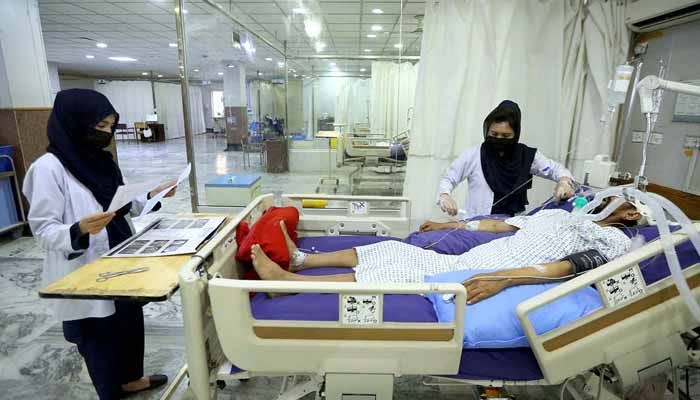
Punjab hospital reforms have entered a new phase as the provincial government announced the introduction of body cameras for hospital security guards, ward boys, nurses, and pharmacy staff. The decision reflects a broader push by the Punjab government to improve security, accountability, and service delivery in public hospitals, while restoring public trust in the healthcare system.
A Major Step Toward Accountability
The decision was taken during a high-level meeting chaired by Chief Minister Maryam Nawaz, where progress on ongoing health sector initiatives was reviewed. The introduction of body cameras is being seen as a practical step to monitor staff conduct, reduce conflicts, and ensure transparency in patient interactions. Under the Punjab hospital reforms, the move is expected to discourage misconduct, protect patients’ rights, and also safeguard healthcare workers against false allegations.
Public complaints regarding the behavior of private security guards in hospitals were taken seriously during the meeting. The chief minister directed strict action and accountability, making it clear that negligence or abuse of authority will not be tolerated in government healthcare facilities.
Mobile Phone Ban During Duty Hours
As part of the Punjab hospital reforms, the government has also decided to ban the use of mobile phones by doctors and nurses during duty hours. The aim is to ensure that healthcare professionals remain fully focused on patient care rather than distracted by personal phone usage. Officials believe this measure will significantly improve the quality of attention given to patients, especially in emergency and high-pressure environments.
This decision aligns with broader efforts to professionalize hospital operations and reinforce a culture of responsibility among medical staff.
Hygiene and Cleanliness Standards
Maintaining cleanliness in hospitals has been another major focus of the reforms. Chief Minister Maryam Nawaz ordered that all government hospitals must complete full steam cleaning by 9am daily. This directive is designed to improve hygiene standards, reduce the risk of infections, and create a safer environment for patients, attendants, and staff.
Improved sanitation practices are a core component of the Punjab hospital reforms, particularly in densely populated public hospitals where cleanliness has long been a challenge.
Addressing Medicine Shortages
One of the most critical issues discussed during the meeting was the shortage of medicines in government hospitals. The chief minister expressed concern over the unavailability of essential drugs, especially when the government is allocating around Rs80 billion for medicines. She termed the situation “incomprehensible” and ordered a foolproof mechanism to ensure uninterrupted medicine supply.
Authorities were directed to prepare a new, modern medicines list for government hospitals and to form a dedicated committee to oversee this process. These steps under the Punjab hospital reforms aim to ensure that patients receive timely and effective treatment without being forced to buy medicines from private pharmacies.
Upgrading Medical Equipment
The meeting was informed that Punjab government hospitals may be allowed to procure modern Chinese-made medical equipment to upgrade healthcare facilities. This move could help improve diagnostic and treatment capabilities, particularly in under-resourced hospitals.
By embracing cost-effective and modern technology, the Punjab hospital reforms seek to bridge gaps in healthcare infrastructure and bring public hospitals closer to international standards.
Performance-Based Management
Another significant reform announced was the establishment of an MS (Medical Superintendent) pool across Punjab. Under this system, salary increases for MS officers will be strictly linked to performance. The goal is to encourage efficient hospital management and hold leadership accountable for service delivery.
In addition, community health inspectors will be tasked with conducting hospital surveys to gather on-ground feedback. To further strengthen oversight, the chief minister ordered the creation of a Data Analysis Centre to evaluate the effectiveness of public welfare initiatives in the health sector.
Progress in Healthcare Delivery
Officials briefed the meeting on several positive developments already achieved. More than 2,500 doctors have secured jobs in Punjab in less than two years, helping address staffing shortages. Around 585,000 patients have been registered for home delivery of cardiac medicines, while nearly 6,000 hepatitis and tuberculosis patients are receiving medicines at their doorsteps.
These initiatives highlight that Punjab hospital reforms are not limited to policy announcements but are already translating into tangible benefits for patients.
A Clear Message from Leadership
Reiterating her resolve, Chief Minister Maryam Nawaz stated that public money and time will no longer be wasted. She warned that inefficient and negligent staff would be sent home, underlining a zero-tolerance approach toward poor performance.
The Punjab hospital reforms represent a comprehensive effort to transform public healthcare through accountability, technology, and patient-focused policies. If implemented effectively, these measures could significantly improve the quality of care and restore confidence in government hospitals across the province.