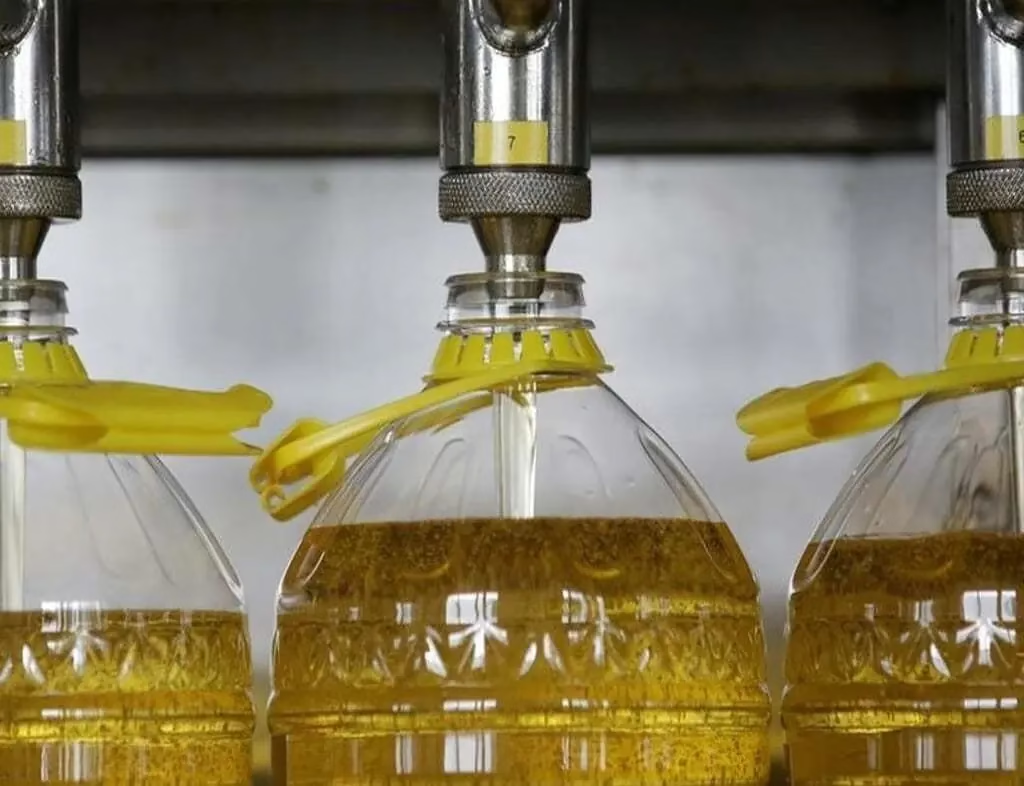
The Pakistan Oilseeds Summit kicked off on Friday as part of a two-day international event that brought together leading experts, industrialists, policymakers, and traders from Pakistan and abroad. Participants from Malaysia, Indonesia, Canada, and the United States gathered to discuss the future of oilseeds and edible oil, making the event one of the most significant industry forums in the region. This year marked the 8th Pakistan Edible Oil Conference (PEOC) and the 5th Pakistan Oilseeds Summit, held together for the first time to reflect the deep interconnection between the two sectors.
A Unified Platform for a Linked Industry
The decision to combine the Pakistan Oilseeds Summit with the Pakistan Edible Oil Conference was widely appreciated by stakeholders. Rashid Janmohammad, CEO of PEOC and Chairman of PEORA, explained that oilseeds production and edible oil processing are essentially two sides of the same coin. Organizing both forums simultaneously allows for more meaningful dialogue, better coordination, and practical solutions that benefit the entire value chain. According to him, this joint platform will have a strong regional and global impact.
Janmohammad also acknowledged the role of international partners, especially diplomatic missions, in promoting edible oil trade with Pakistan. He praised the US Consulate in Karachi, the US Embassy in Islamabad, and the Canadian High Commission for supporting trade engagement and industry collaboration.
Pakistan as a Growing Edible Oil Market
One of the central themes of the Pakistan Oilseeds Summit was the country’s massive and growing demand for edible oil. Nawab Shahzad Ali Khan, Patron-in-Chief of the Pakistan Edible Oil Refiners Association (PEORA), highlighted that Pakistan, with a population of around 250 million, is one of the largest importers of edible oil. Rapid population growth, urbanization, and changing food habits continue to drive demand not only for edible oils but also for dairy products and beverages.
This growing demand presents both a challenge and an opportunity. While Pakistan relies heavily on imports, the summit emphasized the need to boost local oilseed production to reduce the import bill and strengthen food security.
Canada’s Perspective on Sustainable Trade
A key international voice at the Pakistan Oilseeds Summit was Canadian High Commissioner to Pakistan, Tarik Ali Khan. He stressed the importance of quality, reliability, and sustainability in the global edible oil trade. According to him, canola represents a major success story for Canada, having replaced several traditional edible oils due to its health benefits and consistent quality.
He noted that Canadians view Pakistan as a promising and trustworthy market. Despite global geopolitical challenges, both governments are working to expand bilateral trade. Canada’s advanced technology in oilseeds and dairy sectors, he said, could greatly benefit Pakistan. Although geographically distant, the two countries enjoy strong people-to-people ties, which further support long-term trade relations.
International Expertise and Knowledge Sharing
The event featured a strong lineup of international experts who shared insights on global trends, supply chains, and technological advancements. Speakers from Canada included representatives from the Asian Pacific Agriculture and Food Office and Manitoba Agriculture, who discussed innovation, crop development, and farmer support systems.
From the United States, the US Soybean Export Council played a prominent role. A dedicated panel discussion on the US soy producer perspective explored issues such as sustainability, productivity, and market access. The discussion highlighted how collaboration between producers, exporters, and importing countries like Pakistan can create stable and mutually beneficial trade relationships.
Focus on Sustainability and Future Growth
Sustainability emerged as a recurring theme throughout the Pakistan Oilseeds Summit. Experts emphasized the need for environmentally responsible farming practices, efficient supply chains, and the adoption of modern technology. With climate change affecting crop yields worldwide, long-term planning and innovation were identified as critical for the future of oilseeds and edible oil industries.
Presentations from global companies and industry leaders also shed light on logistics, port infrastructure, and storage solutions key factors in ensuring consistent supply and price stability in Pakistan’s edible oil market.
A Strategic Event for Pakistan’s Food Economy
The Pakistan Oilseeds Summit served as more than just a conference; it became a strategic platform for shaping the future of Pakistan’s edible oil sector. By bringing together local stakeholders and international partners under one roof, the event encouraged dialogue, investment, and collaboration.
As Pakistan continues to face rising edible oil demand, forums like this play a vital role in bridging gaps between production and consumption. The insights shared over these two days are expected to influence policy decisions, trade partnerships, and industry strategies in the years ahead, strengthening Pakistan’s position in the global edible oil landscape.