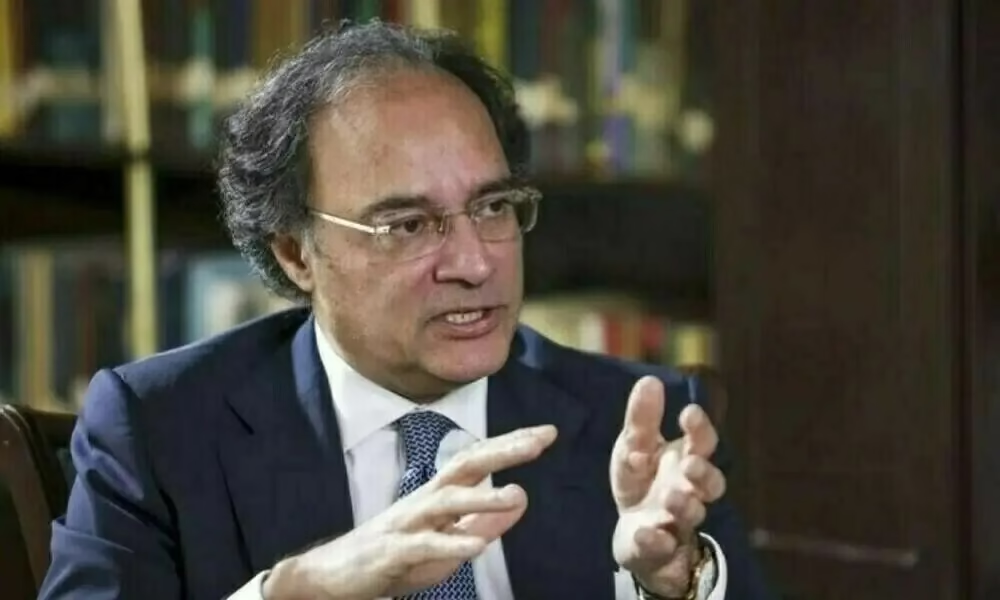
Pakistan digital payments are gaining renewed momentum as Finance Minister and Senator Muhammad Aurangzeb met with a senior Visa delegation to discuss financial inclusion, digital infrastructure, and ongoing economic reforms. The high-level meeting reflects Pakistan’s growing focus on modernizing its financial system and accelerating the shift toward a cash-light economy.
During the discussion, the finance minister welcomed Visa’s continued engagement with Pakistan’s financial sector and acknowledged its role in supporting innovation and secure payment systems. The talks highlighted improving macroeconomic indicators, stabilization efforts, and the government’s broader vision for sustainable and inclusive economic growth.
Economic Stability Sets the Foundation
Senator Aurangzeb briefed the Visa delegation on progress under the IMF-supported program, noting that external validation from international credit rating agencies has helped rebuild confidence in Pakistan’s economy. He emphasized that reforms in taxation, energy, state-owned enterprises, public debt management, and privatization are moving forward, with renewed momentum to accelerate the privatization process.
These reforms are critical for creating a stable environment where Pakistan digital payments can expand. A predictable macroeconomic framework encourages investment in technology, fintech innovation, and modern financial services that reach a wider segment of the population.
Digital Transformation at the Core of Policy
A central theme of the meeting was Pakistan’s accelerating digital transformation. The finance minister underscored that digitalization is being led at the highest level, with the Prime Minister ensuring coordinated implementation across government institutions. This top-level commitment signals that digital reforms are not isolated initiatives but a national priority.
Key initiatives discussed included the establishment of the Pakistan Digital Authority, reforms in payment rails under the State Bank of Pakistan, and the digitization of government receipts and expenditures. These measures aim to improve transparency, efficiency, and service delivery while strengthening trust in Pakistan digital payments.
Expanding Digital Payments Ecosystem
Visa’s delegation shared insights from their engagements with banks, fintech companies, and other stakeholders in Pakistan. They noted growing confidence driven by macroeconomic stabilization and a clear interest in expanding digital payments, financial inclusion, and innovation.
Discussions covered practical areas such as cash displacement, fraud prevention, and support for small and nano businesses. Solutions like QR-based payments and tap-to-phone technology were highlighted as cost-effective tools to bring merchants into the digital economy, particularly in Tier-2 and Tier-3 cities.
Expanding acceptance infrastructure beyond major urban centers is essential for the long-term success of Pakistan digital payments. Wider acceptance enables small businesses to participate in formal financial channels, access credit, and grow sustainably.
Financial Inclusion and Consumer Protection
Both sides emphasized that digital growth must go hand in hand with strong consumer protection and fraud prevention. As more people adopt electronic payments, ensuring secure transactions becomes vital to maintaining trust in the system.
Visa stressed the importance of maintaining optionality and competition across payment channels. A competitive ecosystem fosters innovation, manages risk, and delivers better outcomes for consumers and merchants alike. This approach aligns with Pakistan’s regulatory goals of encouraging innovation while safeguarding financial stability.
Emerging Opportunities: Remittances and E-Commerce
The meeting also explored emerging areas such as remittances, e-commerce, and tourism-related spending by overseas Pakistanis. Digital channels offer faster, more transparent, and cost-effective ways to send money home, which is particularly important for Pakistan’s economy.
New technologies, including blockchain and digital assets, were discussed within the context of a regulated framework. The finance minister noted that Pakistan is carefully examining these developments, balancing innovation with regulatory oversight. Potential use cases include public debt management, remittances, and government payments, all of which could benefit from secure digital solutions.
Collaboration for Long-Term Growth
Both the Ministry of Finance and Visa reaffirmed their commitment to continued collaboration. This includes technical engagement, knowledge-sharing, and support for government payments digitization and financial inclusion initiatives.
Such partnerships play a key role in strengthening Pakistan digital payments by combining public sector policy direction with private sector expertise. Close coordination with regulators will help ensure that innovation proceeds in a safe, inclusive, and sustainable manner.
The meeting between Finance Minister Muhammad Aurangzeb and Visa marks an important step in Pakistan’s journey toward a modern digital economy. With improving macroeconomic stability, strong political backing, and collaboration with global payment leaders, Pakistan digital payments are positioned for significant growth.
As reforms continue and digital infrastructure expands, the focus on inclusion, security, and innovation will determine how effectively Pakistan can harness digital payments to support economic growth and improve everyday financial access for its citizens.