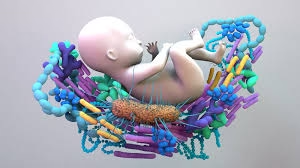
New research suggests that what mothers eat during pregnancy can impact their children’s gut health long after birth, even without direct exposure to certain food additives. Scientists found that emulsifiers—common additives in processed foods—can alter gut bacteria passed from mother to offspring, affecting early gut development.
The study, conducted in mice by researchers from Institut Pasteur and Inserm, shows that these early changes may increase the risk of gut inflammation and weight gain later in life.
Emulsifiers and Their Role
Emulsifiers help mix ingredients like oil and water, improving texture and shelf life in processed foods such as ice cream, baked goods, sauces, dairy products, and powdered baby formula. Two widely used emulsifiers are carboxymethyl cellulose (E466) and polysorbate 80 (E433). Previous studies had shown that these additives disturb gut bacteria in adults; this research highlights their effects before birth.
Gut Bacteria and Early Life Development
Gut microbes play a critical role in digestion, immune system development, and metabolism. Early life is a sensitive window when gut bacteria help train the immune system to recognize friendly microbes and avoid harmful reactions.
In the study, female mice were given small amounts of E466 or E433 for ten weeks before and during pregnancy, as well as during nursing. Their offspring never consumed the emulsifiers directly, yet showed significant early-life changes in gut bacteria. Although microbial composition partially normalized later, long-term health effects persisted.