Iran inflation protests have taken a dramatic turn after the government announced a financial relief measure in response to nationwide demonstrations against rising prices, economic hardship, and the rapid decline of the national currency. Following days of unrest and mounting international pressure, Iranian authorities made a sudden policy shift, offering monthly assistance to citizens in an attempt to calm public anger and restore stability.
Protests Sparked by Economic Pressure
The current wave of Iran inflation protests began last week as ordinary citizens took to the streets to express frustration over soaring prices, unemployment, and shrinking purchasing power. For many Iranians, daily life has become increasingly difficult due to a sharp fall in the value of the rial and limited income growth.
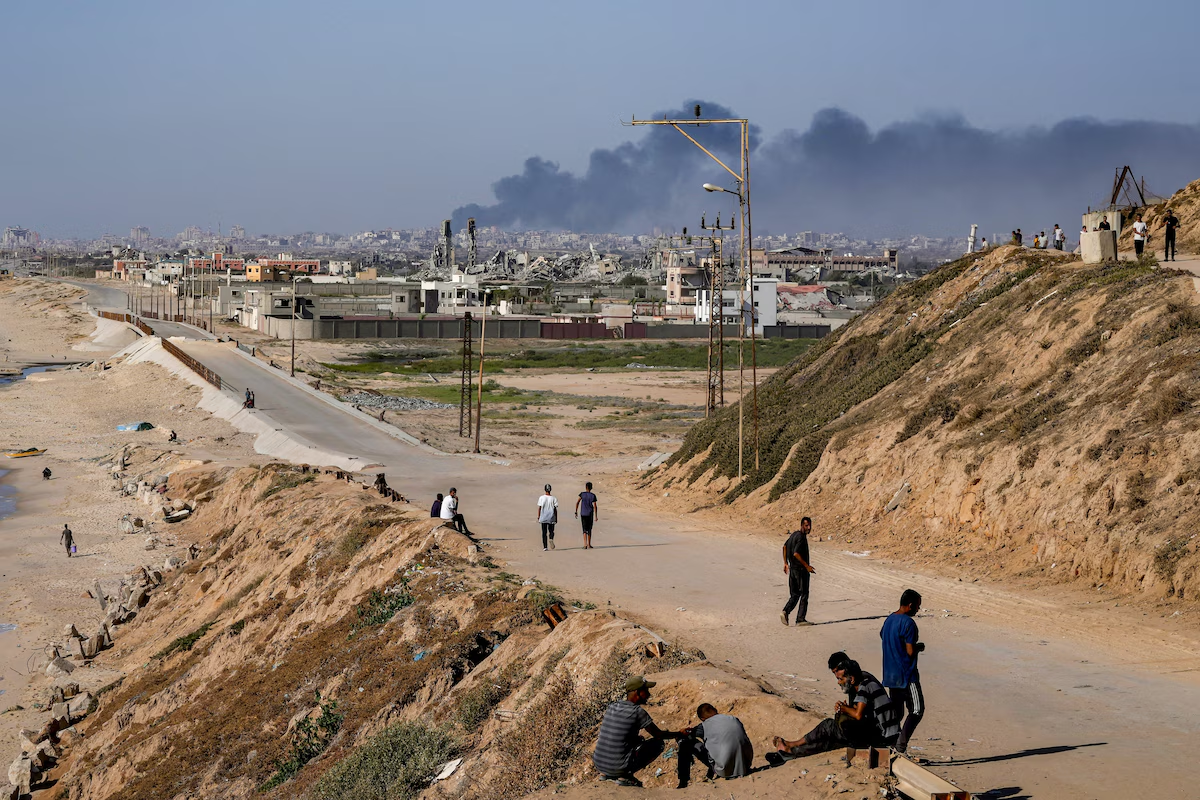
Initially confined to a few major urban centers, the protests quickly spread. According to official and media reports, demonstrations have now reached at least 40 cities, making this one of the most widespread protest movements in recent years. The scale and intensity of the unrest signaled deep-rooted dissatisfaction with the country’s economic management.
Government’s Sudden U-Turn
Despite initially adopting a hardline approach to suppress the Iran inflation protests, the government announced a surprising reversal. According to international news agencies, authorities revealed that each citizen would receive 1 million tomans per month for a period of four months.
Government spokesperson Fatima Mahajirani, speaking on state television, confirmed the plan and explained that the assistance would be provided in the form of special credit rather than cash. This credit, equivalent to around seven US dollars per month, will be deposited into citizens’ bank accounts and can only be used to purchase selected essential goods.
The spokesperson stated that the goal of the initiative is to ease the growing economic pressure on the public. Importantly, the relief package is intended for all Iranian citizens without discrimination, reflecting an effort to present the move as inclusive and nationwide.
International Pressure and Political Context
Reports suggest that the policy shift came after US President Donald Trump warned of severe consequences if protesters were killed during crackdowns. While Iranian officials have not publicly linked the announcement to these statements, the timing has raised questions about the role of international pressure in shaping Tehran’s response.
For many observers, the relief announcement appears to be an attempt to de-escalate tensions quickly, especially as images and reports of Iran inflation protests continued to circulate globally.
Economic Reality Behind the Protests
Iran’s economic challenges are severe. With a population exceeding 85 million, the country’s minimum monthly wage is estimated at around $100, while the average salary hovers near $200. Over the past year, the Iranian currency has reportedly lost more than one-third of its value against the US dollar, sharply reducing purchasing power.
Most everyday transactions in Iran are conducted through debit cards and mobile payments rather than cash, making the government’s decision to provide credit-based assistance a practical choice. However, economists argue that such a small amount may offer only temporary relief and may not address the structural causes behind the Iran inflation protests.
Public Reaction and Skepticism
Reactions among citizens have been mixed. Some welcome the assistance as a sign that the government is finally acknowledging public suffering. Others view it as insufficient, pointing out that the amount barely offsets rising food and fuel costs.
Critics also argue that limiting the credit to specific essential items restricts consumer choice and does little to restore long-term economic confidence. For many protesters, demands go beyond short-term financial aid and include calls for meaningful economic reforms, job creation, and currency stabilization.
A History of Economic Unrest
Iran is no stranger to economic protests. In 2019, fuel price hikes triggered nationwide demonstrations, while protests in 2022 highlighted broader social and economic grievances. The current Iran inflation protests are being described as among the most significant since then, reflecting cumulative frustration built up over years of economic strain.
According to official figures, at least 12 people, including security personnel, have been killed during the recent unrest, and several others have been detained. These developments have further fueled public anger and international concern.
Whether the relief package will succeed in calming the Iran inflation protests remains uncertain. While the government’s move may temporarily reduce pressure, experts warn that without deeper economic reforms, unrest could resurface once the four-month assistance period ends.
The announcement marks a notable shift in tone and policy. It underscores how sustained public pressure, combined with economic realities, can force governments to reconsider their approach. The coming weeks will reveal whether this measure restores trust—or merely delays the next wave of unrest in an already fragile economic landscape.