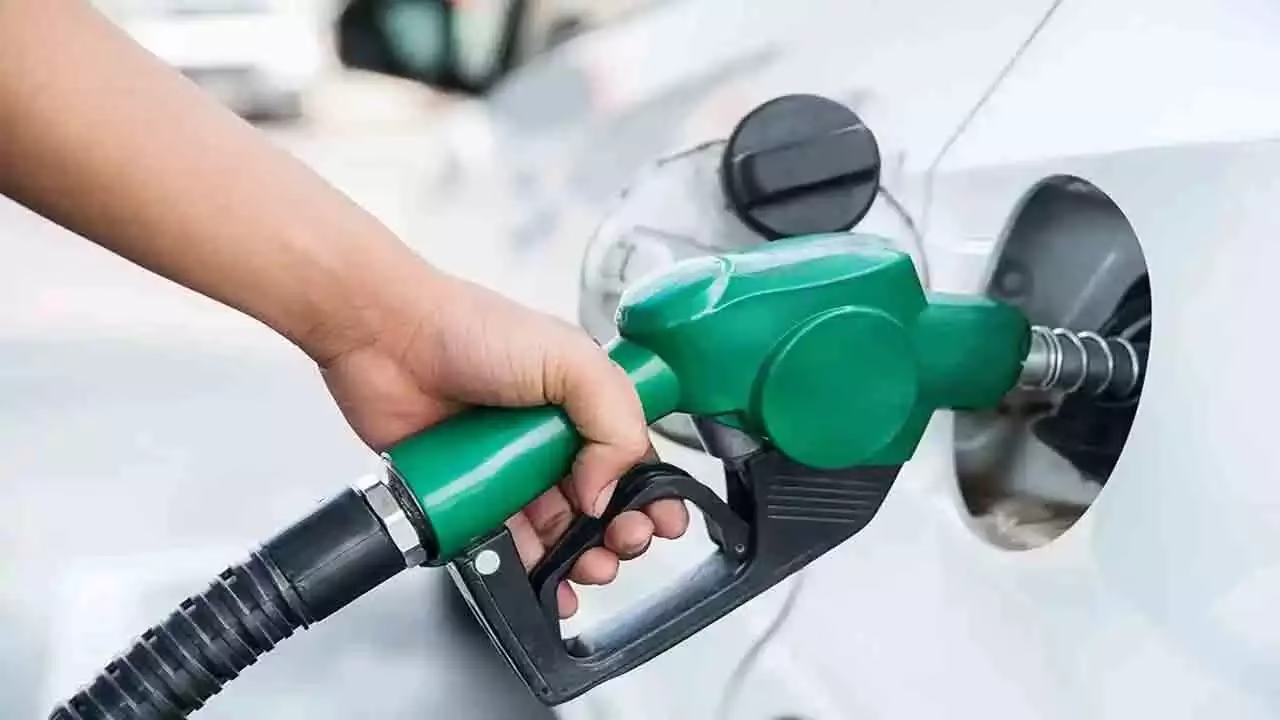
The recent petrol and diesel price reduction announced by the Ministry of Finance has brought a wave of relief to millions of Pakistanis struggling with high living costs. According to the official notification, the government has reduced the price of petrol by Rs 10.28 per litre and high-speed diesel by Rs 8.57 per litre, with the new rates taking effect from midnight and remaining valid until January 15, 2026.
Following the reduction, the price of petrol has dropped from Rs 263.45 to Rs 253.17 per litre, while high-speed diesel has come down from Rs 265.65 to Rs 257.08 per litre. This move is being welcomed by households, transporters, and businesses alike, as fuel prices directly impact daily expenses and overall inflation.
Why Fuel Prices Matter So Much
Fuel prices play a critical role in Pakistan’s economy. Any petrol and diesel price reduction has a ripple effect across multiple sectors, including transportation, agriculture, manufacturing, and retail. When fuel becomes cheaper, transport costs decline, which can eventually lead to lower prices for essential goods such as food, clothing, and household items.
For ordinary citizens, even a small reduction in fuel prices can make a noticeable difference. Commuters using motorcycles, cars, and public transport often feel the immediate impact, as fuel expenses make up a significant portion of monthly budgets.
Impact on Transport and Daily Commuting
One of the most direct beneficiaries of the petrol and diesel price reduction is the transport sector. Bus operators, rickshaw drivers, ride-hailing services, and logistics companies rely heavily on fuel. Lower diesel prices, in particular, can ease pressure on freight transport, which is essential for moving goods across the country.
If transporters pass on the benefit to consumers, passengers may see some relief in fares, especially on long routes. While fare reductions are not always immediate, lower operational costs provide room for stability in prices.
Relief for the Agriculture Sector
High-speed diesel is a crucial input for agriculture, as it is widely used to operate tractors, tube wells, and other farming machinery. The petrol and diesel price reduction can help reduce input costs for farmers, especially during planting and harvesting seasons.
Lower fuel expenses may allow farmers to manage operations more efficiently, which could contribute to better crop output and potentially help stabilize food prices. In a country where agriculture supports a large portion of the population, even modest relief in input costs can have meaningful long-term effects.
Connection With Inflation Trends
Fuel prices are closely linked to inflation. Over the past year, rising fuel costs have contributed to higher prices of essential commodities. The recent petrol and diesel price reduction aligns with the government’s broader efforts to control inflation and provide short-term relief to consumers.
While a single price cut may not drastically change inflation trends, it can help slow down further increases. Economists often view such adjustments as a signal of improving macroeconomic management, especially when combined with stable exchange rates and controlled global oil prices.
Government’s Approach to Fuel Pricing
Fuel prices in Pakistan are influenced by several factors, including international oil prices, exchange rate movements, taxes, and levies. The current petrol and diesel price reduction suggests that the government is passing on some benefit of favorable global market conditions to local consumers.
However, experts note that fuel pricing remains a delicate balancing act. On one hand, lower prices provide public relief; on the other, fuel taxes are a major source of government revenue. Any sustained reduction requires careful fiscal planning to avoid budgetary pressure.
Public Reaction and Expectations
Public response to the price cut has largely been positive. Many citizens see the petrol and diesel price reduction as a welcome step, especially at a time when household expenses remain high. Social media discussions reflect cautious optimism, with people hoping that the relief will translate into lower transport fares and reduced prices of everyday goods.
At the same time, there is awareness that fuel prices are reviewed regularly and can change again depending on global trends. As a result, consumers remain hopeful but realistic about the temporary nature of the relief.
What Happens Next
The revised fuel prices will remain in effect until January 15, 2026, after which the government will review them again. Future decisions will depend on international oil markets, currency stability, and domestic economic conditions.
For now, the petrol and diesel price reduction provides breathing space for consumers and businesses. While it may not solve all economic challenges, it offers short-term comfort and signals the government’s intent to ease public burden where possible.
The latest petrol and diesel price reduction is a timely move that brings modest but meaningful relief to Pakistan’s economy. From daily commuters and farmers to transporters and small businesses, many segments of society stand to benefit.
As citizens hope for further stability in fuel prices, the coming weeks will reveal whether this relief translates into broader economic ease. For now, the reduction stands as a positive development in an otherwise challenging economic environment.