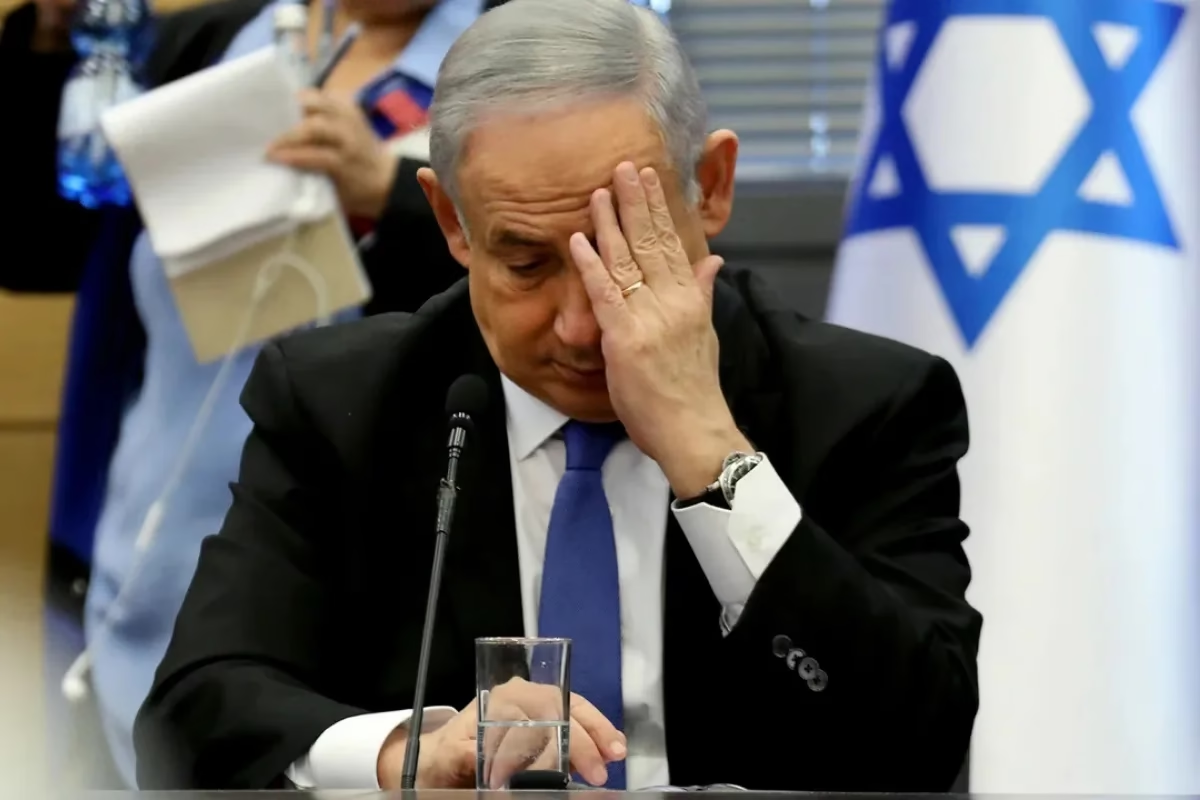
Netanyahu Iran threat rhetoric has once again pushed Middle East tensions into the global spotlight after Israeli Prime Minister Benjamin Netanyahu issued a strong warning to Tehran over its alleged efforts to revive nuclear and ballistic missile capabilities. Speaking in an interview with Fox News, Netanyahu claimed that Iran is attempting to rebuild sensitive infrastructure in areas that were not targeted during earlier strikes.
According to Netanyahu, Israeli intelligence has identified renewed activity linked to Iran’s nuclear ambitions, as well as steps to restore its ability to develop long-range ballistic missiles. His remarks signal a hardening stance by Israel and underline the seriousness with which Tel Aviv views Tehran’s strategic moves.
Israel’s Concerns Over Iran’s Capabilities
The Israeli prime minister stated that Iran is working quietly to re-establish its nuclear program despite previous bombings. He also warned that Iran is seeking to regain missile-launching capabilities that could pose a direct threat to Israel.
Netanyahu revealed that he was recently briefed on Iranian military exercises involving ballistic missile launches. At that time, he said, he made it clear that such actions would invite “terrible consequences.” This firm language reinforces the Netanyahu Iran threat narrative, which has become central to Israel’s regional security messaging.
Strategic Messaging and Deterrence
Israel has long maintained that it will not allow Iran to acquire nuclear weapons. Netanyahu’s comments reflect a strategy of deterrence aimed at discouraging Tehran from advancing its military programs. By speaking publicly, Netanyahu appears to be sending a message not only to Iran but also to international stakeholders, emphasizing that Israel is prepared to act if necessary.
The Netanyahu Iran threat stance also aligns closely with Israel’s broader security doctrine, which prioritizes preemptive measures against perceived existential risks.
Gaza and Hamas: Netanyahu’s Position
Beyond Iran, Netanyahu also addressed the situation in Gaza. He claimed that despite pledges of neutrality, Hamas still possesses around 60,000 weapons. According to him, lasting stability in Gaza cannot be achieved unless Hamas is dismantled.
Netanyahu said that the formation of a new governing structure in Gaza is possible, but only after Hamas is removed from power. This position highlights Israel’s belief that militant groups remain the main obstacle to peace in the region.
US-Israel Coordination
When asked about Israeli military actions during a ceasefire and Washington’s reaction, Netanyahu said he and U.S. President Donald Trump were in complete harmony.He added that he received no complaints from Trump regarding Israeli strikes during that period.
This alignment with Washington strengthens Israel’s diplomatic backing and gives added weight to the Netanyahu Iran threat, suggesting that Israel may feel more confident acting against Iran with U.S. support or understanding.
The West Bank Narrative
Netanyahu also commented on the situation in the West Bank, addressing criticism over settler-related violence. He downplayed reports of widespread destruction, saying such claims were exaggerated. According to him, while isolated incidents do occur, they are not comparable to what he described as nearly 1,000 attacks against Israeli settlers.
He stated that Israel aims to develop infrastructure for both Israelis and Palestinians but insists on maintaining military control over the area for security reasons. This perspective reflects Israel’s long-standing position that security concerns outweigh calls for reduced military presence.
Regional Implications
The Netanyahu Iran threat has broader implications for regional stability. Iran and Israel are already engaged in a shadow conflict involving cyber operations, proxy groups, and intelligence activities. Public threats raise concerns that tensions could escalate into more direct confrontation.
Neighboring countries and global powers are closely monitoring developments, as any military escalation could affect energy markets, trade routes, and diplomatic relations across the Middle East.
Iran’s Likely Response
While Netanyahu’s comments were forceful, Iran has consistently denied seeking nuclear weapons and maintains that its missile program is defensive. Tehran has often responded to Israeli warnings by accusing Israel of destabilizing the region and violating international norms.
This cycle of accusation and counter-accusation keeps the Netanyahu Iran threat dynamic alive, with little sign of de-escalation in the near future.
A Fragile Balance
Netanyahu’s remarks underscore how fragile the current balance of power remains. His warning suggests that Israel is prepared to respond decisively if it believes Iran is crossing red lines. At the same time, the absence of direct conflict indicates that both sides may still be operating within a framework of deterrence rather than open war.
As diplomatic channels remain strained, the Netanyahu Iran threat continues to shape regional discourse. Whether this rhetoric leads to renewed negotiations or heightened confrontation will depend on actions taken in the coming months, not just words exchanged in interviews.
Netanyahu’s message is clear: Israel views Iran’s alleged military rebuilding as a serious danger and is prepared to act if those efforts continue.