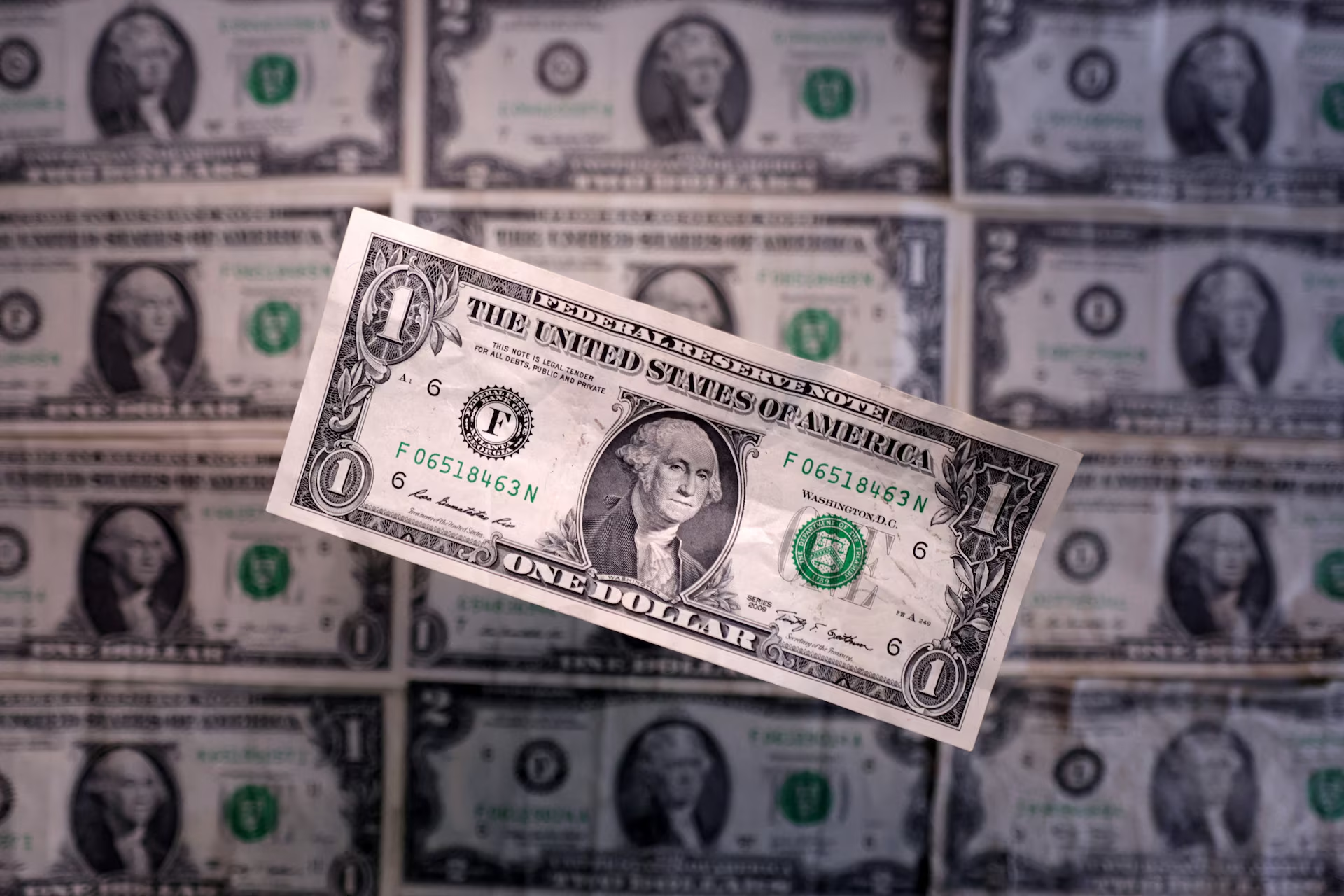
The U.S. dollar was stable on Tuesday as traders awaited the release of the Federal Reserve’s December minutes report. The report is expected to highlight divisions within the central bank about its policy direction for next year.
Currency markets were relatively calm, with low liquidity due to the holiday season. However, after a tough year for the U.S. dollar, the euro and the British pound posted their strongest gains since 2017.
The euro was trading at $1.1772, on track for a 13.7% annual gain, while the British pound was at $1.3509, up 8% for the year.
The dollar index, which tracks the U.S. dollar against other major currencies, was down 9.6% for the year, marking its steepest drop in eight years. The decline was driven by expectations of rate cuts from the Fed, lower interest rate differences with other currencies, and concerns over the U.S. fiscal deficit and political instability. The index was at 98.033, close to a three-month low.
This week, traders are focusing on the Fed’s minutes after the central bank cut rates earlier this month but hinted they could hold rates steady in the near term. There are differing opinions within the Fed about where rates should go in 2026, with some expecting further cuts.
Market analysts are pricing in two more rate cuts in 2026, suggesting the dollar could weaken further.
MUFG strategists expect the dollar index to fall by 5% next year, primarily driven by the U.S. economy and monetary policy decisions. They predict the Fed will cut rates three times in 2026, once per quarter until Q3.
In other currency news, the Japanese yen was trading at 156.07 per dollar, moving away from levels that prompted concerns of intervention by Japanese officials. The Bank of Japan (BOJ) has debated continuing interest rate hikes, despite one rate increase in December. The yen has remained largely flat against the dollar despite these hikes.
Investors have been disappointed with Japan’s slow pace of tightening, and a major long yen position earlier this year has reversed. As of now, speculators hold a small short position on the yen.
Kit Juckes, chief FX strategist at Societe Generale, said the dollar-yen pairing is now more about growth expectations than monetary policy, with the yen needing stronger economic growth to gain strength.
Meanwhile, the Australian dollar was at $0.6693, just below a 14-month high, and was on track for an 8% rise in 2025, its strongest performance since 2020. The New Zealand dollar was at $0.5806, poised for a 3.7% annual gain, breaking a four-year losing streak.