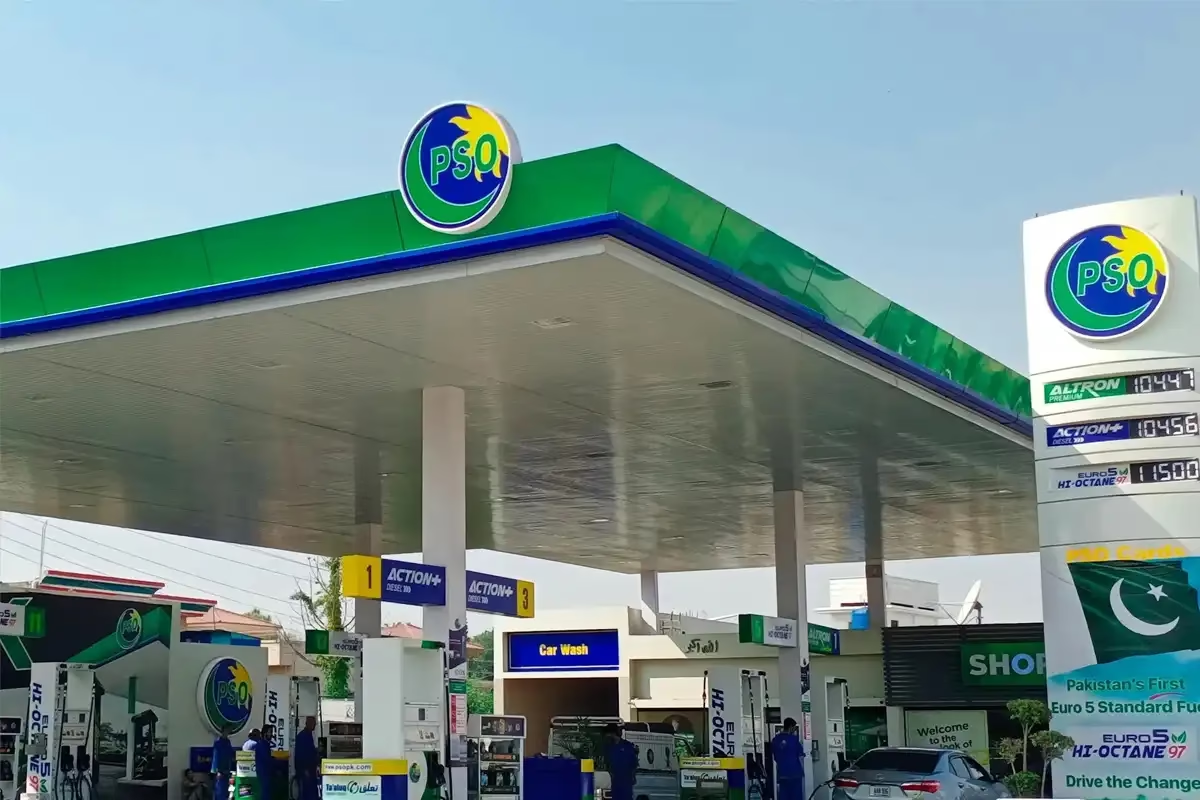
PSO advance pricing policy has become a major talking point in Pakistan’s oil sector after Pakistan State Oil introduced a first-of-its-kind pricing mechanism aimed at protecting fuel dealers from losses during price cuts. The decision marks a clear shift in how oil marketing companies manage risk and dealer relationships, and it could reshape market dynamics in the coming months.
For the first time in Pakistan’s history, PSO has rolled out an advance pricing facility under which the company itself will absorb financial losses if petrol or diesel prices are reduced after dealers have already placed their orders. Previously, dealers bore this burden, often resulting in hesitation, reduced orders, and supply disruptions.
What the New Policy Means for Dealers
Under the PSO advance pricing policy, fuel station owners no longer need to fear sudden losses when prices fall. If a dealer places an order at a higher price and the government later announces a reduction, PSO will compensate for the difference. This single change significantly alters the risk equation for dealers, who have long complained about uncertainty tied to frequent fuel price adjustments.
In addition to loss absorption, PSO has announced an extra discount of Rs4.82 per litre on petrol for its dealers. This incentive is expected to improve cash flow for fuel stations and encourage consistent ordering, even during periods when price changes are anticipated.
Why PSO Introduced This Shift
Industry insiders say the PSO advance pricing policy was introduced to strengthen the company’s competitive position against other oil marketing companies, particularly those operating in partnership with foreign suppliers. Over the years, aggressive pricing strategies by competitors have put pressure on PSO’s market share, especially in urban centers.
Another key reason behind the move was the recurring issue of supply disruptions. In the past, when dealers expected a price cut, many delayed or reduced their orders to avoid losses. This behavior often resulted in fuel shortages, long queues, and public frustration. By removing the financial risk for dealers, PSO hopes to stabilize supply patterns across the country.
A First-of-Its-Kind Decision
Analysts note that the PSO advance pricing policy is unprecedented in Pakistan’s oil sector. No oil marketing company has previously agreed to shoulder losses resulting from price reductions. This bold step signals a shift toward dealer-centric policies and could set a new benchmark for the industry.
Market observers believe this move may pressure other oil marketing companies to revise their own dealer support models. If competitors fail to offer similar protections or incentives, they risk losing dealer loyalty to PSO, which already holds a dominant position in the market.
Impact on the Oil Market
The announcement has triggered significant discussion within the oil industry. Many experts believe the PSO advance pricing policy could help reduce artificial shortages that often emerge just before fuel price revisions. With dealers assured that losses will be covered, there is less incentive to withhold stock or slow down sales.
Improved supply management is another expected outcome. Consistent ordering patterns make it easier for PSO to plan imports, manage storage, and ensure timely distribution. In the long run, this could lead to smoother fuel availability for consumers and fewer disruptions caused by speculative behavior.
Potential Challenges and Risks
While the policy has been widely welcomed by dealers, some analysts caution that absorbing losses could impact PSO’s margins, especially during periods of sharp price volatility. The company will need strong financial controls and forecasting mechanisms to manage this added risk effectively.
However, supporters argue that PSO’s scale, infrastructure, and market dominance put it in a better position than smaller players to absorb such shocks. They also point out that improved supply stability and stronger dealer relationships could offset short-term financial pressures.
What This Means for Consumers
Although the PSO advance pricing policy is primarily aimed at dealers, consumers may also benefit indirectly. Reduced shortages, fewer panic-buying situations, and steadier fuel availability can improve the overall experience at petrol stations. In addition, better supply discipline can help prevent sudden spikes in prices driven by artificial scarcity.
A Possible Industry-Wide Shift
PSO’s move could redefine how oil marketing companies operate in Pakistan. The policy signals a transition from short-term risk avoidance to long-term market stability. Competitors will be closely watching the results, and many may be forced to introduce similar measures to remain competitive.
The PSO advance pricing policy represents a bold and strategic change in Pakistan’s oil sector. By protecting dealers from losses and offering additional discounts, PSO is aiming to strengthen trust, ensure smoother supply, and reinforce its leadership position. Whether this becomes a new industry standard will depend on how effectively PSO manages the financial and operational challenges that come with this groundbreaking decision.