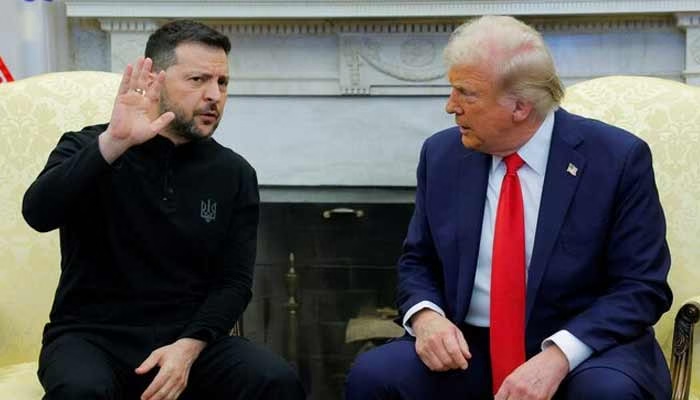
The ongoing Ukraine peace talks have entered a potentially decisive phase as President Volodymyr Zelenskiy prepares to meet US President Donald Trump in Florida. The meeting, scheduled ahead of the New Year, is expected to focus on the most sensitive and unresolved issues of the war, particularly territorial disputes and long-term security guarantees. With draft agreements nearing completion, global attention is once again fixed on whether diplomacy can finally bring an end to Europe’s deadliest conflict since World War Two.
Zelenskiy confirmed that territorial questions will be central to the discussions, calling them the main stumbling block in negotiations. He specifically mentioned Donbas and the Zaporizhzhia nuclear power plant as key agenda items, underscoring how deeply complex the Ukraine peace talks remain even after years of conflict and mediation efforts.
Territorial Disputes at the Core
Territory continues to define the limits of compromise. Russia is seeking full control over the Donbas region, which includes Donetsk and Luhansk, despite failing to occupy all of it militarily. Ukraine, on the other hand, wants hostilities frozen along the current battle lines, arguing that any territorial concessions must be decided by the Ukrainian people themselves.
Zelenskiy has repeatedly stressed that no leader can unilaterally give away land. He reiterated that any decision involving territorial compromise should come through a national referendum. This position reflects both constitutional principles and public sentiment, making territory the most politically sensitive issue in the Ukraine peace talks.
The United States has reportedly floated the idea of a free economic zone as a possible compromise if Ukraine withdraws from certain areas. However, details remain unclear, and skepticism persists over how such a zone would function amid unresolved sovereignty and security concerns.
The Zaporizhzhia Nuclear Power Plant
Another critical issue is the Zaporizhzhia nuclear power plant, Europe’s largest, which sits near the front line and remains under Russian control. Its status is not just a bilateral concern but a global one, given the risks associated with military activity around nuclear facilities.
In the context of the Ukraine peace talks, the plant represents both a humanitarian and strategic challenge. Any agreement will need to address its security, management, and long-term oversight to prevent further escalation or environmental catastrophe.
Security Guarantees and Draft Agreements
Beyond territory, Ukraine is pushing hard for strong, legally binding security guarantees. Zelenskiy has openly expressed mistrust rooted in past experiences where assurances from international partners failed to prevent aggression. This time, Kyiv wants commitments that carry real consequences.
According to Zelenskiy, a security guarantees agreement between Ukraine and the US is nearly finalized, while a broader 20-point peace framework is about 90% complete. These developments suggest that the Ukraine peace talks are moving from abstract discussions toward actionable agreements, even if final signatures are not yet assured.
Zelenskiy noted that his meeting with Trump aims to “refine” these drafts and explore potential economic cooperation alongside security arrangements. While he stopped short of confirming whether a deal would be signed during the visit, he made it clear that Ukraine is open to progress.
The US and European Role
Washington continues to play a central role in facilitating negotiations. Trump has previously signaled frustration with the slow pace of talks but indicated willingness to engage directly if meaningful progress seemed possible. The upcoming meeting appears to reflect that threshold being reached.
European leaders may also join discussions virtually, highlighting the multilateral nature of the Ukraine peace talks. Zelenskiy recently spoke with Finland’s President Alexander Stubb, describing “significant progress” and reinforcing Europe’s continued involvement.
Russia’s Position and Ongoing Conflict
Moscow’s stance remains less transparent. Kremlin officials have avoided public commentary on the latest proposals, citing concerns about undermining negotiations. However, reports suggest that President Vladimir Putin may be open to limited territorial swaps, provided Russia gains full control of Donbas.
Despite diplomatic efforts, fighting continues. Russian forces have intensified attacks on Ukraine’s energy infrastructure and key cities, including Odesa and Kharkiv. These actions underscore the fragile and contradictory nature of the Ukraine peace talks, where dialogue and destruction proceed in parallel.
Pressure as a Negotiating Tool
Zelenskiy has indicated he will urge Trump to increase pressure on Russia, viewing leverage as essential to achieving a fair and lasting settlement. Sanctions, diplomatic isolation, and coordinated international action remain key tools in this strategy.
A Narrow Window for Peace
As the year draws to a close, optimism is cautiously tempered by realism. The Ukraine peace talks have advanced further than many expected, yet the hardest decisions still lie ahead. Territorial integrity, national sovereignty, and credible security guarantees will determine whether diplomacy succeeds where war has failed.
The upcoming Zelenskiy–Trump meeting may not end the conflict overnight, but it could shape the framework for peace in the months to come. For Ukraine, Russia, and the wider world, the stakes could not be higher.