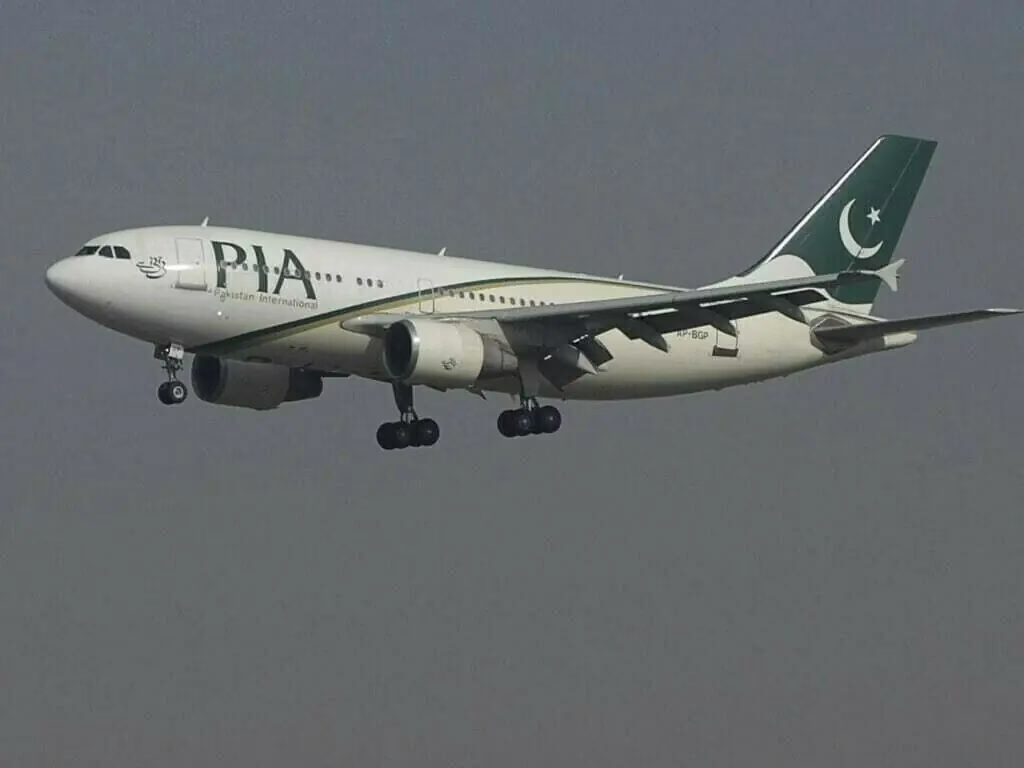
The long-delayed PIA privatization deal has taken a decisive step forward after the Privatisation Commission Board (PC Board) recommended the Rs135 billion bid for a 75% stake in Pakistan International Airlines (PIA). The offer, submitted by the Arif Habib consortium, has now been forwarded to the Cabinet Committee on Privatisation for final consideration and approval, marking a major milestone in the government’s efforts to offload the loss-making national carrier.
This development comes a day after the federal government formally concluded the bidding process, effectively ending years of uncertainty surrounding PIA’s future. Privatization attempts had stalled repeatedly in the past due to weak investor interest, financial liabilities, and operational challenges. The latest progress signals renewed confidence in the airline’s turnaround potential under private management.
Details of the Winning Bid
Under the proposed PIA privatization deal, the Arif Habib consortium has offered Rs135 billion for a controlling 75% stake in the airline. The bid exceeded the government’s reference price of Rs100 billion, which was noted with satisfaction by the PC Board during its 246th meeting chaired by Muhammad Ali, Adviser to the Prime Minister on Privatisation.
The consortium includes prominent Pakistani corporate entities: Arif Habib Corporation Limited, Fatima Fertilizer Company Limited, City Schools (Private) Limited, and Lake City Holdings (Private) Limited. Together, these firms bring experience across finance, industry, education, and real estate—an ownership mix that policymakers believe could strengthen PIA’s governance and long-term sustainability.
How the Funds Will Be Used
Out of the Rs135 billion bid amount, the government will receive Rs10 billion in immediate cash. The remaining amount will be invested directly into PIA to support restructuring, operational improvements, and financial stabilization. This reinvestment-focused structure aims to address the airline’s chronic issues rather than treating privatization as a purely fiscal transaction.
The overall valuation of PIA under this arrangement stands at Rs180 billion. Once the remaining 25% shares are sold in a later phase, the government is expected to receive an additional Rs45 billion. This phased approach allows the state to retain some upside potential while transferring operational control to private hands.
Why This Deal Matters
The PIA privatization deal is significant not just because of its size, but because of its symbolic importance. PIA has long been cited as an example of inefficiency, political interference, and mounting losses within state-owned enterprises. Successful privatization could set a precedent for reforming other struggling public sector entities.
Over the years, PIA’s financial losses have burdened the national exchequer, diverting public funds away from social services and development. By bringing in private investors with a managing stake, the government hopes to reduce fiscal pressure while improving service quality, punctuality, and competitiveness.
A Restart After Past Failures
The current progress follows a failed attempt to privatize PIA last year, when the process collapsed due to insufficient bids and investor concerns. Learning from that experience, the government restarted the sale process in April by inviting expressions of interest and revising key terms to make the deal more attractive.
Greater clarity on liabilities, operational freedom for the buyer, and a realistic valuation appear to have helped revive investor confidence. The response from the Arif Habib consortium suggests that private sector players now see a viable path to restructuring the airline.
What Happens Next
While the PC Board’s recommendation is a crucial step, the PIA privatization deal still requires approval from the Cabinet Committee on Privatisation. Once approved, legal documentation, regulatory clearances, and transaction closing procedures will follow.
Attention will then shift to how the new management plans to turn PIA around. Key challenges include modernizing the fleet, improving on-time performance, restoring international routes, and rebuilding the airline’s reputation among passengers. Labor relations and workforce optimization will also be sensitive areas requiring careful handling.
Broader Economic Context
The privatization push aligns with Pakistan’s broader economic reform agenda, which emphasizes reducing losses from state-owned enterprises and improving efficiency through private sector participation. International lenders and economic partners have repeatedly stressed the need for such reforms as part of fiscal stabilization efforts.
If executed effectively, the PIA privatization deal could help restore confidence in Pakistan’s privatization program and attract interest in future transactions. It may also signal to markets that politically difficult reforms are achievable with the right structure and timing.
The recommendation of the Rs135 billion bid for a 75% stake in PIA marks a turning point in the airline’s long and troubled privatization journey. With the PIA privatization deal now awaiting cabinet approval, Pakistan stands closer than it has in years to transferring control of its national carrier to private hands.
While challenges remain, the deal offers a chance to stabilize PIA, reduce fiscal drain, and improve aviation services for passengers. Its success or failure will likely shape the future of privatization efforts across the country.