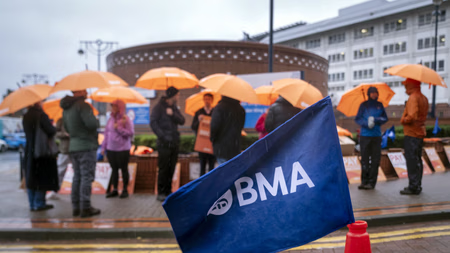
Britain’s Health Secretary Wes Streeting has pledged to do everything possible to prevent further industrial action by hospital doctors after they returned to work on Monday following a five-day strike.
The walkout, organised by the British Medical Association (BMA), took place during one of the busiest periods for the National Health Service (NHS), as hospitals struggled with a surge in flu cases. Streeting had earlier criticised the strikes, describing them as “self-indulgent, irresponsible and dangerous.”
In a statement on Monday, Streeting said his door remained open for negotiations and expressed a firm commitment to ending what he called “damaging cycles of disruption.”
“I do not want to see a single day of industrial action in the NHS in 2026,” he said, confirming talks with the BMA would resume early next year.
The BMA responded by urging the government to shift its tone. Chair Jack Fletcher said the union wanted “less name-calling and more deal-making,” calling for job creation and a multi-year plan to restore doctors’ pay.
“Strikes were not inevitable in 2025 and they are not in 2026 either,” Fletcher said.
Pressure from Flu Surge
The strike coincided with a sharp rise in flu-related hospitalisations. NHS England has warned hospitals are facing a “worst-case scenario,” with flu admissions jumping more than 50% in early December to an average of 2,660 patients per day — the highest ever recorded for this time of year.
Streeting said the NHS had managed the “double whammy” of strikes and rising flu cases due to staff dedication, but cautioned that the most difficult weeks of winter were still ahead.
The dispute dates back to the previous Conservative government and involves resident doctors, who make up nearly half of England’s medical workforce.