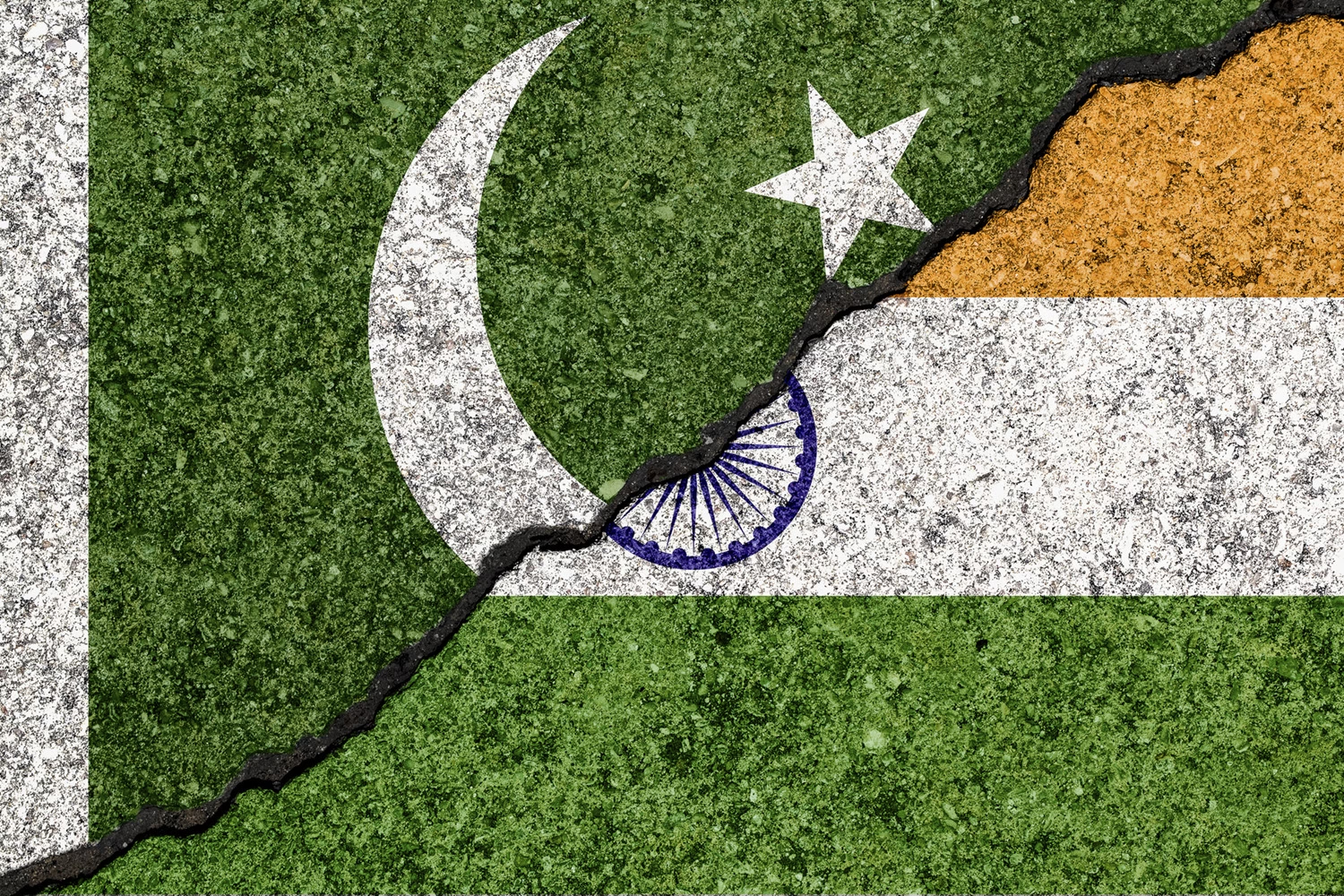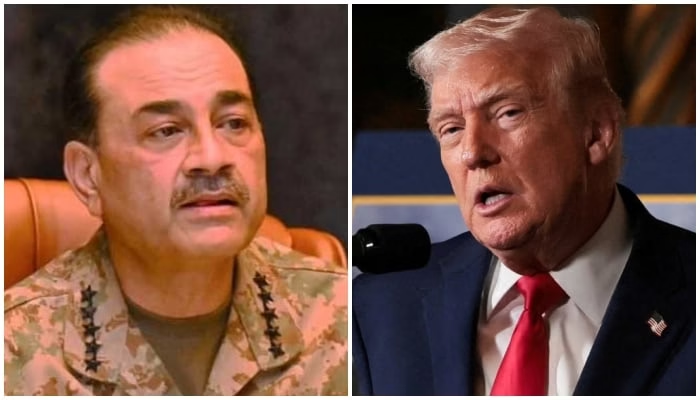
Trump Pakistan India ceasefire once again came into global focus after US President Donald Trump publicly praised Pakistan’s Chief of Army Staff, Field Marshal Syed Asim Munir, calling him a “highly respected” leader while reiterating his claim that Washington played a decisive role in preventing a major war between Pakistan and India.
Speaking at an event in Florida alongside senior US defence officials, President Trump said the situation between the two nuclear-armed neighbours had reached a dangerous point earlier this year. According to him, timely diplomatic intervention helped avert what could have escalated into a devastating conflict with catastrophic consequences for the region.
Trump’s Claim of Preventing a Major War
President Trump stated that the Trump Pakistan India ceasefire efforts saved millions of lives. He claimed that both Pakistan’s military leadership and Prime Minister Shehbaz Sharif acknowledged his role in defusing tensions. Trump asserted that the conflict had already reached an alarming stage, with fighter jets shot down and military operations intensifying on both sides.
While making these remarks, Trump said the war “was going to rage” and stressed that the confrontation carried nuclear risks. He also claimed that he has helped stop multiple wars during his political career, presenting the Pakistan-India situation as one of the most serious crises he helped resolve.
Background of the Pakistan-India Escalation
The escalation between Pakistan and India earlier this year marked the worst military confrontation between the two countries in decades. The crisis was triggered by a deadly attack in Indian Illegally Occupied Jammu and Kashmir (IIOJK), which India blamed on Pakistan. Islamabad strongly denied the allegations, calling them baseless.
In the days that followed, India launched what Pakistan described as unprovoked attacks that resulted in civilian casualties. Pakistan responded with Operation Bunyanum Marsoos, which, according to Islamabad, was a defensive action. During the conflict, Pakistan claimed it shot down several Indian Air Force jets and intercepted multiple drones.
After nearly four days of intense hostilities, the Trump Pakistan India ceasefire was announced on May 10 through US mediation, bringing an end to the military confrontation.
Praise for Field Marshal Asim Munir
President Trump has repeatedly praised Field Marshal Syed Asim Munir for his leadership during the crisis. He described the Pakistani army chief as a “great fighter” and credited him with playing a constructive role in restoring calm. Trump’s remarks highlighted what he portrayed as professional military leadership on both sides that ultimately chose de-escalation over prolonged conflict.
Trump also recalled his rare one-on-one meeting with Field Marshal Munir at the White House, where he thanked him for his role in ending the conflict. Later meetings with Prime Minister Shehbaz Sharif further reinforced what Washington described as improving ties with Islamabad.
Improving US-Pakistan Relations
The Trump Pakistan India ceasefire episode appears to have contributed to warmer relations between the United States and Pakistan. For years, Washington’s regional strategy leaned heavily toward India, particularly as a counterweight to China. However, recent high-level engagements suggest a recalibration of US-Pakistan ties.
Following the ceasefire, both countries increased diplomatic and military-level interactions. A trade deal was also finalized, signaling renewed economic cooperation. Analysts believe the crisis gave Pakistan an opportunity to reassert its strategic relevance in Washington.
Trump’s Broader Regional Messaging
While praising Pakistan’s leadership, Trump also emphasized his strong relationship with India and Prime Minister Narendra Modi. He stated that maintaining ties with both countries was crucial for regional stability. By highlighting his engagement with leaders from both sides, Trump framed himself as a mediator capable of balancing competing interests in South Asia.
The Trump Pakistan India ceasefire narrative has been a recurring theme in his public statements, particularly when discussing global security challenges. Trump has often pointed to the episode as evidence of his conflict-resolution approach and willingness to engage directly with military and political leaders.
Mixed Reactions and Global Perspective
Trump’s claims have generated mixed reactions internationally. Supporters credit US diplomacy for preventing further escalation, while critics argue that regional dynamics and internal decision-making in Pakistan and India also played a critical role. Regardless, the ceasefire underscored how fragile peace remains between the two neighbours.
From Pakistan’s perspective, the ceasefire was welcomed as a necessary step to avoid further loss of life. Islamabad has publicly acknowledged US mediation and even nominated Trump for the Nobel Peace Prize, citing his role in de-escalation.
The Trump Pakistan India ceasefire continues to shape discussions around South Asian security and US foreign policy. Trump’s repeated praise for Pakistan’s military leadership and his assertions of preventing a nuclear conflict have reinforced the narrative of US involvement as a stabilizing force. As regional tensions persist, the episode serves as a reminder of how quickly conflicts can escalate—and how critical diplomacy remains in averting disaster.