Pakistan Bangladesh economic cooperation took a positive step forward as both countries reaffirmed their commitment to deepening bilateral economic ties and enhancing collaboration on international taxation. The renewed engagement reflects a shared vision to strengthen trade relations, align tax frameworks, and promote sustainable economic growth through institutional cooperation.
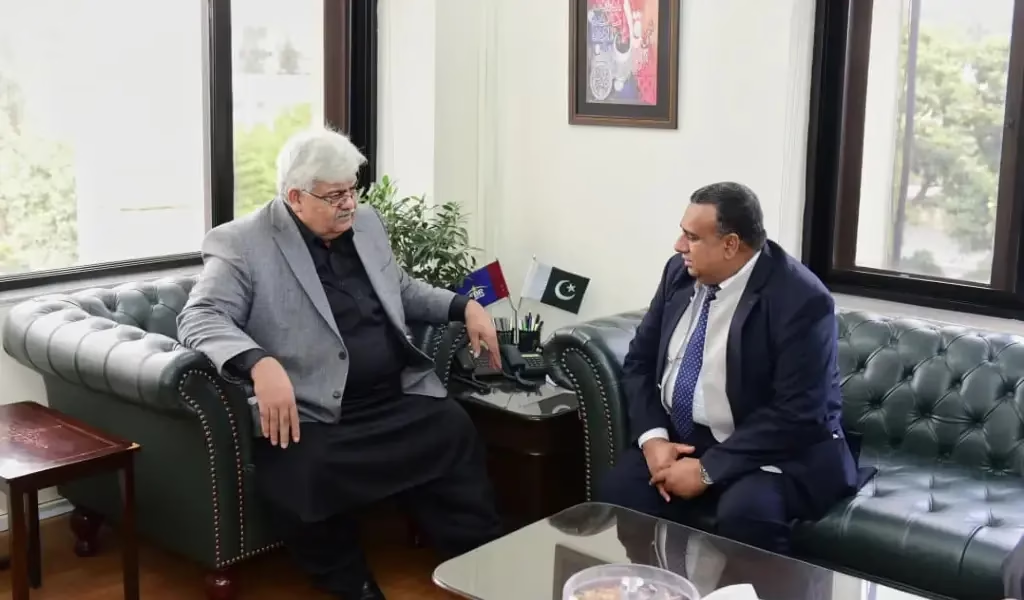
The development emerged during a high-level meeting in Islamabad between Md. Iqbal Hussain Khan, High Commissioner of Bangladesh to Pakistan, and Rashid Mahmood Langrial, Chairman of Pakistan’s Federal Board of Revenue (FBR). The meeting highlighted the long-standing brotherly relations between the two nations and emphasized the need to translate goodwill into stronger economic outcomes.
Renewed Focus on Economic Ties
Both sides acknowledged that Pakistan Bangladesh economic cooperation holds significant untapped potential. Despite shared history and cultural connections, trade volumes between the two countries remain below capacity. Officials agreed that closer coordination on taxation, trade facilitation, and regulatory alignment could help unlock new opportunities for businesses and investors.
During the discussions, the two leaders stressed the importance of creating a business-friendly environment by reducing tax-related barriers and ensuring transparency. Stronger tax cooperation was identified as a key pillar for encouraging cross-border trade and investment.
High-Level Bangladeshi Delegation Visit
A major highlight of this engagement is the five-day official visit of a senior delegation from Bangladesh’s National Board of Revenue (NBR) to Pakistan, running from December 22 to 26. The delegation is led by Muhammad Lutful Azeem, Member (International Taxes), and includes experienced tax officials tasked with advancing bilateral discussions.
This visit reflects growing momentum in Pakistan Bangladesh economic cooperation, particularly in the area of international taxation. Face-to-face engagements allow both sides to share best practices, understand each other’s tax systems, and identify areas where reforms can be harmonized.
Updating the Double Taxation Convention
One of the primary objectives of the visit is to initiate discussions on a protocol to amend the existing Double Taxation Convention (DTC) between Pakistan and Bangladesh. The proposed update aims to ensure that individuals and businesses are not taxed twice on the same income while also preventing fiscal evasion.
Aligning the DTC with evolving global standards is seen as crucial for modern Pakistan Bangladesh economic cooperation. Updated tax treaties not only protect investors but also signal policy stability and mutual trust, which are essential for long-term economic partnerships.
Strengthening Institutional Collaboration
On the first day of the visit, the Bangladeshi delegation met with senior FBR officials, including Iqbal Khan, Member (Administration), and Aftab Alam, Director General (International Taxes). These meetings focused on exchanging views on international tax practices, digital taxation challenges, and mechanisms for dispute resolution.
Both sides agreed that sustained institutional engagement is necessary to keep cooperation effective. Regular technical meetings, information sharing, and joint capacity-building initiatives were proposed to ensure that Pakistan Bangladesh economic cooperation remains dynamic and responsive to global economic changes.
Benefits for Trade and Investment
Enhanced cooperation on taxation is expected to directly benefit traders, exporters, and investors in both countries. Simplified tax procedures, clearer rules, and reduced uncertainty can lower the cost of doing business and encourage companies to explore new markets.
For Pakistan, stronger economic ties with Bangladesh can help diversify export destinations and strengthen regional trade links. For Bangladesh, collaboration opens access to new opportunities in Pakistan’s market, particularly in sectors such as textiles, pharmaceuticals, agriculture, and services. In this context, Pakistan Bangladesh economic cooperation becomes a strategic tool for mutual growth.
A Broader Regional Context
The renewed engagement also reflects a broader regional trend toward cooperation and economic integration. As global trade faces uncertainty, countries in South Asia are increasingly looking inward to strengthen regional partnerships. Improved tax coordination between Pakistan and Bangladesh can serve as a model for similar agreements across the region.
Officials noted that aligning tax policies with international norms would also enhance both countries’ credibility in the global financial system. This alignment supports transparency, combats tax evasion, and promotes responsible economic governance.
The ongoing discussions signal a constructive phase in Pakistan Bangladesh economic cooperation. While the immediate focus is on taxation, the broader objective is to build a comprehensive economic partnership that supports trade growth, investment flows, and people-to-people connections.
As the Bangladeshi delegation continues its visit, expectations remain high that concrete outcomes will emerge, paving the way for a more integrated and mutually beneficial economic relationship. With continued dialogue and political will, Pakistan and Bangladesh appear well-positioned to strengthen their partnership and unlock new avenues for shared prosperity.