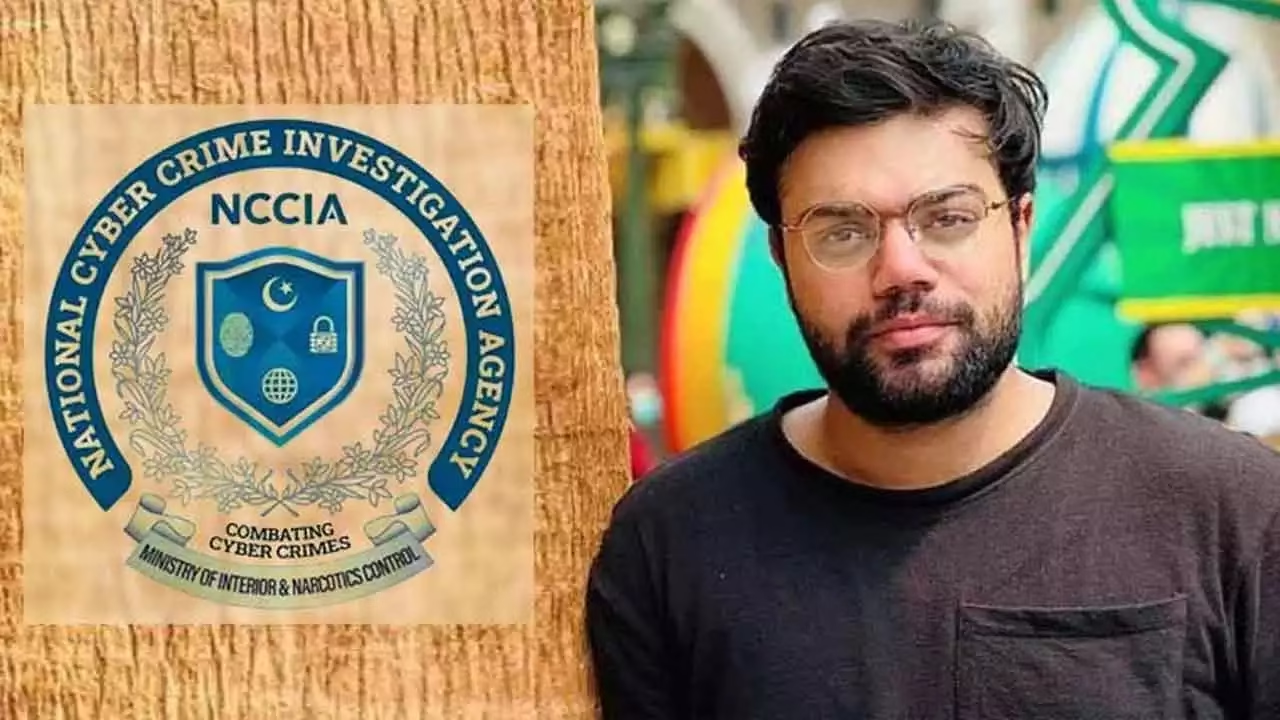
The Dicky Bhai YouTube case has recently drawn public attention after legal proceedings highlighted questions around digital content ownership, platform regulations, and the responsibilities of online creators. The matter surfaced when a lawyer representing the NCCIA alleged that Dicky Bhai had uploaded three videos on his YouTube channel that were considered state property, prompting concerns over potential rule violations.
According to the NCCIA’s counsel, the videos in question were uploaded without proper authorization, and therefore action should be taken under applicable laws. During the court proceedings, the lawyer emphasized that YouTube channels are not exempt from legal oversight, especially when content allegedly involves state-owned material. This argument placed the Dicky Bhai YouTube case at the center of a broader discussion about digital governance in Pakistan.
Court Proceedings and Judicial Response
As the hearing progressed, the judicial magistrate responded cautiously to the claims. The judge made it clear that if the NCCIA intended to pursue legal action, a formal written application would need to be submitted. This response underscored the importance of due process and procedural compliance, even in cases involving digital platforms and online content.
The court’s stance highlighted that allegations alone are not sufficient grounds for immediate action. Instead, the legal system requires proper documentation and clearly stated claims before moving forward. This approach ensures fairness and transparency, especially in high-profile matters like the Dicky Bhai YouTube case, where public interest and media attention can influence perception.
Affidavit and Legal Assurance
Representing Dicky Bhai, lawyer Barrister Amrit Sheikh stated that an affidavit had already been submitted to the court. He assured the magistrate that his client had no intention of engaging in any illegal activity. According to the defense, Dicky Bhai has consistently tried to comply with the law and platform guidelines, and any misunderstanding regarding the videos should be addressed through lawful channels.
The defense further emphasized that content creators often operate in a complex digital environment where rules can be unclear or open to interpretation. In this context, the Dicky Bhai YouTube case reflects the challenges faced by influencers who balance creative expression with legal boundaries.
Appearance Before the Court
Dicky Bhai appeared before the judicial magistrate alongside his legal team, which included Barrister Amrit Sheikh and Mian Usman. His presence in court signaled cooperation with the legal process and a willingness to address the allegations transparently. Observers noted that such appearances are crucial in reinforcing trust between digital creators and regulatory institutions.
The hearing itself remained procedural, focusing on initial arguments rather than delivering any immediate verdict. This stage of the Dicky Bhai YouTube case was primarily about establishing whether formal proceedings should move forward based on written submissions.
Broader Implications for Digital Creators
Beyond the individual circumstances, the Dicky Bhai YouTube case raises important questions for Pakistan’s growing community of digital creators. As online platforms become more influential, regulatory bodies are increasingly scrutinizing content that may intersect with public interest, state institutions, or sensitive information.
Legal experts believe this case could serve as a reference point for future disputes involving YouTube channels and alleged misuse of official or state-related material. It highlights the need for clearer guidelines that define what constitutes state property in the digital space and how creators can safely engage with such content without risking legal consequences.
The Need for Clear Digital Policies
One of the key takeaways from the Dicky Bhai YouTube case is the growing urgency for updated digital content policies. As technology evolves, laws must adapt to address new forms of communication and media distribution. Without clear frameworks, both creators and regulators may find themselves navigating uncertain legal territory.
Transparent rules would not only protect state interests but also provide creators with the confidence to produce content responsibly. Many digital professionals argue that collaboration between policymakers, platforms, and creators is essential to avoid unnecessary conflicts.
For now, the case remains at an early stage. Any further action depends on whether the NCCIA submits a written application, as advised by the court. Until then, the Dicky Bhai YouTube case serves as a reminder that digital influence comes with legal responsibility.
As audiences increasingly consume news and entertainment online, such cases are likely to become more common. How authorities and courts handle them will shape the future of digital content regulation in Pakistan, setting precedents that could impact creators for years to come.