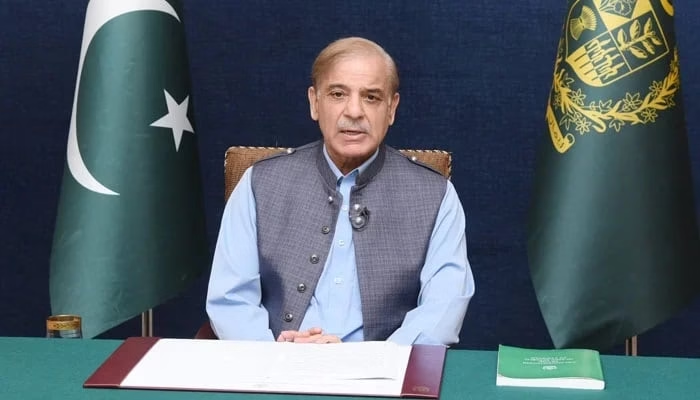
The overseas Pakistanis contribution to the country’s economy, culture, and global standing was highlighted by Prime Minister Muhammad Shehbaz Sharif on International Migrants Day, observed on December 18. In his message, the prime minister described overseas Pakistanis as a valuable national asset who not only support the economy through remittances but also act as ambassadors of Pakistan’s culture, values, and potential across the world.
Pakistan is home to more than 12 million citizens living and working abroad. According to the prime minister, their annual remittances of over $38 billion play a crucial role in supporting the national economy and providing livelihoods for millions of families. However, he emphasized that the true overseas Pakistanis contribution goes beyond financial support, reflecting their skills, determination, and hard work in diverse global markets.
Beyond Remittances: Skills and Determination
While remittances remain a key economic pillar, the prime minister stressed that the real strength of overseas Pakistanis lies in their professional capabilities. From healthcare and engineering to construction, IT, and entrepreneurship, Pakistani migrants are contributing meaningfully to the economies of host countries while enhancing Pakistan’s reputation abroad.
Recognizing this, the government is placing greater emphasis on skills development and technical education for individuals planning to work overseas. The goal is to ensure that Pakistani workers can compete effectively in the global economy, where success increasingly depends on a combination of technical expertise, communication skills, and adaptability.
Aligning Training With Global Standards
To enhance the overseas Pakistanis contribution in a rapidly changing world, the government is aligning Pakistan’s technical and vocational training systems with international standards. This includes upgrading curricula, improving training facilities, and focusing on market-relevant skills.
Special attention is being given to social training and foreign language education. Proficiency in international languages and cross-cultural communication is now seen as essential for professional growth and integration into global work environments. These efforts aim to prepare Pakistani workers not just for employment, but for long-term success abroad.
International Migrants Day and Global Recognition
On International Migrants Day, Pakistan joined the global community in recognizing the courage and resilience of individuals who leave their homelands in search of better opportunities. This year’s theme, “My Great Story: Cultures and Development,” reflects how migration contributes positively to both host and home countries.
The prime minister noted that large-scale human mobility can be a powerful source of shared prosperity. The movement of people from diverse backgrounds enriches societies culturally, encourages innovation, and fosters creativity. In this way, the overseas Pakistanis contribution also supports social development and cultural exchange.
Multicultural Societies and Sustainable Growth
According to the prime minister, societies that embrace diversity and are built on cooperation, dignity, and rights are better positioned for sustainable development. Overseas Pakistanis, through their daily interactions and professional achievements, help build bridges between cultures and promote mutual understanding.
Their presence in multicultural societies demonstrates how inclusion and respect can drive long-term progress. This cultural dimension of migration often receives less attention than economic factors, yet it remains a vital part of the overseas Pakistanis contribution to global development.
Protecting Rights and Recognizing Skills
The government is also working to ensure that overseas Pakistanis receive proper recognition and protection. Through initiatives such as the European Union Talent Partnership and various bilateral agreements, Pakistan is establishing structured systems for international recognition of skills and safeguarding migrant rights.
In addition, drafts of the National Emigration and Welfare Policy and the National Reintegration Policy aim to ensure that every individual who goes abroad experiences a safe, secure, and dignified journey. These policies address the entire migration cycle, from preparation and placement to return and reintegration.
A Shared Responsibility for the Future
The prime minister called for renewed commitment to empowering those who are compelled by circumstances to seek employment abroad. By equipping them with relevant skills and ensuring safer opportunities, Pakistan can maximize the positive impact of migration.
Ultimately, strengthening the overseas Pakistanis contribution is not just about economic gains. It is about human dignity, global cooperation, and shared development. As Pakistan continues to invest in its people, both at home and abroad, overseas Pakistanis will remain a powerful force in shaping the country’s future and enhancing its standing in the world.