The Trump Ukraine Conflict Plan has become the center of global attention as the United States continues to pressure Ukraine to make major territorial concessions in order to end the nearly four-year war. The latest statements from Washington and Kyiv reveal deep disagreements, growing frustration, and a political landscape that is becoming increasingly complex. The Trump Ukraine Conflict Plan remains controversial, with critics arguing that it dangerously favors Russia, while supporters insist it is the fastest route to peace.
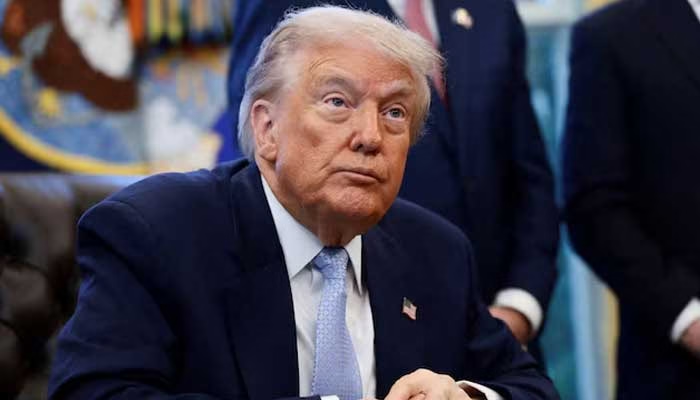
In recent remarks, White House spokesperson Karoline Leavitt said that President Donald Trump is extremely frustrated with both Russia and Ukraine. She emphasized that Trump doesn’t want any more talk and wants immediate action toward ending the conflict. This reflects the administration’s approach under the Trump Ukraine Conflict Plan, which seeks rapid negotiations but has drawn backlash from Ukrainian leadership.
Ukrainian President Volodymyr Zelensky, speaking to reporters, suggested that Washington’s core position has not changed since it shared its initial 28-point peace proposal. According to Zelensky, the Trump Ukraine Conflict Plan still pushes Ukraine to surrender parts of its territory in the Donetsk region, transforming the area into a demilitarized “free economic zone.” While the plan expects Ukrainian forces to withdraw from key strategic areas, it allows Russian troops to remain in several southern territories. This imbalance has become one of the major reasons Kyiv continues to resist the Trump Ukraine Conflict Plan.
Zelensky made it clear that Ukraine has submitted a revised 20-point counterproposal to Washington. Although full details have not been released, he confirmed that the biggest disagreements involve the status of the Donetsk region and the future of the Zaporizhzhia Nuclear Power Plant. Under the Trump Ukraine Conflict Plan, Russian troops would only withdraw from regions Moscow has not formally claimed, including parts of Kharkiv, Dnipropetrovsk, and Sumy—while leaving Russia in control of areas it claims to have annexed.
The Ukrainian president also challenged Washington’s expectation that only Kyiv should withdraw troops. He questioned why Russia is not being asked to pull back an equal distance in disputed territories. This, he argued, raises many “unresolved questions” and highlights the imbalance built into the Trump Ukraine Conflict Plan. Zelensky insisted that he has neither the constitutional nor moral authority to cede Ukrainian land and stressed that any decision on territorial concessions must come from the people—through elections or a national referendum.
Meanwhile, on the ground, the situation continues to deteriorate. Russia claims to have captured the town of Siversk, although Ukraine denies losing control. Both eastern and southern regions of Ukraine remain heavily damaged, with millions displaced and tens of thousands killed since Russia’s full-scale invasion in 2022. Despite ongoing diplomatic efforts, Zelensky sees no signs that Moscow truly wants to end the conflict. He believes Russia wants a temporary pause, not genuine peace—adding further complications to the Trump Ukraine Conflict Plan.
European allies have responded with alarm. After a virtual meeting, the UK prime minister’s office called it a pivotal moment for Ukraine and for security across the Euro-Atlantic region. However, Trump has largely sidelined European partners, preferring a direct negotiating style involving Moscow and Kyiv, with key roles played by his envoy Steve Witkoff and son-in-law Jared Kushner. This shift has added more controversy to the Trump Ukraine Conflict Plan and raised concerns about transparency and long-term stability.
Washington reportedly hopes to finalize the outline of an agreement before Christmas. But with Ukraine pushing back and Russia continuing its military operations, the path to a settlement looks increasingly uncertain. As the Trump Ukraine Conflict Plan continues to dominate global headlines, many analysts warn that pressuring Kyiv into concessions could have long-lasting consequences for European security.
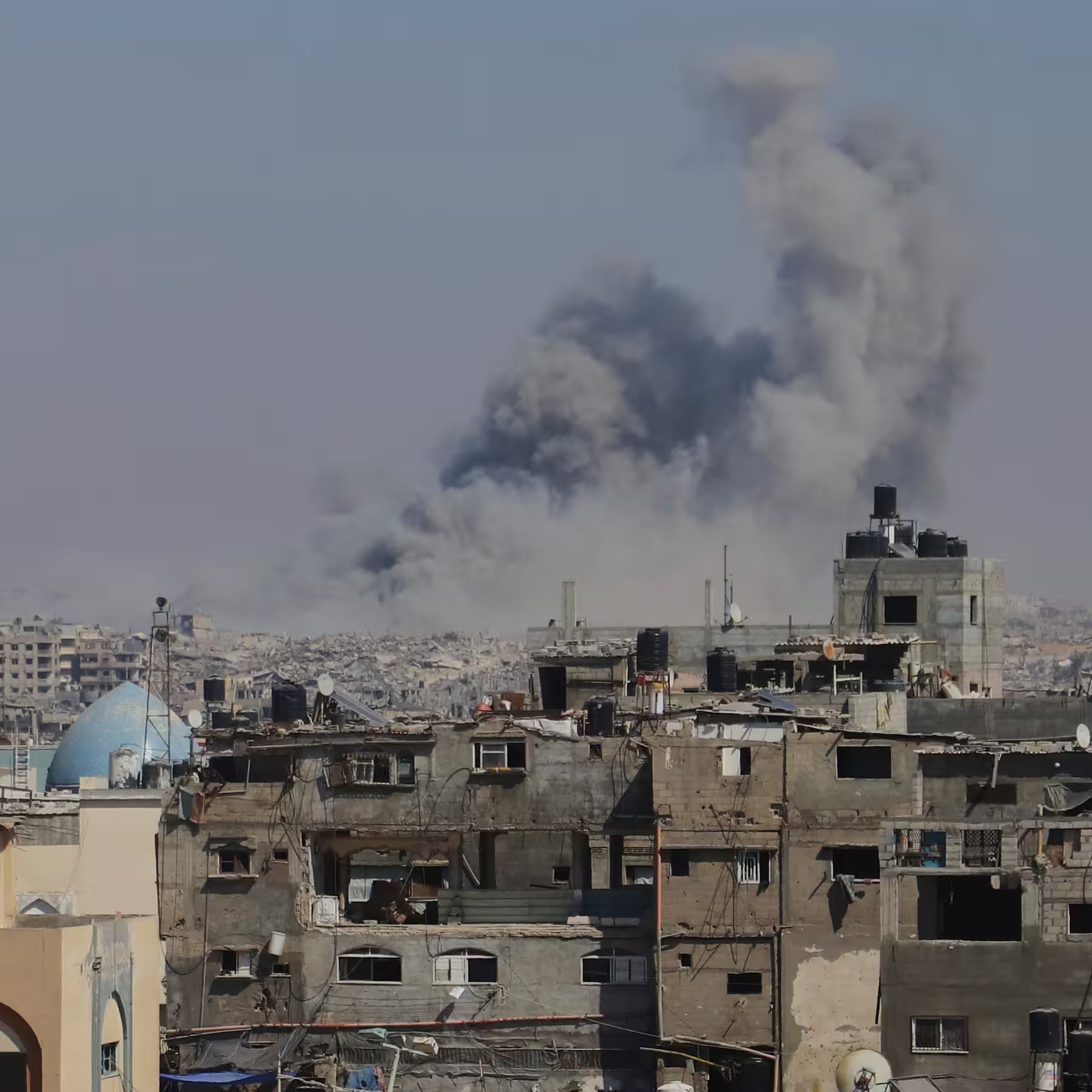
Amid the diplomatic turbulence, violence continues. A double bomb blast in Kyiv killed one serviceman and injured four others, in what authorities describe as a suspected terror attack. The incident is a stark reminder that the war is still very active, even as political negotiations unfold behind closed doors.
As the world watches, the Trump Ukraine Conflict Plan remains both a possible pathway to peace and a lightning rod for criticism. Whether it will bring an end to the war — or intensify divisions — is a question only time will answer.