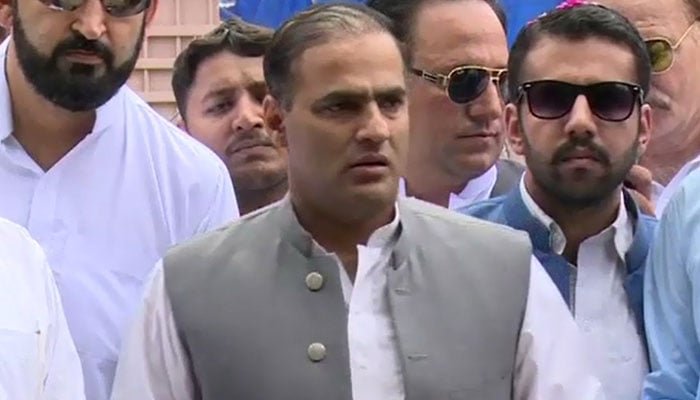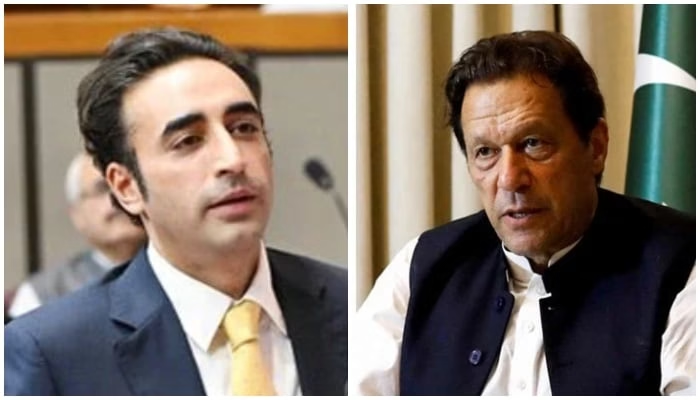
The Bilawal Bhutto political stance became a major national discussion this week as the Pakistan Peoples Party (PPP) Chairman made it clear that he does not support banning any political party in the country. His remarks come at a crucial time when debates around Pakistan’s political atmosphere, governance in Khyber Pakhtunkhwa (KP), and internal security have intensified. Speaking to the media in Lahore, Bilawal Bhutto-Zardari emphasized that democratic continuity and responsible conduct must guide all political activities in the country.
Bilawal stated openly that neither he nor the PPP had demanded the imposition of governor’s rule in KP. He explained that although the security situation in the province is deteriorating, the solution does not lie in banning political parties or removing the elected provincial government without due reasons. This clear and consistent Bilawal Bhutto political stance supports a democratic approach rather than confrontational politics.
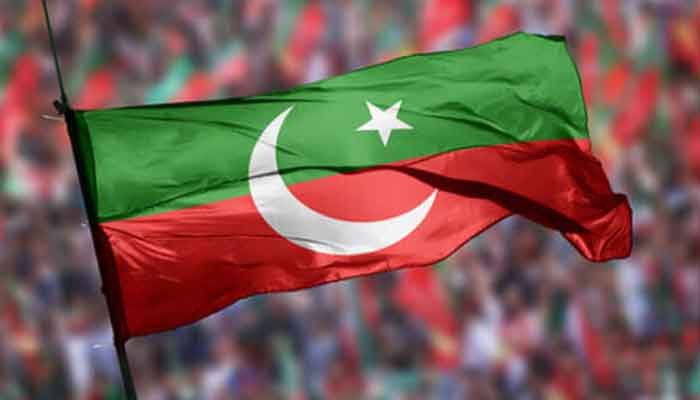
His comments come after certain ministers from the PML-N-led federal government called for a ban on the Pakistan Tehreek-e-Insaf (PTI), accusing it of promoting an anti-state and anti-army narrative. Responding to these claims, Bilawal insisted that while no party should be banned, the PTI-led government in KP must correct its behaviour and avoid interfering in counterterrorism operations. According to him, any interference in security matters at this sensitive time could cause serious national complications.
As the discussion around governor’s rule gained momentum, State Minister for Law Aqeel Malik reiterated that the federal government was “seriously considering” the option due to concerns about governance and worsening security. However, PTI-backed KP Chief Minister Sohail Afridi challenged the federal government to take such a step, adding to the political tension in the province.
Amid this backdrop, reports surfaced that the PTI had decided to reach out to the PPP through the multi-party alliance Tehreek Tahaffuz-e-Ayeen-Pakistan (TTAP). According to sources, the PPP is expected to be invited to a two-day national conference intended to explore possibilities for political dialogue. Notably, the ruling PML-N will not be part of this conference. Within this context, the Bilawal Bhutto political stance of supporting dialogue and democratic engagement gains further relevance.
Sources also revealed that PTI has tied any future negotiations with the federal government to a meeting involving political allies such as Mahmood Khan Achakzai and the incarcerated former prime minister Imran Khan. This development shows that political discussions are slowly shifting toward engagement, even if cautiously.
Bilawal also discussed the growing threat to Pakistan’s internal security, particularly emphasizing that KP is increasingly facing a “war-like situation.” He pointed out that extremist elements operating from Afghanistan pose a real danger, as terrorists from across the border have been involved in recent attacks against Pakistan. The PPP chairman stressed that the armed forces are playing an essential role in fighting this challenge and must not be undermined through political rhetoric or irresponsible narratives.
Welcoming broader political participation, Bilawal praised the idea of Punjab Chief Minister Maryam Nawaz contesting elections from Sindh. According to him, political competition is healthy and helps strengthen democratic processes when all parties are given equal opportunity to participate. This portion of the Bilawal Bhutto political stance highlights his preference for cross-provincial political engagement and open electoral processes.
He also addressed internal political tensions, warning against individuals or groups trying to weaken public trust in institutions. Without naming the party directly, he described a certain political force as behaving like a “political dajjal,” attempting to create distrust between the people and the country’s security institutions. Bilawal urged the party to correct its conduct and keep political differences within ethical boundaries.
Overall, the Bilawal Bhutto political stance reflects a balanced approach—opposing authoritarian measures like bans while demanding responsible behaviour from all political actors. He repeatedly emphasized the importance of democracy, national unity, and security cooperation during a time when the country faces significant internal and external challenges.
As the political environment evolves, Bilawal’s position can influence upcoming dialogues, party strategies, and potential alliances. With national security concerns growing and political temperatures rising, his call for maturity, responsibility, and democratic engagement may play a crucial role in shaping the political landscape in the coming months.