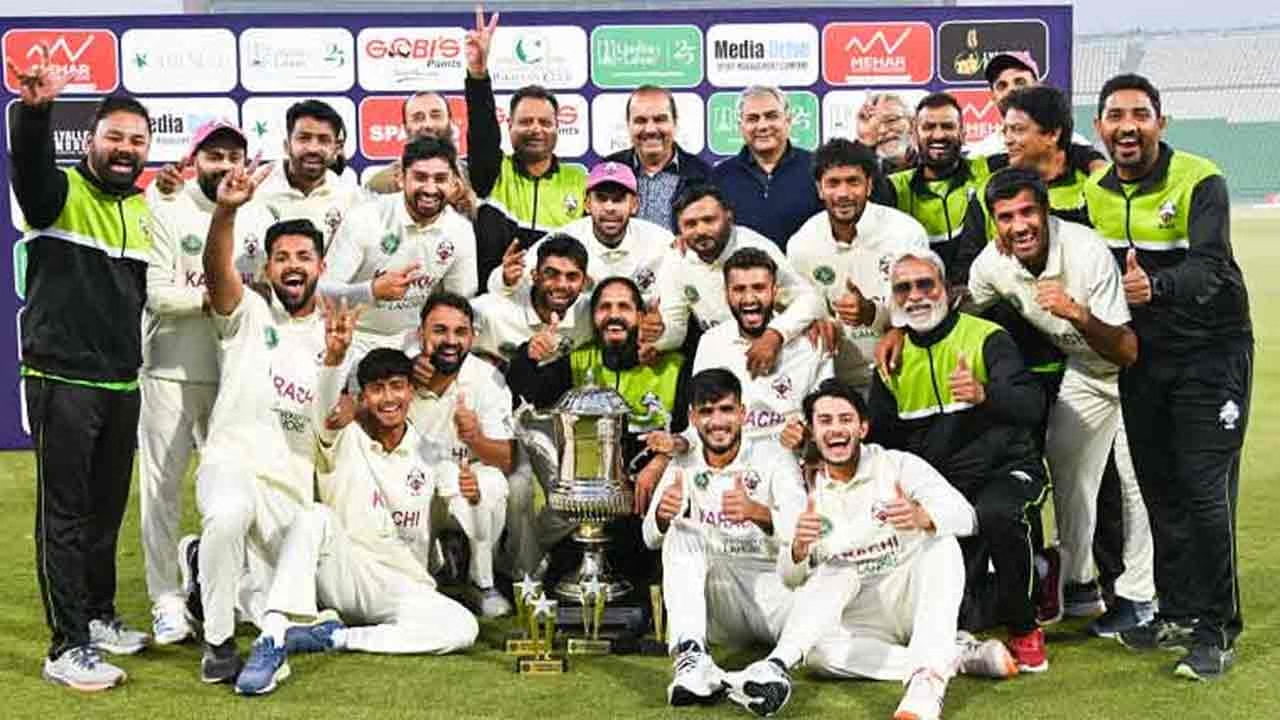
The cricketing world celebrated an extraordinary performance as Karachi Blues win Quaid-e-Azam Trophy after defeating Sialkot in a high-scoring five-day final at Gaddafi Stadium, Lahore. The victory marked Karachi Blues’ 10th title in the prestigious tournament and the 22nd overall for any Karachi-based team. Their dominance, skill, and tactical execution throughout the match displayed why they remain one of Pakistan’s most decorated domestic cricket sides.
A Monumental Target and a Strong Start by Sialkot
To secure the championship, Karachi Blues set Sialkot a massive target of 533 runs—a mountain that demanded sustained focus and resilience. On the last day, Sialkot resumed their innings at 12 runs without loss, requiring another 521 runs to clinch the final. However, their chase faltered early on when Saqib Khan trapped Azan Owais lbw for 11, making the score 35 for 1.
Sialkot managed brief stability, but Karachi Blues applied pressure at crucial moments. Muhammad Hurairah contributed 39 runs before being caught by Saad Baig off Muhammad Umar, taking the total to 81. Soon after, Abdul Rehman fell for 18 after Abdullah Fazal found an edge that was safely caught by Ramiz Aziz, leaving Sialkot at 121 for 3.
Karachi Blues Win Quaid-e-Azam Trophy Through Consistent Bowling Pressure
As the innings progressed, Karachi’s bowlers tightened their grip. Approaching 144 runs, two key wickets fell—Mohsin Riaz for 6 and national star Abdullah Shafiq for a well-made 59. Both dismissals were orchestrated by the brilliant Saqib Khan, who proved to be the turning point of the match.
Despite the pressure, Sialkot’s Afzal Manzoor launched a spirited counterattack. His aggressive 63, featuring 13 boundaries, injected energy back into the chase. Alongside Hamza Nazar, he stitched a resilient 112-run partnership for the sixth wicket. Nazar also played confidently, scoring 56 runs decorated with nine fours before Mushtaq Ahmed had him caught by Saad Baig.
But once this partnership ended, Sialkot’s hopes began to fade. When Karachi Blues win Quaid-e-Azam Trophy, it is usually marked by standout bowling—and this match was no exception.
Saqib Khan’s Match-Winning Spell
A major headline of the final was the sensational bowling display by Saqib Khan. With relentless accuracy and movement, he dismantled Sialkot’s lower order. Hassan Ali contributed a brief 25 before Mushtaq Ahmed dismissed him, taking the score to 304 for 7. Just a few runs later, Sialkot’s ninth wicket fell at 310 when Saqib Khan got Muhammad Ali caught behind for 6.
Saqib completed his five-wicket haul by bowling Hasnain for a duck, ending the innings at 314. His final figures of 5 for 86 highlighted a match-winning performance. Combined with the four wickets he claimed in the first innings, he closed the tournament with an outstanding total of 47 wickets, making him the standout bowler of the Quaid-e-Azam Trophy season.
Abdullah Fazal Shines as Player of the Match
While bowlers played a vital role, the batting brilliance of Abdullah Fazal cannot be overstated. His elegant 88 in the first innings and commanding 114 in the second innings laid the foundation for Karachi’s monumental target. Consistency, composure, and classical technique earned him the well-deserved Player of the Match award.
Abdullah’s performance exemplified the determination that helped Karachi Blues win Quaid-e-Azam Trophy once again, proving the depth and strength of their batting lineup.
Celebrations and Prize Distribution
Following the dramatic win, PCB Chairman Mohsin Naqvi awarded trophies and individual prizes to the victorious team and top performers. The atmosphere at Gaddafi Stadium was filled with excitement as Karachi Blues lifted the trophy, celebrating their decade-long dominance and their historic 10th title.
What This Victory Means for Domestic Cricket
The fact that Karachi Blues win Quaid-e-Azam Trophy once more highlights their consistent excellence in Pakistan’s domestic cricket structure. Their mix of emerging talents and seasoned performers sets the standard for competitiveness across regional teams. With young players like Abdullah Fazal and match-winners like Saqib Khan, Karachi continues to produce cricketers with international potential.
This victory not only strengthens Karachi’s legacy but also signals a promising future for Pakistan’s domestic cricket framework.